

MALARIA & LIVESTOCK: Poultry keeping linked to higher malaria risk in southern Tanzania
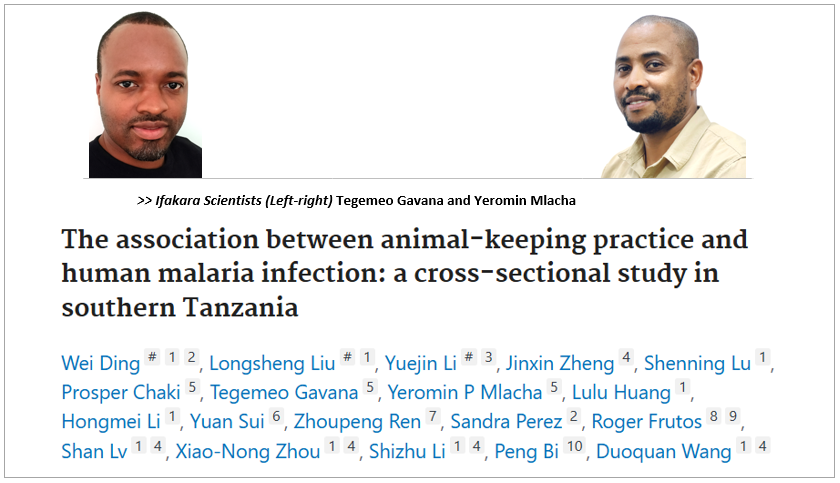
A new study involving researchers from Ifakara Health Institute (IHI) and partners has found that some livestock-keeping practices may be associated with increased malaria risk in farming communities.
The findings suggest that the way livestock are kept around homes could influence mosquito behaviour and highlight the need to consider farming practices as part of broader malaria prevention efforts.
Published in Frontiers in Veterinary Science recently, the study explored how keeping different types of livestock may affect malaria transmission in areas where people and animals live in close proximity. The research contributes to growing evidence supporting a One Health approach, which recognizes that human health, animal health and the environment are interconnected.
What the researchers found
The researchers analyzed data collected in July 2019 from more than 11,000 people living in Kibiti, Rufiji and Kilwa districts in southern Tanzania, where livestock keeping is common.
They compared malaria infection rates among people living in households that kept different types of animals with those from households that did not keep livestock.
The study found that people living in households that kept poultry, such as chickens, were more likely to test positive for malaria compared with those who did not keep poultry. This association remained even after researchers accounted for other factors that influence malaria risk.
However, the study did not find a similar strong association between malaria infection and keeping cattle, goats or sheep.
What does this mean?
The researchers emphasize that the findings do not mean that chickens cause malaria or that families should stop keeping poultry.
Instead, the results suggest that poultry keeping practices — including where animals are housed and how they interact with household environments — may influence mosquito activity and increase opportunities for malaria-carrying mosquitoes to bite people.
The researchers say that improving livestock management practices could complement existing malaria prevention measures, including the use of insecticide-treated mosquito nets, reducing mosquito breeding sites and improving the surroundings around homes.
Further research is needed to understand how livestock housing and management practices can be adapted to reduce malaria risk while supporting the livelihoods of farming communities.
A One Health approach to malaria prevention
The study highlights the importance of looking at malaria through a One Health lens, where solutions consider the connections between people, animals and the environment.
“Adopting a One Health framework that integrates veterinary and environmental management is essential for improving malaria intervention outcomes in rural communities,” the authors noted.
By combining knowledge from human health, veterinary science and environmental management, researchers hope to identify new approaches that reduce malaria transmission while supporting sustainable livestock production.
Ifakara scientists among contributors
The study was conducted by researchers from Ifakara Health Institute, Shanghai Jiao Tong University School of Medicine, Fudan University, University of Adelaide, University of Montpellier and other international partners.
Researchers from Ifakara Health Institute who contributed to the study include the late Dr. Prosper Chaki, Tegemeo Gavana and Yeromin Mlacha.
Supporting healthier farming communities
The study provides new insights into how agricultural practices and public health are connected.
For farming families, protecting health and maintaining productive livestock systems go hand in hand. By improving understanding of how livestock management may influence malaria risk, the research provides evidence that can inform future health and agricultural programmes aimed at building healthier and more resilient communities.
Read the publication here.