

CHILD HEALTH: Early detection gaps put those disabled at risk
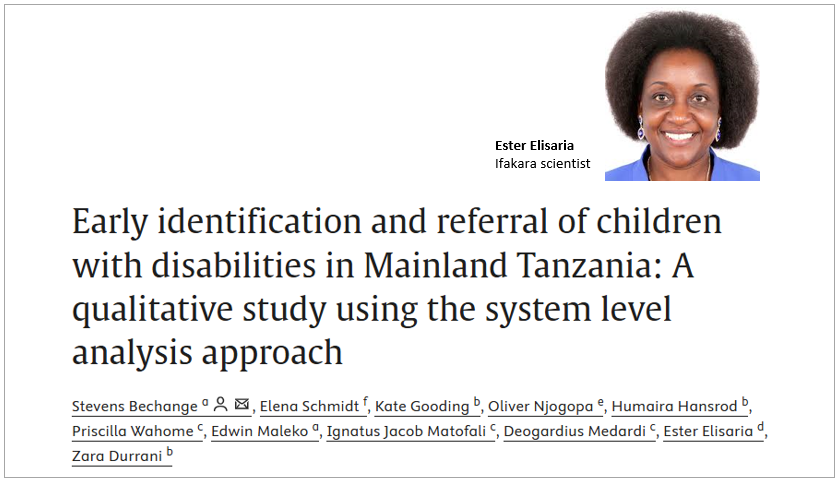
Many children with disabilities in Tanzania are missing out on early support and care because they are not being identified in time, putting their health and development at risk, a new study has found.
Published on Health Systems, the study shows that although policies and systems exist, weak coordination between health services, government departments, and community structures is slowing early detection and response. As a result, many children miss out on essential care that could improve their development and well-being.
Why it matters
Researchers underline that early identification is essential for improving outcomes for children with disabilities. When detected early, children can receive timely support that improves their growth, learning, and quality of life.
Delays in detection and referral can lead to long-term challenges that could otherwise be prevented.
Ifakara, partners contribute to the study
The study was co-authored by Ifakara Health Institute scientist Dr. Ester Elisaria, together with researchers from Sightsavers Tanzania Country Office, Oxford Policy Management, the Prime Minister’s Office – Labour, Youth, Employment and Persons with Disability (PMO-LYED), and Sightsavers UK.
“While some of our findings are specific to Tanzania, many apply across the region,” the researchers noted. They added that the findings can help “improve understanding of how systems for early detection and referral of children with disabilities function in low-resource settings and how they can be strengthened within available resources.”
Key findings
The study identified several system gaps affecting early detection and support:
- Weak coordination across systems: Health services, government departments, and community structures often work in isolation, despite existing policies.
- Limited support for community workers: Community health workers play a key role in identifying early signs of disability, but many lack adequate training, tools, and supervision.
- Low referral uptake: Even when children are identified, referrals are often not completed due to costs and limited access to specialists.
- Families face barriers to care: After identification, families struggle to access services due to high transport costs, long distances to specialist facilities, and shortages of trained professionals.
- Weak data systems and stigma: Poor record-keeping makes tracking and follow-up difficult, while stigma and low awareness in communities delay care-seeking.
Call for stronger systems
The study urges stronger action to improve early detection and referral systems. Key priorities include:
- Strengthening referral systems for diagnosis and disability certification
- Improving disability data systems and enabling data sharing across sectors
- Enhancing coordination between health, education, and social support services
- Improving communication on available fee exemptions and benefits for families
- Ensuring better implementation of policies and clearer roles at all levels
Researchers also recommend further studies to better understand system bottlenecks and evaluate practical solutions, cost-effective solutions for early identification and referral.
Read the publication, here.