

NEWBORN HEALTH: Study finds major gaps in Tanzania’s routine reporting of newborn deaths
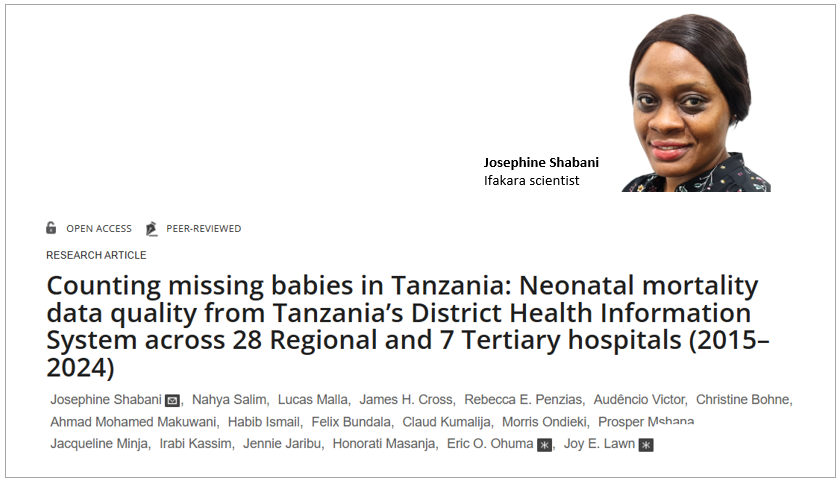
Tanzania’s health system may be missing a significant number of newborn deaths from its routine records, raising concerns about how accurately the country can track progress in reducing neonatal mortality, a new study has found.
Led by Ifakara Health Institute researcher Josephine Shabani and published this month in PLOS ONE, the study assessed the quality of neonatal mortality data recorded in Tanzania’s District Health Information System (DHIS2) between 2015 and 2024.
The findings are significant as Tanzania works towards the global target of reducing neonatal mortality to fewer than 12 deaths per 1,000 live births by 2030.
Records reveal major gaps in reporting
Researchers examined records from 28 regional referral hospitals (RRHs) and seven tertiary hospitals to assess the completeness and consistency of neonatal death reporting. They also compared DHIS2 data with a more detailed Neonatal Inpatient Dataset (NID) from seven hospitals implementing the Newborn Essential Solutions and Technologies (NEST360) programme.
Between 2015 and 2024, DHIS2 recorded 85,588 neonatal deaths across all facility levels. Reported deaths increased from 4,358 in 2015 to 10,486 in 2024.
However, the study found substantial gaps in reporting. RRHs had better reporting completeness than tertiary hospitals, with median completeness of 61.7% and 50%, respectively. Only eight of the 28 RRHs achieved reporting completeness above 75%, while none of the seven tertiary hospitals reached that level.
Why the numbers differ
The 2022/23 Tanzania Demographic and Health Survey (TDHS) estimated that 24 babies die for every 1,000 live births within their first 28 days, compared with 21 per 1,000 estimated by the United Nations Inter-Agency Group for Child Mortality Estimation.
By comparison, the neonatal mortality rate calculated from DHIS2 data for 2024 was 5.9 deaths per 1,000 live births after accounting for births occurring at home.
The researchers caution that these figures cannot be directly compared because they measure different populations and use different methods. TDHS and UN estimates capture neonatal mortality at the population level, while DHIS2 primarily reflects deaths among newborns receiving care in health facilities.
Nevertheless, the large differences, combined with incomplete reporting, point to weaknesses in routine health data that need to be addressed.
Different systems, different estimates
The comparison with the NEST360 dataset also revealed inconsistencies. In one tertiary hospital, DHIS2 recorded a lower neonatal mortality rate than the NEST360 dataset, while three RRHs recorded higher rates in DHIS2.
The differences show that even data collected from the same hospitals can produce different mortality estimates, highlighting the need for stronger data quality processes and harmonized reporting systems.
Why reliable data matters
Accurate neonatal mortality data are essential for understanding where newborns are dying and identifying facilities and interventions that require additional support.
Tanzania has introduced several interventions to improve newborn survival, including Kangaroo Mother Care, newborn resuscitation, respiratory support, infection prevention and treatment, and improved management of neonatal complications.
However, measuring their impact depends on reliable data to monitor coverage, identify gaps and determine whether newborn survival is improving.
The study notes that about 80% of newborn deaths in Tanzania are attributed to three major causes: preterm birth, complications during labour and delivery, and infections—conditions that can be prevented by high coverage and quality neonatal care interventions.
Strengthening the data system
The researchers call for improved reporting in facilities where data remain incomplete, while encouraging health authorities to learn from hospitals with stronger reporting systems.
Although RRHs generally perform better than tertiary hospitals, the study concludes that neonatal mortality reporting through DHIS2 remains substantially under-captured across facilities.
Strengthening reporting systems could help Tanzania better understand where newborns are dying, how many lives are being lost and whether efforts to save them are making a difference.
Read the publication here.