

VISIT: Ifakara hosts the U.S. military tropical medicine trainees
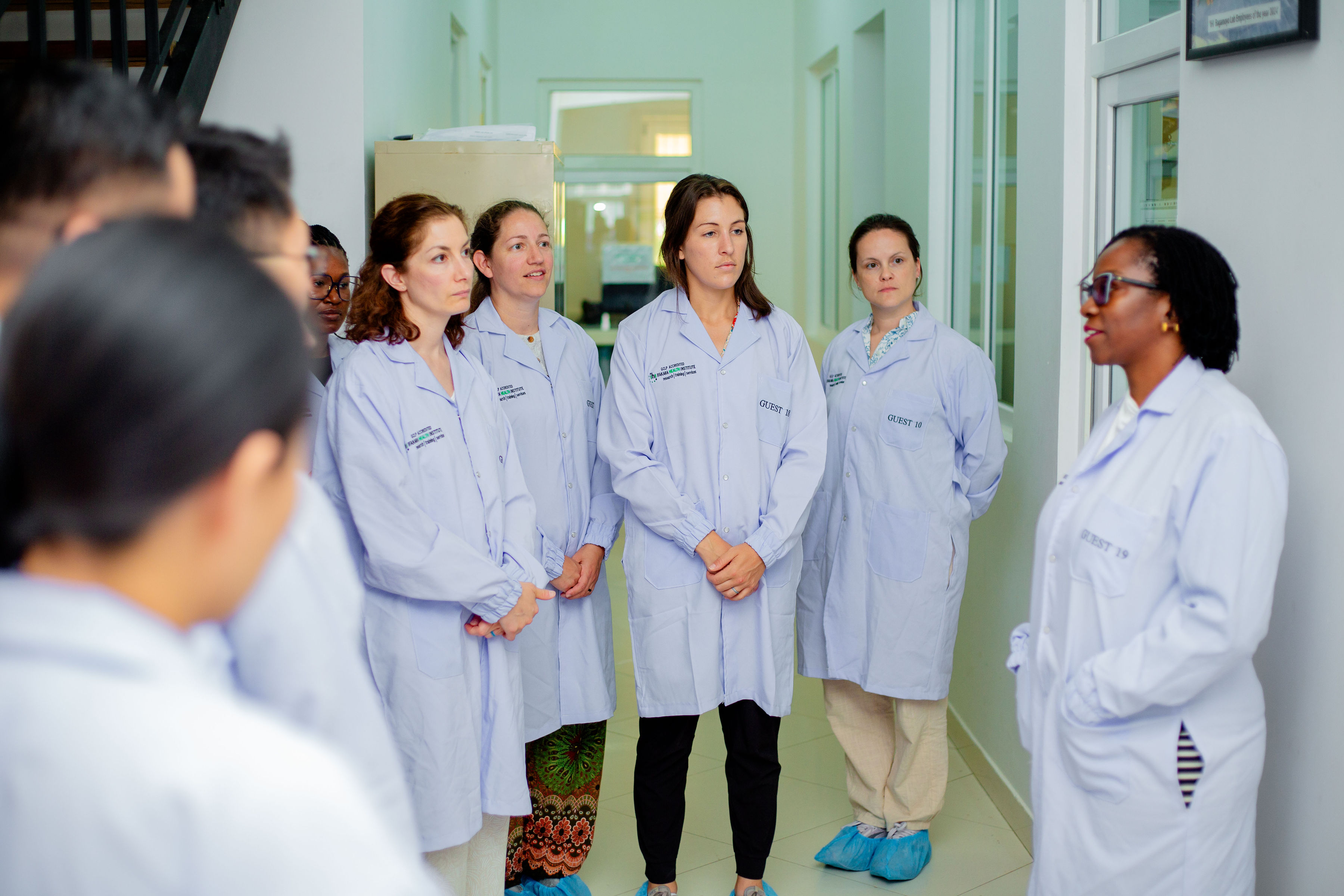
On Tuesday, 4 August 2026, Ifakara Health Institute welcomed medical officer trainees from the United States Military Tropical Medicine (MTM) Program of the Naval Medical Leader and Professional Development Command, to its Bagamoyo Research and Training Center.
The delegation, led by Colonel Jan Maby, U.S. Army-Team lead and Captain Sarah-Blythe Ballard, U.S. Public Health Service, was received by Ifakara’s Chief Executive Director (CED), Dr. Honorati Masanja, and Ifakara’s Director of Science, Dr. Ally Olotu.
The visit, which is coordinated by Walter Reed Army Institute of Research (WRAIR) at the US Embassy in Tanzania, aimed to provide the trainees with an understanding of malaria parasite populations and antimalarial drug resistance in Tanzania, while offering an opportunity to learn about Ifakara's research platforms and contributions to malaria surveillance and control.
Showcasing malaria research, surveillance expertise
During the visit Dr. Deus Ishangoma, an Ifakara Principal Investigator, presented findings from the Molecular Surveillance of Malaria Mainland Tanzania (MSMT) programme, focusing on malaria parasite population genetics and molecular surveillance.
Another Ifakara Principal Investigator, Dr. Kefas Mugittu, presented on Ifakara’s ongoing Therapeutic Efficacy Studies (TES) and the importance of molecular analysis in monitoring malaria drug resistance in Tanzania. He emphasized a need for TES to continue being funded and conducted in order to continue monitoring antimalarial drug efficacy and ensure early detection of emerging antimalarial resistance.
He highlighted how the current TES Molecular Analysis Project helps bridge the gap created by funding interruptions following the .
The team further explored Ifakara’s role in supporting national malaria strategies through research, surveillance, and evidence generation to strengthen responses to emerging challenges in malaria control, presented by Frank Chacky, Tanzania National Malaria Control Programme (NMCP)’s Monitoring and Evaluation (M&E) Officer.
Chaky showcased Tanzania’s progress in reducing its malaria burden while outlining the NMCP data-driven, adaptive strategy to combat emerging antimalarial drug resistance (AMDR) and insecticide resistance.
Exploring Ifakara’s research facilities, capabilities
As part of the visit, the delegation toured several facilities, including the laboratory, Clinical Trial Facility, Transmission Zero Facility, and the Vector Control Product Testing Unit, learning about how the Institute conducts clinical trials, laboratory research, vector control evaluations, and innovative research approaches aimed at reducing malaria transmission.
We extend our sincere appreciation to the United States Embassy in Tanzania and the Walter Reed Army Institute of Research–Tanzania (WRAIR-TZ) for making this visit possible, and we look forward to continued collaboration in advancing scientific knowledge and improving global health.