

MEASLES VACCINE: Study reveals wide gaps in vaccination coverage in Tanzania
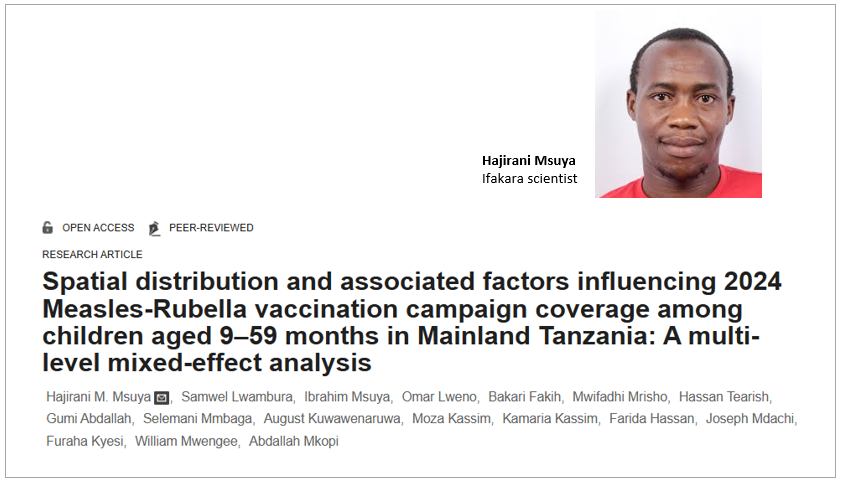
A new study has found large differences in measles-rubella (MR) vaccination coverage among children across Tanzania Mainland. The findings show that while many children were reached during the 2024 vaccination campaign, some areas had much lower coverage than others, highlighting the need for targeted efforts to protect children.
Published in PLOS ONE recently, the study looked at vaccination among 16,703 children aged 9–59 months following Tanzania’s February 2024 measles-rubella vaccination campaign. Researchers also used geographic data to identify areas where vaccination coverage was higher or lower.
The study was led by Hajirani Msuya, a researcher at the Ifakara Health Institute, together with researchers from Ifakara, Zanzibar University, Regency Medical Centre, the Ministry of Health, Tanzania, and the World Health Organization - Tanzania Country Office.
Why this matters
Measles is one of the most contagious diseases and can spread quickly among people who are not protected. Rubella can also cause serious problems when a woman becomes infected during pregnancy, including health problems in the baby.
Tanzania has made progress in protecting children against measles and rubella through routine vaccination and campaigns. However, the study shows that national figures can hide important differences between communities.
Improving vaccination coverage is therefore not only about reaching more children overall. It is also about finding the children who are being missed and understanding why they are being missed.
Using local data to identify these gaps can help health programmes direct vaccination services and resources to the communities that need them most.
Some regions are doing better than others
Overall, 81.5% of the children in the study received the MR vaccine during the campaign. This was below the 95% coverage level recommended to help stop the spread of measles.
Vaccination coverage varied widely across regions.
Njombe had the highest coverage at 97.4%, followed by Mbeya at 95.6%. In contrast, coverage was much lower in Tabora, at 58.8%, and Pwani, at 61.0%.
The researchers found that areas with low vaccination coverage tended to be close to other areas with similarly low coverage. Low-coverage clusters were identified in areas including Tabora, Katavi, Dar es Salaam and Pwani.
This is important because when many children in the same area are not vaccinated, communities can remain at risk of measles outbreaks, even when vaccination coverage across the country looks relatively high.
Understanding who is being missed
The study also found that vaccination coverage was linked to factors such as household wealth, where people live, caregiver education, caregiver age and marital status.
This suggests that reaching more children may require health programmes to look at both where children live and the challenges families face in getting them vaccinated.
Understanding these differences can help health teams identify communities that may need additional outreach, information and vaccination services.
Using data to reach more children
The researchers highlight the importance of using data and maps to identify communities where vaccination coverage is low.
This information can help health teams focus vaccination activities and outreach services in areas where more children need to be reached. By understanding where coverage gaps are concentrated, programmes can better direct resources and plan activities for communities that need them most.
Read the publication here.