

MEETING: Global partners tackle violence against health workers
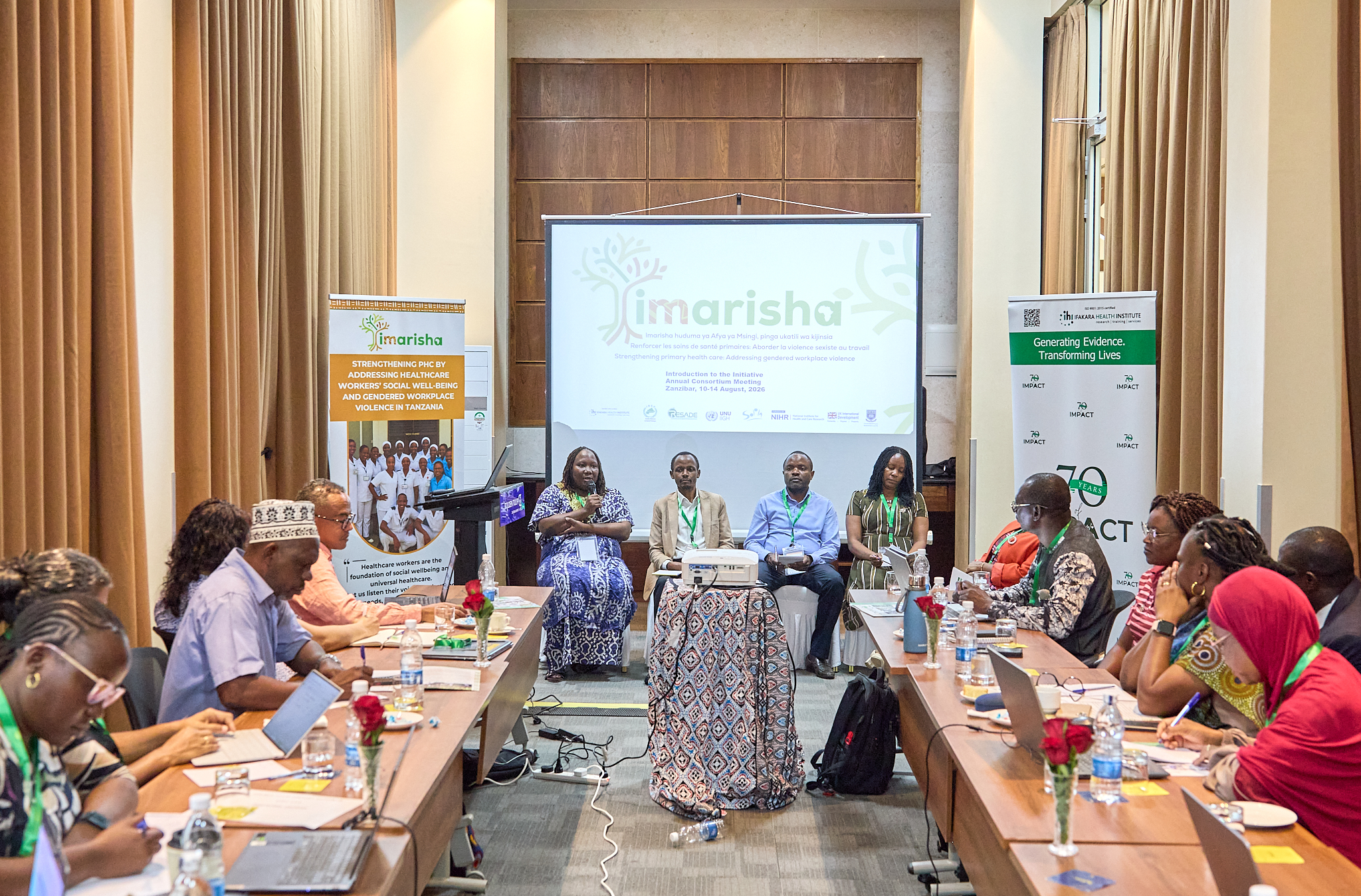
From 10–14 August 2026, health researchers, policymakers and gender-equity advocates from across Africa are meeting in Zanzibar for the Imarisha Annual Meeting 2026, focused on a long-overlooked challenge: violence against the health workers who keep primary healthcare systems running.
Held at the Golden Tulip under the theme “Realizing the Full Potential of the PHC Workforce: Addressing Gendered Workplace Violence,” the five-year Imarisha project brings together Ifakara Health Institute (IHI), University of the Western Cape (UWC), Institut National de Santé Publique (INSP), RESADE, and United Nations University (UNU), with IHI leading implementation in Tanzania.
Why it matters
Despite global commitments to Universal Health Coverage, gender-based violence in health workplaces remains largely invisible. While both men and women experience workplace violence, women often bear a disproportionate burden due to entrenched power imbalances.
Global efforts to address gender-based violence in healthcare have largely focused on protecting patients, particularly women and children, while the safety and wellbeing of health workers have received less attention. Left unaddressed, workplace violence can affect health workers’ motivation, wellbeing and performance, ultimately impacting the quality of care.
Opening the meeting, Dr. Sally Mtenga, Senior Social Scientist and Tanzania Principal Investigator at IHI, welcomed participants and conveyed regards from IHI’s incoming Chief Executive Director, Dr. Ally Olotu. Dr. Olotu expressed his support for the initiative, emphasizing the importance of creating health systems where health workers are not only equipped to provide quality care, but are also protected, respected and able to work in safe and supportive environments.
He noted that addressing workplace violence is part of the broader effort to strengthen the primary healthcare workforce and health systems, and that evidence generated through Imarisha can help inform practical approaches that benefit health workers, health facilities and the communities they serve.
Regards were also conveyed from Dr. Grace Magembe, Permanent Secretary of the Ministry of Health, and Dr. James Tumaini Kengia, MBA, PhD, from the Prime Minister’s Office – Regional Administration and Local Government (PMO-RALG), both of whom have supported the project since its inception but were unable to attend.
Prof. Asha George, Overall Principal Investigator, introduced the initiative and welcomed Zanzibar representatives, including Siti Abas Ali, Director of the Department of Community Development, Gender and Children, and Omar Haji from the Ministry of Community Development, Gender, Elderly and Children. Siti expressed interest in seeing the research extended to Zanzibar, noting the relevance of similar challenges affecting women in the region.
Tanzania shares lessons from a year of research
A key highlight was a panel discussion chaired by Dr. Mtenga, where the Tanzania team — Dr. Francis Levira, Irene Mashasi, Lorraine Kiswaga and Elisante Abraham — shared lessons from a year of fieldwork across five regions.
Morogoro served as the case-study site for co-designing interventions, while Tabora, Musoma, Mbeya and Kilimanjaro provided broader survey data. The research engaged health workers, community health workers, facility committee members and decision-makers at national and sub-national levels.
The team highlighted several lessons. Lorraine Kiswaga emphasized the importance of training research assistants on gender, trauma and different forms of violence, including non-physical forms. Elisante Abraham noted that qualitative research enabled participants to share sensitive experiences through stories and detailed accounts, while trauma-informed approaches, confidentiality and reassurance helped build trust and encourage disclosure.
The research also showed how workplace power hierarchies can shape women’s experiences and risks, while field teams had to navigate practical challenges such as staff shortages, inaccurate sampling information, long travel distances and facility closures.
From evidence to action
Participants identified priorities for strengthening future research and interventions, including piloting sampling frameworks, developing contingency plans, conducting regular team debriefs and ensuring measurement tools capture non-physical forms of abuse.
They also highlighted the need for stronger coordination among workplace violence focal points and sustained engagement with health facility managers, the Ministry of Health and communities. Integrating workplace violence indicators into routine reporting systems was proposed as one way to keep the issue visible beyond the research period.
The meeting is also exploring the consortium’s broader research design and participatory action research approach, which places health workers at the centre of developing solutions.
Z’bar Minister for stronger action to protect women health workers
The Imarisha Annual Meeting 2026 concluded with closing remarks from Hon. Anna Athanas Paul, Minister for Community Development, Gender, Elderly and Children in Zanzibar, who reaffirmed the Ministry’s commitment to addressing gendered workplace violence and protecting the rights, safety and dignity of women in the health workforce.
In her remarks, the Minister emphasized that safe workplaces are essential to women’s empowerment and to building stronger health systems. She highlighted the important role of women, who make up the majority of the primary healthcare workforce, and stressed that no health worker should face violence while providing care to others.
Hon. Anna Athanas Paul also expressed the Ministry’s commitment to working with the relevant government institutions in Mainland Tanzania, partners and other stakeholders to strengthen efforts to prevent and address gendered workplace violence. She further expressed hope that the work initiated through Imarisha could be extended to the health workforce in Zanzibar.
Looking ahead
Through 14 August, Imarisha partners will reflect on the first year of implementation, identify areas for improvement, strengthen collaboration across country teams and plan the next phase of research.
The discussions aim to help translate evidence into national and global policy and practice, advancing safer, more equitable primary healthcare workplaces and bringing greater visibility to gendered workplace violence — an issue that has too often remained unseen and unaddressed.