

MATERNAL HEALTH: Age, wealth and distance influence service use in Tabora
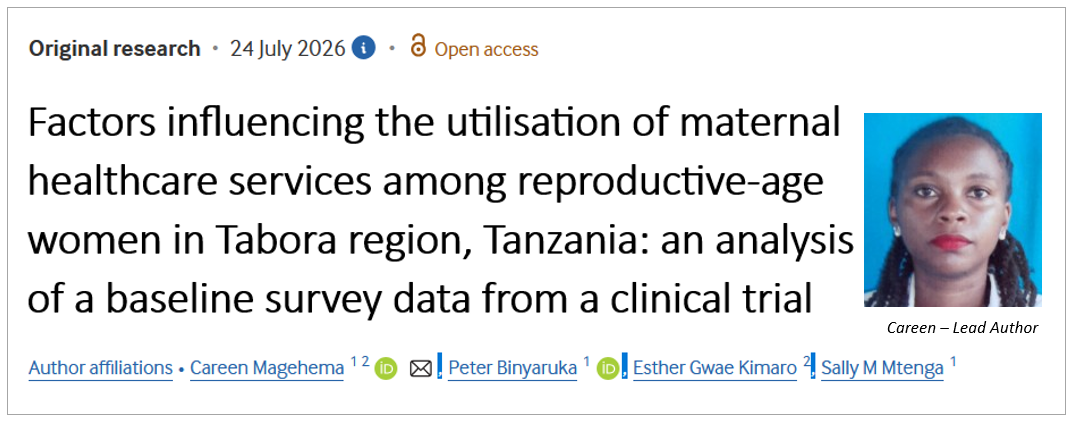
Women’s age, household wealth, marital status and distance to health facilities are among the factors influencing how women in Tabora, a city in Tanzania, use maternal healthcare services, a study has found.
Published in the BMJ Public Health recently, the study analyzed data from 958 women aged 15–49 collected across Tabora Region between November and December 2017. Researchers examined factors linked to antenatal care (ANC), facility-based delivery and postnatal care, including household wealth, age, marital status, parity, ethnicity and distance to health facilities.
The study was led by Ifakara Health Institute scientists Careen Magehema, with Peter Binyaruka, Esther Gwae Kimaro and Sally Mtenga serving as co-authors.
Older and wealthier women more likely to complete ANC
Women aged 36–50 were more than three times as likely to have attended at least four antenatal care visits compared with women younger than 20.
Household wealth also mattered. Women from households classified as the least poor were more likely to achieve four or more ANC visits than those from the poorest households.
The findings suggest that younger women and those living in poorer households may face greater barriers to maintaining regular contact with maternal health services.
Wealth and distance affect facility deliveries
The study also found differences in where women gave birth. Married women were more likely to have facility-based deliveries than women who were not married. Women from the least poor households were also substantially more likely to give birth at a health facility than women from the poorest households.
Distance was another important factor. Women living less than 5km from a health facility were more likely to use facility-based delivery services than those living 5km or more away.
The researchers also found differences by ethnicity, with Nyamwezi women more likely to have facility-based deliveries than women from other ethnic groups in Tabora.
ANC linked to delivery and postnatal care
The study points to a pattern across the maternal healthcare journey: women who attended at least four ANC visits were more likely to deliver at a health facility, and women who delivered at a facility were much more likely to attend postnatal care.
Women who delivered in a health facility were nearly seven times as likely to attend postnatal care compared with those who delivered elsewhere.
This suggests that encouraging women to attend ANC may have benefits beyond pregnancy monitoring, potentially increasing their contact with skilled maternal health services during delivery and after birth.
Why this matter
The findings highlight that improving maternal healthcare use requires more than simply making services available.
The researchers call for targeted interventions that address barriers affecting poorer households, younger women and women who live farther from health facilities. Strengthening access and encouraging continued use of services throughout pregnancy, childbirth and the postnatal period could help improve maternal and child health outcomes in Tabora.
Read the publication here.