
ENGAGEMENT: Bagamoyo school students learn about mosquitoes
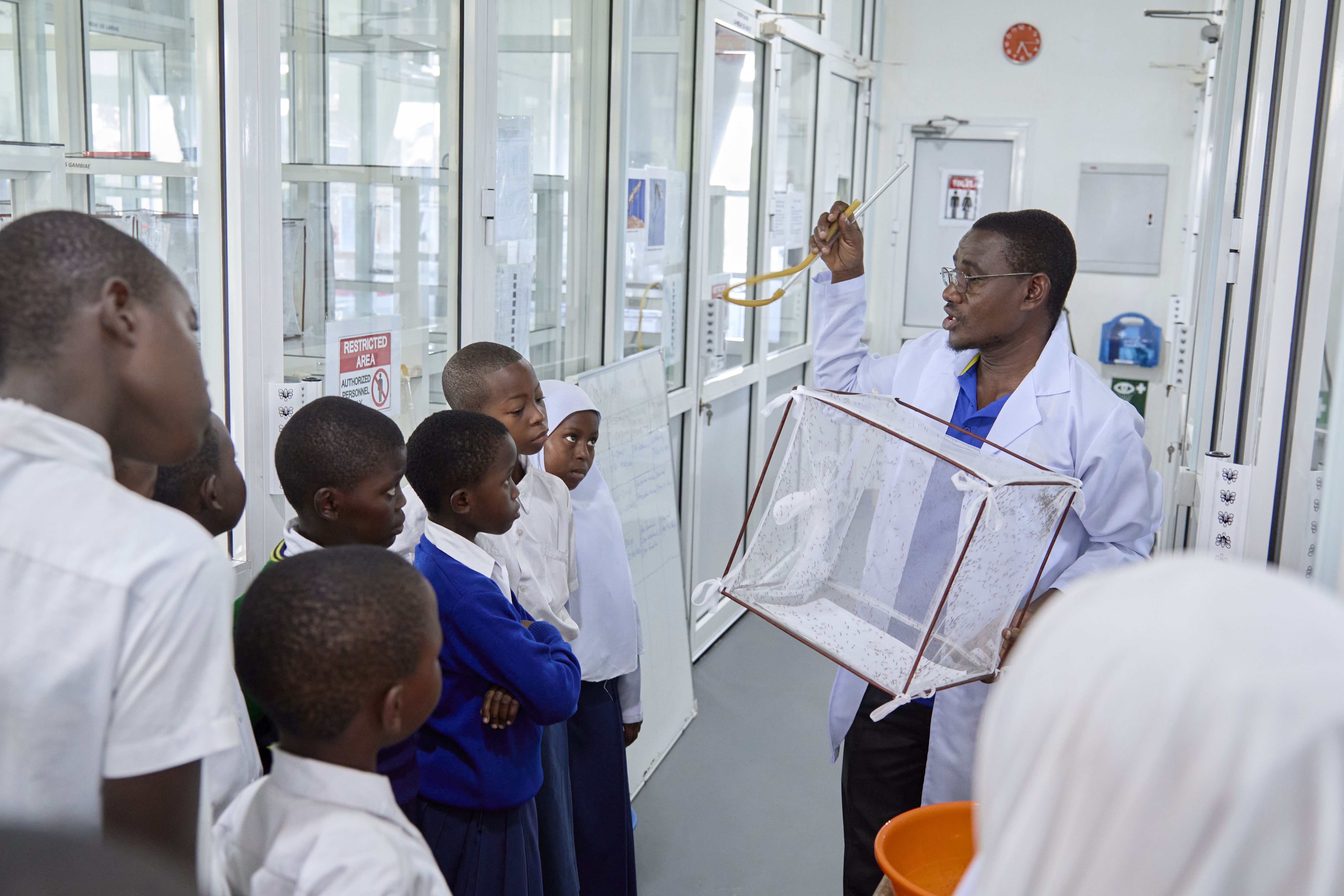
On 13 August 2026, ahead of World Mosquito Day, 24 primary school students from four schools in Bagamoyo Town Council visited the Ifakara Health Institute (IHI) for an interactive learning engagement focused on mosquitoes, malaria and ongoing scientific research. The visit was organised by Transmission Zero as part of activities ahead of World Mosquito Day.
The students, from Majengo, Kizuiani, Mwanamakuka, and Nia Njema primary schools, were accompanied by their respective Health Teachers. During the engagement, they were introduced to mosquitoes, their reproduction and life cycle, as well as diseases transmitted by mosquitoes. They also learned how malaria is transmitted and discussed key strategies for preventing and controlling the disease.
IHI researchers Fadhila Kilwehu, Felista Tarimo, Augustino Mmbaga and Fatuma Matwewe led sessions. The students also learned about Transmission Zero’s research efforts to develop innovative tools and approaches to support malaria control and elimination.
Learning from the insectary and lab
A highlight of the visit was a tour of the Bagamoyo insectary, led by Mzee Mohamed Mangapi, where the students learned more about the mosquito life cycle and observed mosquitoes at different stages of development.
At the laboratory, Ahmad Bakari, introduced the students to ongoing experiments evaluating malaria control interventions, including research assessing the effectiveness of insecticide-treated bed nets.
The practical experience sparked curiosity among the students, who actively participated in the discussions and asked thoughtful questions about mosquitoes and malaria.
Among their questions were: Why do mosquitoes bite humans? Why do mosquitoes have aquatic stages in their life cycle? Why are people advised to use bed nets? Why don't we have black bed nets? Why does each mosquito species transmit specific diseases? And why does a mosquito bite cause itching and swelling?
The questions reflected the students’ enthusiasm to understand the science behind mosquitoes, their behaviour and the diseases they transmit.
Connecting classroom learning with research
The visit provided the students with an opportunity to connect what they learn in the classroom with real-world scientific research. Interacting with researchers and observing mosquito research firsthand helped demonstrate how scientific knowledge is translated into practical tools and interventions to address malaria and other mosquito-borne diseases.
The participating teachers welcomed the engagement and recommended that similar sessions be conducted regularly. They highlighted the value of exposing students to research environments, noting that firsthand experiences can strengthen their understanding of classroom lessons, nurture curiosity and inspire young people to consider careers in science.
The engagement provided an opportunity to bring young learners closer to malaria research while building awareness of the importance of science and innovation in the fight against mosquito-borne diseases.