
WORKSHOP: Ifakara, partners explore strengthening larval source management in Zanzibar
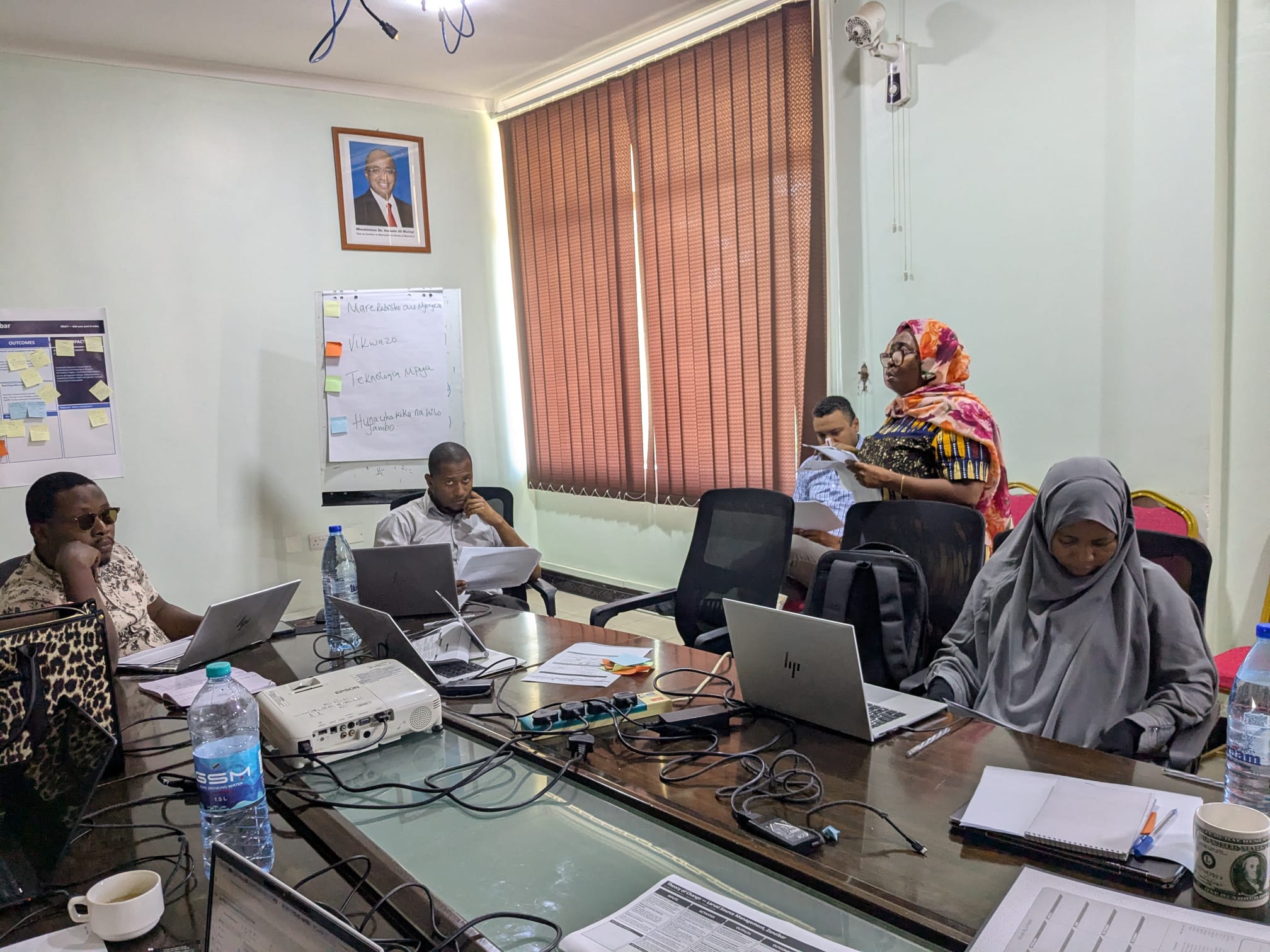
From 26-28 August 2026, the GEO-Larval Source Management (GeoLSM) Process Evaluation team convened a Theory of Change (ToC) review workshop at the Zanzibar Malaria Elimination Programme (ZAMEP) offices in Zanzibar, bringing together key stakeholders to reflect on and strengthen the implementation of larval source management (LSM) activities.
The workshop was collaboratively led by social scientists from partner institutions, including Assistant Professor Lauren D'Mello-Guyett from the London School of Hygiene and Tropical Medicine (LSHTM), Dr. Sally Mtenga and Dr. Irene Moshi from Ifakara Health Institute (IHI), and Ms. Mwatima Ali from ZAMEP.
Participants included ZAMEP national and district staff, representatives from the Zanzibar Ministry of Health, Community-Owned Resource Persons (CORPs), and implementing partners, including Swiss TPH and SORA-Tanzania.
The session focused on reviewing and refining the existing LSM Theory of Change, using participants’ practical experiences to assess whether the intervention’s pathways, assumptions, activities, outputs and outcomes accurately reflect realities on the ground.
Through interactive discussions, participants identified implementation bottlenecks, reflected on challenges faced at district and community levels, and highlighted opportunities to strengthen the delivery of LSM activities. The discussions also encouraged participants to consider how commitments outlined in existing standard operating procedures (SOPs) can be translated into effective implementation.
Reflecting on the exercise, one participant noted “This exercise has inspired me to follow up on various commitments we made in the SOP to ensure that LSM activities are effectively implemented.”
Another participant highlighted the importance of strengthening capacity at the district level “I realise that I need to improve the human resource capacity for LSM activities in my district.”
These reflections demonstrate how the ToC review provided not only an opportunity to examine the intervention’s design, but also to encourage stakeholders to identify practical actions that can improve implementation.
The insights generated during the workshop are expected to support the co-production of a ZAMEP-owned and contextually grounded Theory of Change, ensuring that GeoLSM is aligned with Zanzibar’s programme priorities, implementation realities and local expertise.
The GeoLSM project is funded by the Gates Foundation and seeks to generate evidence on how geographically targeted larval source management can be effectively implemented as part of malaria vector control efforts.