

#IPHC2026: Bringing evidence and innovation to the future of primary health care
Ifakara Health Institute was proud to participate in the 2nd International Primary Health Care Conference, which took place from 9–11 September 2026 at the Arusha International Conference Centre (AICC), Arusha, Tanzania. The conference was held under the theme, “Towards Universal Health Coverage: Strengthening Sustainable Health Financing, Efficiency and Quality Improvement within Primary Health Care.”
The conference brought together policymakers, researchers, healthcare professionals, development partners, academic institutions, and other stakeholders to explore approaches to strengthening primary health care and advancing progress towards Universal Health Coverage (UHC).
Discussions focused on sustainable health financing, improving the efficiency and quality of health services, strengthening health systems, and ensuring that communities can access essential healthcare services.
Connecting research with stronger health systems
For Ifakara, the conference provides an important platform to connect its research and innovations with the broader goal of building stronger, more equitable, and sustainable health systems. Through decades of research and implementation work, the Institute has contributed evidence that supports improvements in health policy, service delivery, disease prevention, maternal and newborn health, community health, health information systems, and other areas that are central to effective primary health care.
Sharing evidence to strengthen primary health care and universal health coverage
Ifakara scientists also had the opportunity to share their latest research findings through a series of oral presentations during the conference. The presentations explored critical issues affecting primary health care in Tanzania, including non-communicable diseases, health financing, provider payment mechanisms, Universal Health Coverage, and the wellbeing of frontline healthcare workers.
Dr. Evance Mahundi presented findings on awareness and care-seeking behaviour towards non-communicable diseases among people living in the rural Kilombero Valley. The research highlights the importance of understanding how communities recognize, respond to, and seek care for non-communicable diseases, providing evidence that can inform approaches to strengthen prevention, early detection, and access to appropriate care at the primary healthcare level.
Meanwhile, Francis Ngadaya presented research examining healthcare workers’ preferences for the capitation payment method in Tanzania using a Discrete Choice Experiment. The study provides insights into factors that influence healthcare workers’ preferences around provider payment mechanisms, contributing to wider discussions on how health financing approaches can be designed to support efficient and sustainable health service delivery.
Dr. Peter Binyaruka shared a narrative review on public health insurance and progress towards Universal Health Coverage in Tanzania. The presentation examined the role of public health insurance in expanding access to healthcare and advancing UHC, contributing evidence to ongoing conversations around sustainable health financing and equitable access to quality health services.
In another presentation, Dr. John Maiba shared findings on the experiences and perceptions of providers and purchasers regarding provider payment methods in Tanzania. The research offers perspectives from key actors within the health financing system and highlights considerations that can inform the design and implementation of payment mechanisms that promote efficiency, accountability, and quality improvement in healthcare delivery.
Dr. Irene Mashasi presented findings from research on the forms and drivers of gendered workplace violence against primary healthcare workers in Tanzania. The study brings attention to the challenges faced by frontline health workers and the importance of creating safe and supportive working environments as part of efforts to strengthen the primary healthcare workforce and improve the quality and sustainability of health services.
Together, these presentations demonstrate Ifakara’s contribution to generating evidence that addresses some of the fundamental challenges facing Tanzania’s health system—from improving community engagement with healthcare and protecting frontline workers to strengthening health financing mechanisms and advancing Universal Health Coverage. Through this research, the Institute continues to support evidence-informed policies and approaches aimed at building a more efficient, equitable, resilient, and people-centred health system.
Showcasing innovations for maternal and newborn health
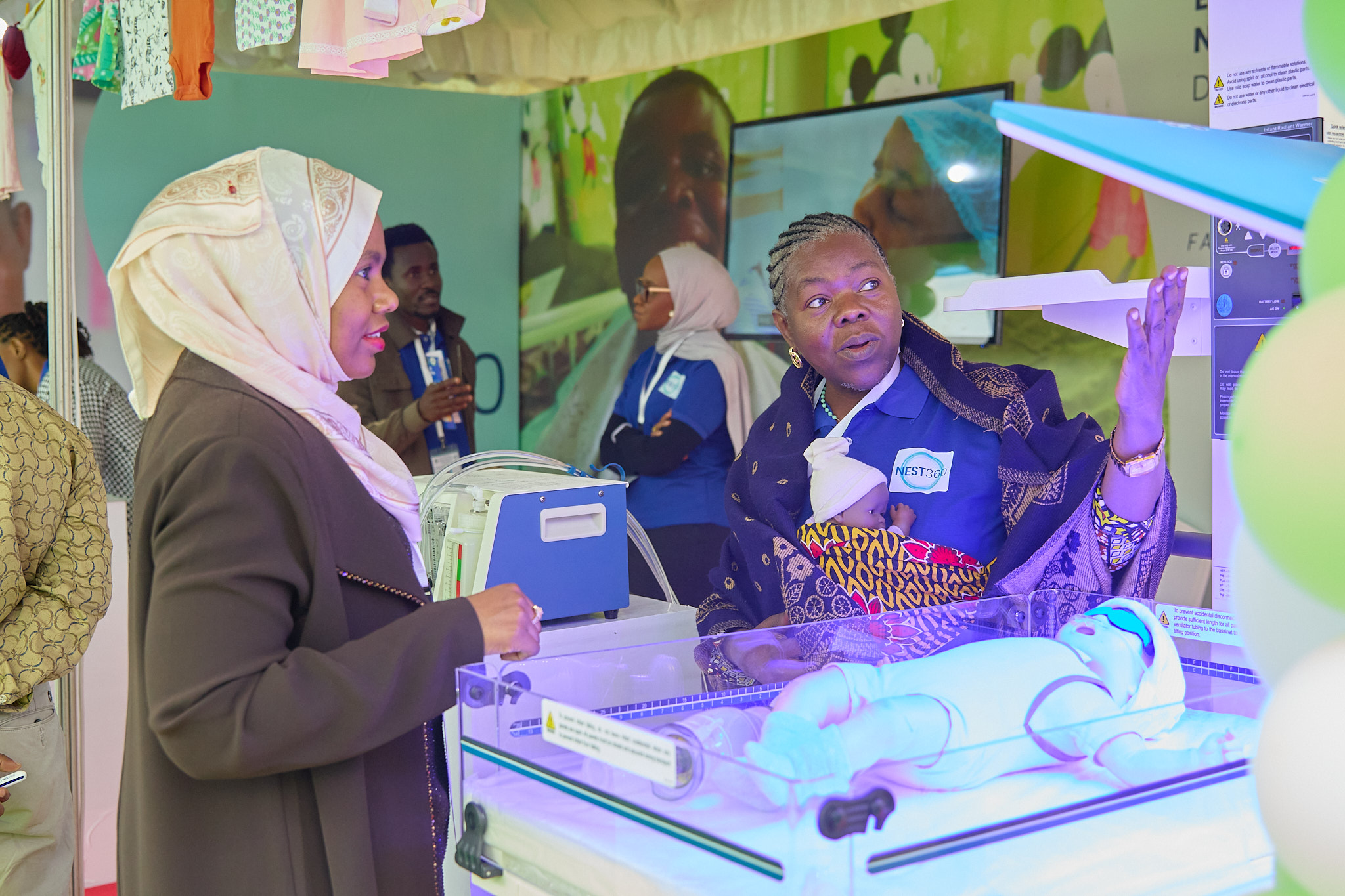
The Institute is also participating as an exhibitor, with the NEST360 initiative showcasing its work and innovations aimed at improving care for small and sick newborns. Through its focus on strengthening newborn care within health facilities, NEST360 demonstrates how evidence-based interventions, quality improvement, health-system strengthening, and capacity building can contribute to better health outcomes and stronger primary healthcare systems.
NEST360 research highlights strengthening newborn care
NEST360 also featured prominently in the scientific programme, with Ifakara researchers sharing evidence on practical approaches to improving the quality of care for newborns in Tanzanian health facilities.
Josephat Mutakyamilwa presented findings on how health facilities can be better supported to prepare for and sustain improvements in newborn care. His presentation highlighted the NEST360 Facility Journey Approach, which helps facilities assess their readiness, establish a clear starting point, and build local ownership to ensure that improvements can be sustained over time.
Mary Machemba shared findings on the impact of a newly established neonatal care ward at Amana Regional Referral Hospital, examining how improvements in health facility infrastructure can contribute to better care for newborns. The findings highlight the importance of creating appropriate spaces and environments where newborns can receive the specialized care they need.
Meanwhile, Jacqueline Minja explored the opportunities and challenges of keeping mothers and newborns together in hospital through rooming-in. Her presentation highlighted health-system factors that can affect the implementation of this practice, while pointing to opportunities for strengthening hospital systems to support mothers and newborns.
Jitihada Baraka shared evidence from high-performing Tanzanian hospitals participating in NEST360, highlighting the factors that have helped facilities successfully implement newborn care interventions. The findings provide valuable lessons on what enables health facilities to adopt and sustain effective practices and can help inform efforts to improve newborn care in other settings.
Together, the presentations demonstrate how NEST360 combines research, facility-level support, quality improvement, and health-system strengthening to improve the care of small and sick newborns. They also highlight the importance of understanding what works in real-world health facilities and using that evidence to support sustainable improvements in newborn care across Tanzania.
Ifakara research that support primary health care
Ifakara’s portfolio reflects the Institute’s contribution to strengthening primary health care through research, implementation science and health-system innovation. Current initiatives include the MOCA Project, which is testing digital clinical decision-support tools and clinical mentorship to improve the quality of care and responsible antibiotic use during primary care consultations in Zanzibar; the IMARISHA Project, which addresses the wellbeing and safety of frontline health workers in primary healthcare facilities; and the MMS-POST study, which is investigating postpartum micronutrient supplementation and its potential to improve maternal and infant health outcomes.
The Institute is also supporting the Government of Tanzania to develop a roadmap for scaling up multiple micronutrient supplements and low-dose calcium through antenatal care, with a focus on policy, monitoring, supply chains and financing. Other initiatives, including JaundiceCARE and the IMCI+ Consortium, are working to strengthen the quality of newborn and child healthcare through improved detection, management and evidence-based approaches in resource-constrained settings. Together, these efforts demonstrate how Ifakara’s research contributes to stronger frontline services, better quality of care, informed decision-making and more sustainable health systems, key building blocks for achieving Universal Health Coverage.
Ifakara Scientist Recognised at IPHC2026
On the final day of the conference, Ifakara Health Institute scientist Dr. Evance Mahundi was awarded Best Oral Abstract Presentation - Senior Presenter category. His award-winning presentation explored awareness and care-seeking behaviour towards non-communicable diseases among people living in the rural Kilombero Valley, providing insights into how communities understand and respond to NCDs and the importance of strengthening access to appropriate care at the primary healthcare level. The recognition highlights the value of Ifakara’s research in generating evidence that can inform better health services and contribute to progress towards Universal Health Coverage.
Turning evidence into impact
The Institute’s participation reinforces its commitment to generating and translating scientific evidence into solutions that can strengthen health systems, improve the quality and efficiency of healthcare services, and contribute to achieving Universal Health Coverage in Tanzania and beyond.