TB: Study shows global burden remains high despite progress
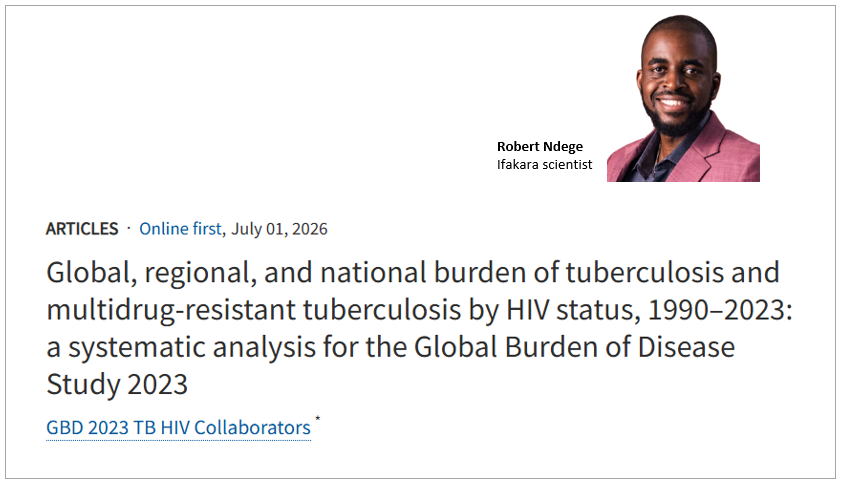
Tuberculosis (TB) remains the world’s leading cause of death from a single infectious disease, with its burden continuing to be shaped by HIV, drug resistance and other risk factors.
A systematic analysis from the Global Burden of Disease (GBD) Study 2023 provides an updated assessment of TB and multidrug-resistant TB (MDR-TB) across 204 countries and territories, examining trends from 1990 to 2023 and progress towards the World Health Organization’s (WHO) End TB targets.
Ifakara Health Institute’s Dr. Robert Ndege was among the contributors to the analysis, published in The Lancet Infectious Diseases in July 2026. He collaborated with 781 authors affiliated with institutions across more than 100 countries, including Tanzania.
More than 9 million TB cases estimated in 2023
The analysis estimated that in 2023, there were 9.11 million new cases of TB globally, resulting in 1.22 million deaths and an estimated 54.6 million years of healthy life lost due to illness, disability and premature death.
HIV-related TB accounted for an estimated 781,000 cases and 210,000 deaths, while MDR-TB accounted for 466,000 cases and 102,000 deaths.
Progress has been made, but unevenly
The findings also show progress in reducing the global TB burden, but at an uneven pace. Between 2015 and 2023, global TB incidence declined by 19.2%, while deaths fell by 22.6%. However, reductions were greater for drug-susceptible TB than for MDR-TB.
Sub-Saharan Africa and south Asia carried the highest TB mortality burdens in 2023, while progress was more limited in some regions, including Latin America and the Caribbean.
Preventable risks could further reduce the burden
The analysis further highlights the contribution of preventable risk factors, estimating that eliminating smoking, alcohol use and high fasting plasma glucose could have substantially reduced TB deaths and disability in 2023, including deaths and disability-adjusted life-years (DALYs) associated with MDR-TB.
Sustained action needed to protect gains
The researchers conclude that global progress towards the WHO End TB targets remains uneven and fragile, with persistent HIV-related TB, divergent MDR-TB trends and modifiable risk factors complicating efforts to reduce the disease burden.
The findings underscore the need for sustained and coordinated action to protect gains already made and accelerate progress towards ending TB.
Read the publication here.