
ENGAGEMENT: Ifakara welcomes Ivorian researcher Prof. Koudou for scientific exchange
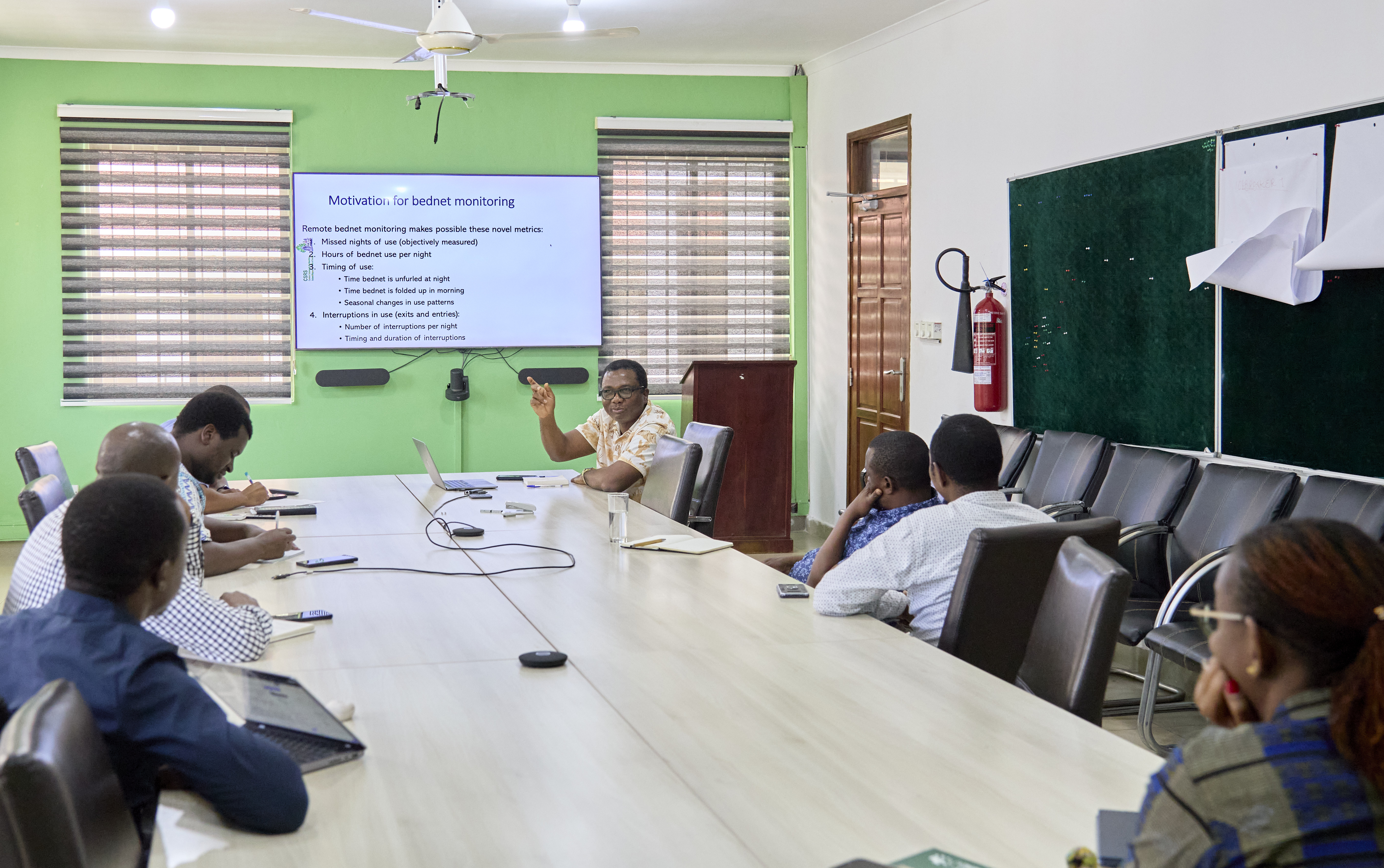
On 21 September 2026, the Ifakara Health Institute (IHI) engaged with Professor Benjamin Koudou of the Centre Suisse de Recherches Scientifiques en Côte d’Ivoire (CSRS) in a scientific talk exploring approaches to tackling malaria vectors and neglected tropical diseases (NTDs) across Africa.
Coordinated by Dr Yeromin Mlacha, an IHI research scientist, the session brought together researchers from across the Institute, both physically and virtually. It provided an opportunity for scientists working in malaria, vector control and other infectious diseases to exchange experiences from East and West Africa, reflect on lessons from different research settings, and explore potential areas for collaboration.
About Prof Koudou
Professor Koudou is Head of a research group on vector control and clinical research at CSRS, where he serves as Principal Investigator on projects addressing malaria and other diseases, including lymphatic filariasis, onchocerciasis and schistosomiasis.
His work has included research on insecticide resistance, indoor residual spraying, insecticide-treated nets, larval control and integrated vector management. He has also worked extensively on health systems strengthening, laboratory capacity and research training, with experience spanning countries including Côte d’Ivoire, Liberia, Burkina Faso, Guinea, Ghana, Cameroon, Nigeria, Mali, Sierra Leone and Ethiopia.
Sharing experience across research institutions
During the talk, Professor Koudou shared experiences from SCSR’s work in addressing malaria vectors and NTDs, providing an opportunity for IHI researchers to reflect on different approaches to disease control and research across African settings.
In her closing remarks, Dr Zawadi Mageni Mboma, Business Development and Partnerships Lead at Ifakara, thanked Prof. Koudou for taking the time to visit the Institute and share his expertise and experience with IHI researchers.
The engagement forms part of the Institute’s wider commitment to scientific exchange and knowledge sharing, bringing researchers together to discuss evidence, approaches and emerging opportunities for collaboration in addressing persistent public health challenges.