

#THS2026: IMARISHA brings healthcare workers’ voices into focus
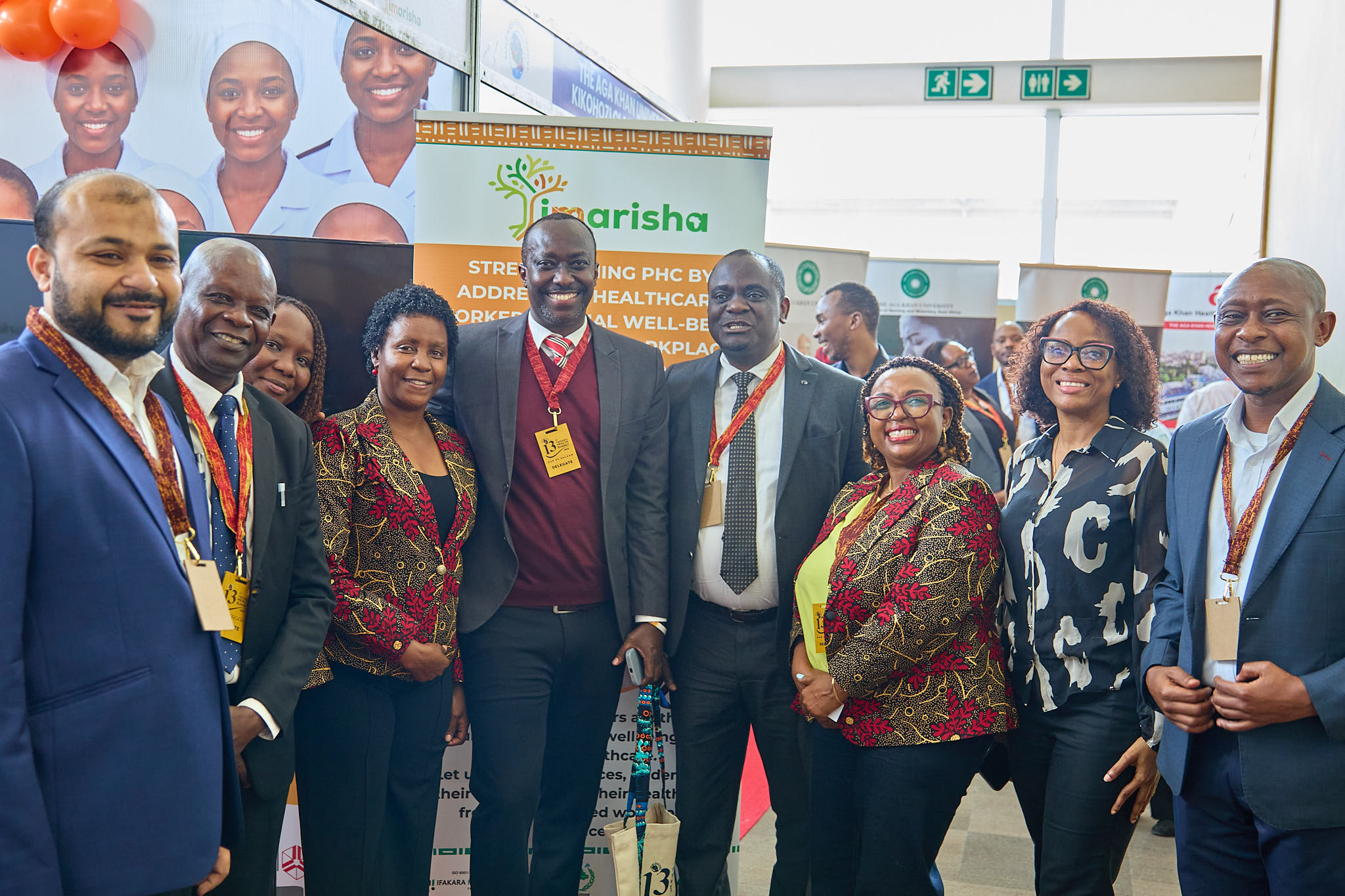
At the 13th Tanzania Health Summit, the Ifakara Health Institute (IHI) through the IMARISHA Project is bringing attention to an important part of strengthening health systems: the wellbeing and safety of the healthcare workers who deliver services every day.
At IHI’s booth, the IMARISHA Tanzania team, comprising Co-PI Dr Sally Mtenga, researchers Irene Mashashi, Lorraine Kiswaga and Dr Francis Levira, and Project Administrator Pamela Sao, is presenting preliminary findings on workplace violence among frontline healthcare workers. The presentation gives summit participants an opportunity to learn about experiences that are often less visible in discussions on strengthening health systems.
Various stakeholders had the chance to visit the IMARISHA booth, including the members of parliament, prime minister’s office regional and local government, ministry of health officials, representatives from NGOs, development partners and other scientist from mainland and Zanzibar.
The findings have sparked conversations among healthcare professionals, researchers, policymakers and other visitors about how health systems can better protect and support their workforce.
What the findings show
The preliminary finds from a survey involving 780 healthcare workers, of whom 321 (41.2%) reported ever experiencing workplace violence. Women reported higher levels of workplace violence (45.1%) than men (35.2%). Verbal abuse was the most reported form of workplace violence, experienced by 85% of those who reported workplace violence. Bullying was the second most common, reported by 23.7%. Shouting or yelling was the most common form of verbal abuse, reported by 53.2% of respondents, while 34.5% said they had experienced false accusations or had been blamed for issues at work. Among the 273 respondents who reported verbal abuse, 80.6% had experienced it within the previous six to twelve months (81.1% among females and 79.5% among males).
The main well-being concerns reported by healthcare workers, beyond gender-based violence, include understaffing, insecure working environments, poor housing conditions, limited mental health support, low salaries, heavy workloads, resource constraints, limited support from health managers, and psychological distress.
Together, these findings point to the need to co-create safe and supportive workplace environments that protect the well-being of healthcare workers. This is important not only for the workers themselves, but also because their well-being has implications for the quality of care they are able to provide to patients.
When we think about the quality of care for health service users, we must also think about the quality of life and working conditions of the healthcare providers, particularly those working at the primary healthcare level.
More than numbers
The findings have prompted strong reactions from visitors to the IHI booth, particularly because they focus on experiences that are not always captured in conventional discussions about health-system performance.
“This is not the traditional kind of study,” was one reaction from a booth visitor, reflecting the interest generated by research that looks beyond service delivery to the experiences of the people delivering those services. For visitors, the findings have raised questions about what support is available to healthcare workers when they experience violence, abuse or other challenges in the workplace. The discussions have also highlighted the importance of recognising the different experiences of women and men within the healthcare workforce.
What can health systems do?
Conversations at the booth have pointed to several areas where action could strengthen support for healthcare workers. These include making mental health support more accessible at the primary healthcare level, building healthcare workers’ capacity to support themselves and their colleagues, and strengthening institutional systems and structures that protect their wellbeing. Creating safe space for health care workers to speak about their concerns without a fear of being intimidated or penalized. Having concrete policies, regulations, and human resource guidelines that protect the health care workers from physical and non-physical violence.
For IMARISHA, these discussions are an important part of bringing evidence into conversations about health-system improvement. Dr Sally Mtenga, Co-Principal Investigator of IMARISHA, says the project is also about ensuring that healthcare workers’ experiences are heard. “IMARISHA being here represents the voices of unrepresented healthcare workers, especially women. Delivery of quality healthcare needs to be supported by the quality of life of the healthcare workers.”
Putting the workforce at the centre
The IMARISHA discussions contribute directly to the wider agenda of the Tanzania Health Summit, which is being held under the theme “Building Health Sovereignty and Strengthening Health Systems in a Changing Global Order.” As Tanzania works towards stronger and more resilient health systems, the experiences of the healthcare workforce need to remain part of that conversation. The IMARISHA Project is using the summit not only to share preliminary evidence, but also to create space for dialogue about what healthcare workers need to remain safe, supported and able to provide quality care. For Dr Mtenga, the message is clear: quality healthcare depends not only on strong systems, but also on the quality of life of the people who deliver it.