

MENTAL HEALTH: Peer support aids recovery by building hope, social connection
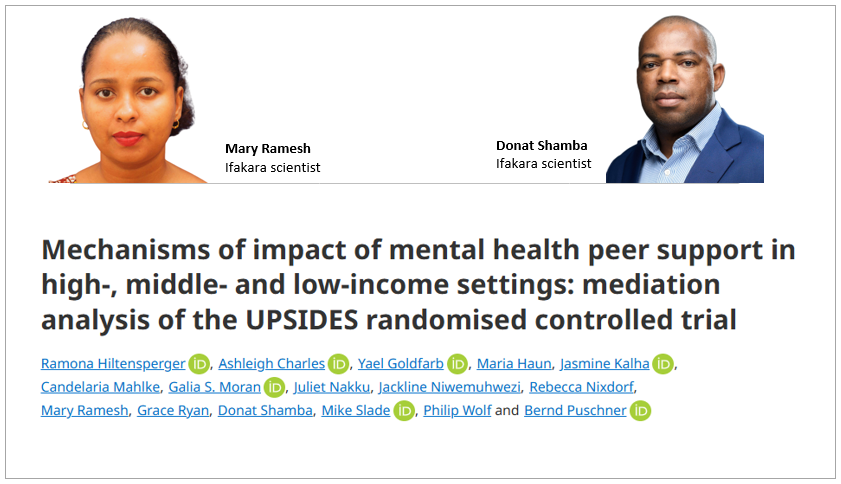
Peer support may help people living with severe mental health conditions recover by strengthening hope and social connection, according to new research involving 565 people across five countries.
The study found that peer support did not directly improve personal recovery or health and social functioning. Instead, it helped people recover from mental health challenges by giving them more hope and helping them feel less isolated and more connected to others.
The findings, published recently in Epidemiology and Psychiatric Sciences, come just ahead of World Mental Health Day on 10 October. This year’s theme, “Lived experiences heard: real voices, real change,” highlights the importance of listening to people with lived experience and involving them in shaping mental health support.
When experience becomes support
Peer support involves people with their own experience of mental health challenges and recovery supporting others facing similar difficulties.
The study was part of the UPSIDES trial, an international research programme exploring whether structured peer support can improve recovery among people living with severe mental health conditions.
Participants were recruited across six research sites in Germany, Uganda, Tanzania, India and Israel. Trained peer workers with lived experience provided structured support over six to eight months.
The study brought together participants from six research sites in Germany, Uganda, Tanzania, India and Israel whereby trained peer workers with lived experience provided support to participants over six to eight months with a 12-month follow-up.
Rather than simply asking whether peer support worked, researchers wanted to understand how it worked.
They examined three possible pathways: social inclusion, hope and empowerment.
The results pointed strongly to the first two.
People who received peer support experienced improvements in social inclusion and hope early in the intervention. These changes were then associated with improvements in personal recovery and health and social functioning.
Why hope, connection matter
The finding suggests that the value of peer support may lie partly in what happens between people.
Living with a severe mental health condition can involve isolation and exclusion. Peer workers, because of their own experiences, may be able to build relationships based on shared understanding, trust and reciprocity.
These relationships can help people feel less alone and more connected to others, while strengthening their sense of hope, supporting their recovery and everyday functioning.
What this means for mental health services
The researchers say the findings could help inform how peer-support programmes are designed and delivered.
Training for peer workers could place greater emphasis on building hope and strengthening social connections. Mental health services could also consider whether people experiencing low levels of hope or greater social exclusion might benefit most from peer support.
The researchers caution, however, that these pathways may not operate in exactly the same way in every setting. The study involved countries with different cultural and health-system contexts, while the sample was not large enough to assess setting-specific effects.
Evidence from Tanzania
Tanzania was one of the countries included in the study.
In Dar es Salaam, 41 participants were assigned to the peer-support intervention and 56 to the control group.
Mary Ramesh and Donat Shamba of the Ifakara Health Institute were among the study authors.
The researchers say the findings provide evidence that hope and social inclusion are important pathways through which peer support may contribute to recovery and improved functioning.
The message is particularly timely as World Mental Health Day brings attention to the value of lived experience in mental health care.
Read the publication here.