

TREATED NETS: Repeated washing reduces ability to kill mosquitoes
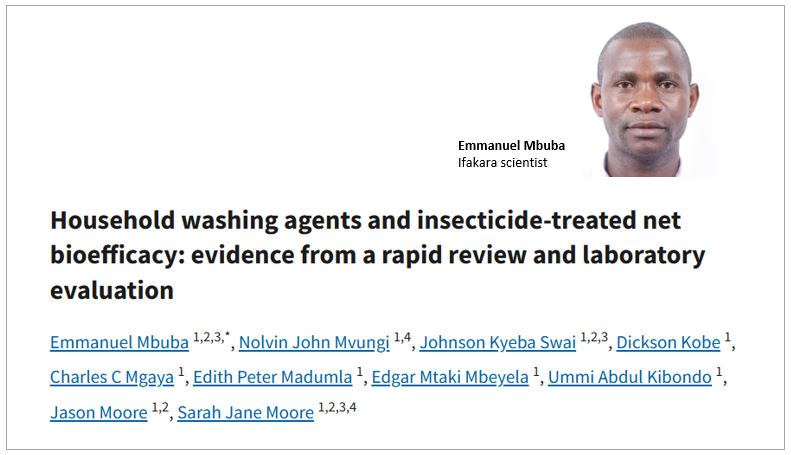
Repeated washing can gradually reduce the ability of insecticide-treated mosquito nets to kill malaria-carrying mosquitoes, regardless of the soap or detergent used, new research has found.
The study, led by scientists from Ifakara Health Institute (IHI), found that the more often mosquito nets were washed, the fewer mosquitoes they killed.
The findings highlight how everyday washing practices can affect the long-term effectiveness of mosquito nets, one of the most widely used tools for preventing malaria.
Published recently in MalariaWorld Journal, the study was led by Emmanuel Mbuba, alongside IHI colleagues Nolvin Mvungi, Johnson Swai, Dickson Kobe, Charles Mgaya, Edith Madumla, Edgar Mbeyela, Ummi Kibondo, Jason Moor and Sarah Jane Moore, all from the Institute's Vector Control Product Testing Unit.
What happens when mosquito nets are washed?
Insecticide-treated nets protect people against malaria in two ways: by creating a physical barrier against mosquitoes and by using insecticides to kill or affect mosquitoes that come into contact with them.
However, repeated washing can gradually weaken their mosquito-killing ability.
To investigate this, researchers reviewed 34 studies involving 30,887 household responses across Africa to identify the products people commonly use to wash mosquito nets.
They found that bar soaps were the most commonly reported washing products, accounting for 59% of responses.
The researchers then conducted laboratory tests using an insecticide-treated net washed with three products commonly used in Tanzania: Jamaa, Family and OMO. They compared these with water alone and a standard washing product recommended by the World Health Organization (WHO) for laboratory testing.
The nets were washed up to 20 times and tested against two types of malaria-carrying mosquitoes, including those resistant to commonly used insecticides.
More washes, fewer mosquitoes killed
The results showed that the nets killed fewer mosquitoes as the number of washes increased, regardless of the washing product used.
The researchers found no significant differences between the effects of the three household washing products and the standard laboratory product. However, nets washed with water alone killed more mosquitoes than those washed with the standard product.
Together, the findings suggest that while washing products can influence how well nets retain their mosquito-killing ability, repeated washing consistently reduces their effectiveness.
Why this matter
In Tanzania and other countries where malaria remains a major health threat, insecticide-treated nets are an important way of protecting families, particularly children and pregnant women.
The findings highlight the importance of properly caring for mosquito nets to help preserve their effectiveness for longer.
The researchers also caution that the laboratory tests involved only one type of mosquito net and a limited number of washing products. They recommend further studies involving different nets and washing conditions to confirm the findings.
Understanding how washing affects mosquito nets could help improve how they are tested and cared for, supporting efforts to maintain their effectiveness in the fight against malaria.
Read the publication here.