

MOSQUITO RESEARCH: Sustained control efforts can help eliminate malaria vectors
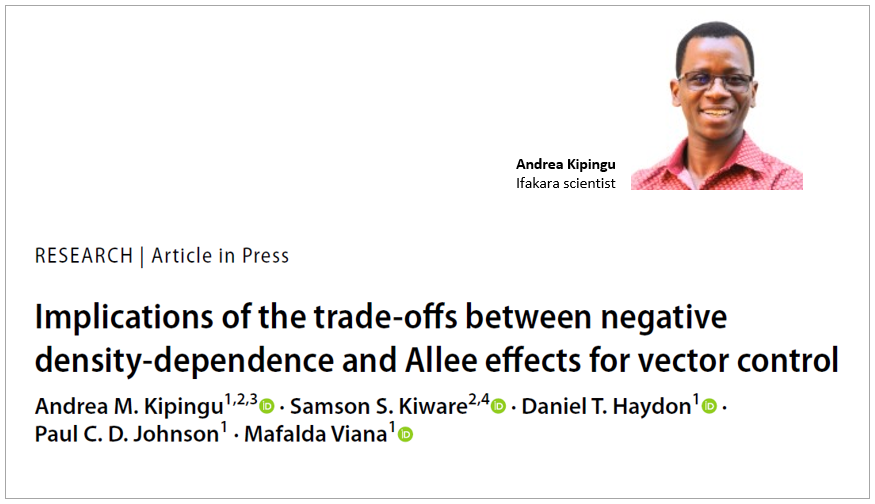
Keeping mosquito populations low for longer periods could make it harder for surviving ones to find mates and reproduce, potentially pushing them toward extinction, according to a new modelling study by scientists from Ifakara Health Institute and the University of Glasgow.
Published recently in Parasites & Vectors, the study offers insights into how natural processes that influence mosquito survival and reproduction could be used to strengthen malaria control efforts.
Why mosquito populations recover
The researchers investigated two biological processes that influence mosquito populations in different ways.
The first, known as negative density-dependence, explains why mosquito populations can recover after control interventions. When mosquito numbers are high, larvae compete for limited food and space in breeding sites, reducing their chances of survival. But when populations decline, competition decreases, allowing more larvae to survive and mosquito numbers to rebound.
The second process, known as the Allee effect, works differently. When mosquito populations become extremely small, surviving adults may struggle to find mates. This reduces reproduction and could eventually push populations toward extinction.
Sustained control makes a difference
Using computer simulations of the mosquito life cycle, the researchers examined how these two processes interact under different mosquito control scenarios.
They found that sustained interventions targeting mosquito larvae could reduce populations to levels where difficulties finding mates become important, increasing the likelihood of extinction.
In contrast, shorter-term interventions allowed mosquito populations to recover as reduced competition improved larval survival.
Why it matters for malaria control
The findings suggest that keeping mosquito populations low over extended periods could be important not only for reducing their numbers but also for preventing their recovery.
However, the researchers caution that mate-finding difficulties at low population densities have not yet been demonstrated in malaria mosquitoes. Further research is needed to establish whether these effects occur in natural populations.
If confirmed, the findings could help scientists develop more effective mosquito control strategies that take advantage of natural weaknesses in mosquito reproduction, supporting efforts to eliminate malaria and other mosquito-borne diseases.
Ifakara scientist led the study
The study was led by Ifakara scientist Andrea Kipingu, with Paul Johnson and Mafalda Viana from the University of Glasgow serving as joint senior authors. Samson Kiware from Ifakara and Daniel Haydon from the University of Glasgow also contributed.
Read the publication here.