

MALARIA: Tanzanian study reveals mosquito net access gaps, calls for targeted interventions
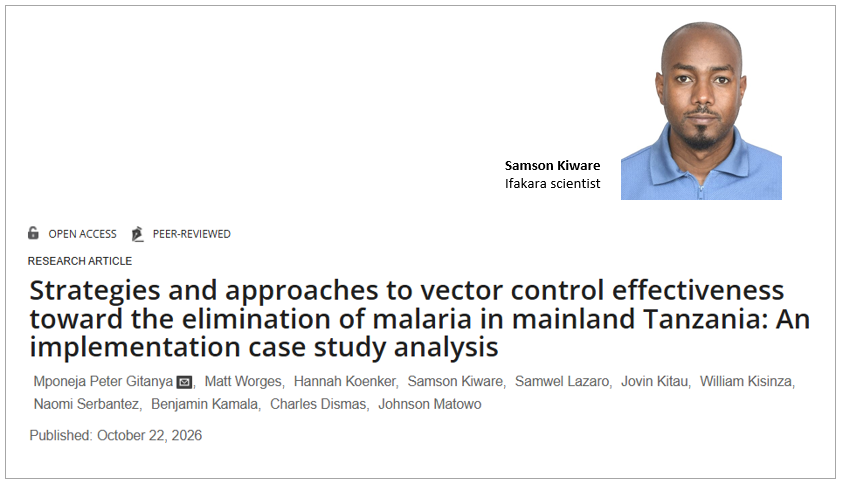
Despite years of progress in fighting malaria in Tanzania, many communities remain vulnerable to the disease, with new research revealing significant gaps in access to insecticide-treated mosquito nets across the country.
Published in PLOS Global Public Health, the study examined malaria trends and prevention efforts across 184 councils in all 26 mainland regions. It found that fewer than one in four councils had achieved recommended mosquito net access levels, highlighting the need for more targeted malaria control.
The research was led by Tanzania's National Malaria Control Programme (NMCP) and collaborating institutions. Ifakara Health Institute scientist Samson Kiware contributed to the study through data curation and formal analysis.
The researchers analyzed malaria case records from 2018 to 2022 from DHIS2, alongside mosquito surveillance data and prevention coverage to identify where interventions were working and where additional protection was needed.
Mosquito net access remains uneven
The analysis found that average estimated access to insecticide-treated nets stood at 65.2% in 2022, below the recommended target of at least 80%.
Of the 184 councils studied, only 43 (23.4%) had achieved sufficient access, while 32 (17.4%) had access below 50%.
Councils with higher mosquito net access generally reported fewer malaria cases, while those with lower access often experienced a greater disease burden.
The researchers also found that mosquito net coverage declined over time in areas relying mainly on mass distribution campaigns, as nets wore out or were lost. They recommend strengthening continuous distribution through schools, antenatal clinics and routine health services to maintain household protection.
Why mosquito nets alone may not be enough
Beyond access, the study identified mosquito behaviour and insecticide resistance as challenges to malaria control.
In areas dominated by Anopheles arabiensis, which frequently bites outdoors, people may remain exposed even when using treated nets.
Researchers recommend combining nets with complementary measures, including larviciding to kill mosquitoes before they develop into adults. They also call for wider use of newer-generation mosquito nets containing two active ingredients, alongside appropriate indoor spraying in areas experiencing insecticide resistance.
Malaria declining, but local risks remain
More than 70% of councils recorded declining malaria incidence between 2018 and 2022, signaling progress. However, differences between communities remained uneven.
In 2022, malaria incidence ranged from fewer than one case per 1,000 people in Mbulu Town Council, Manyara, to 346 cases per 1,000 in Kisarawe District Council, Pwani.
Rainfall also influenced malaria spread, particularly in rural communities where cases often increased after heavy rains.
Researchers recommend using climate data to time prevention efforts and strengthening mosquito surveillance, including monitoring the potential spread of Anopheles stephensi.
Using local evidence to strengthen malaria control
The findings underscore the importance of tailoring interventions to local conditions rather than applying identical approaches nationwide.
By combining information on malaria cases, mosquito species, insecticide resistance and prevention coverage, health authorities can identify high-risk councils and direct resources where they are needed most.
This approach could help the National Malaria Control Programme make better use of available resources, improve intervention coverage and respond more quickly to changes in malaria transmission.
Read the publication here.