

IFAKARA @70: Kikwete reflects on longstanding ties with Ifakara, calls for greater investment in African-led science
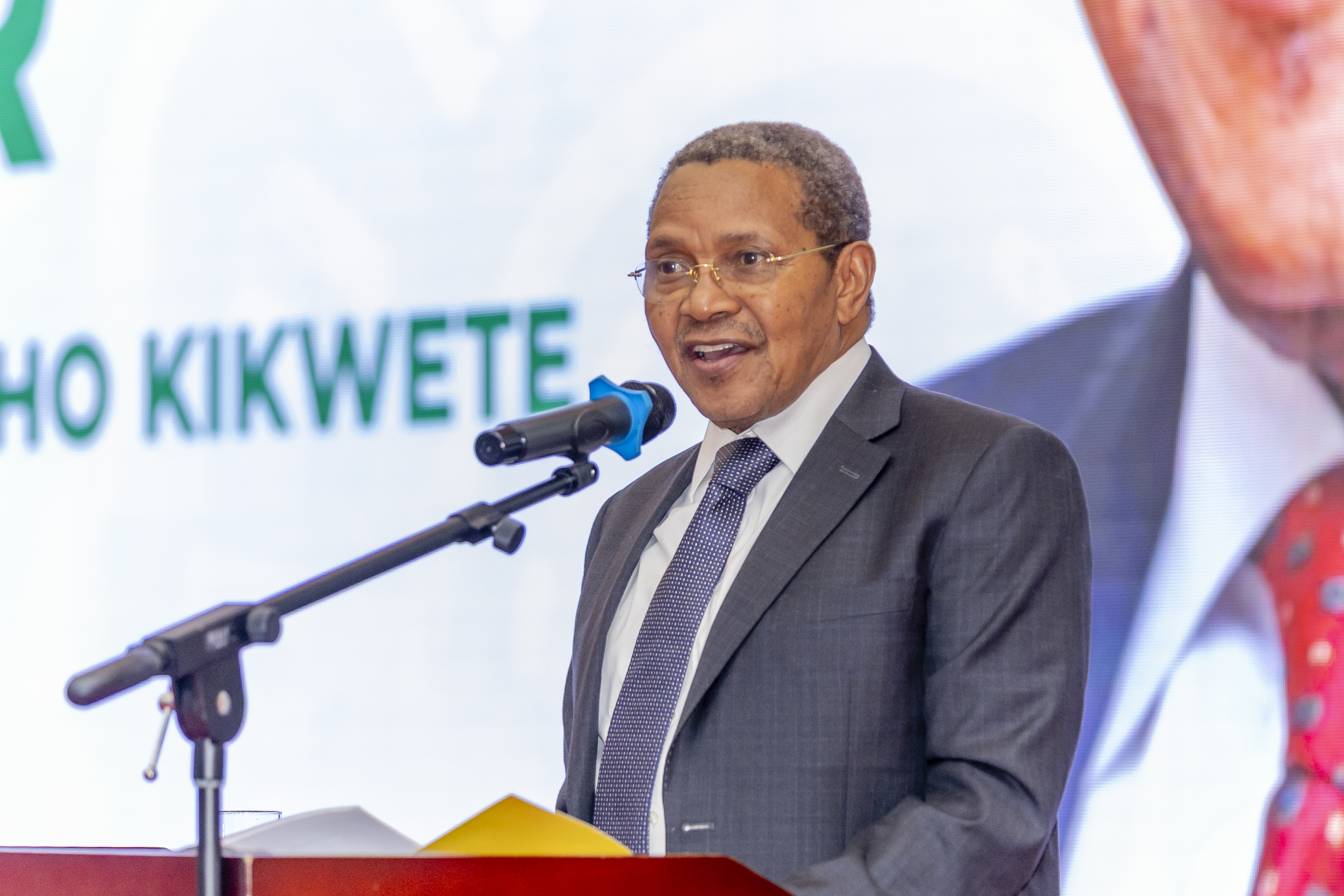
Former President of the United Republic of Tanzania, H.E. Dr. Jakaya Mrisho Kikwete, has expressed pride in his longstanding association with Ifakara Health Institute (IHI), applauding its remarkable 70-year journey from a research station in the Kilombero Valley to an internationally recognised institution advancing scientific research and public health in Tanzania and beyond.
Speaking at the 70th Anniversary Celebrations and 5th Ifakara Annual Scientific Conference, held at the APC Hotel & Conference Centre in Dar es Salaam, which he graced and officially opened, Dr. Kikwete praised the Institute's seven decades of scientific excellence, innovation and commitment to improving lives in Tanzania and beyond.
The celebrations, held under the theme “70 Years of Impact: Roots, Reach, and What’s Next,” bring together scientists, policymakers, development partners, former institutional leaders and other stakeholders to reflect on Ifakara's legacy and chart its future.
A longstanding relationship with Ifakara
Reflecting on his personal connection with the Institute, Dr. Kikwete recalled several engagements with Ifakara scientists and research programmes spanning nearly two decades.
His association includes a visit to the Ifakara Research Centre in 2008, followed by a visit to the Institute's Bagamoyo branch in 2013. In 2014, he met Ifakara scientists at the African Union Summit in Malabo, Equatorial Guinea, where he learned about their work on malaria vaccines.
He also visited an Ifakara field project in Kibiti, Rufiji, in 2020 and has engaged with researchers working on the Transmission Zero initiative, which is exploring innovative approaches to preventing malaria transmission through the development of malaria-free mosquitoes.
More recently, he held discussions with Ifakara scientists on the margins of the 81st United Nations General Assembly in New York.
Across these engagements, Dr. Kikwete said he had consistently been impressed by the ambition, dedication and scientific capabilities of Ifakara's researchers.
“What distinguishes Ifakara is not simply its laboratories, its equipment or its research facilities. It is the ambition of its people,” he remarked.
He emphasised that the Institute's achievements demonstrate the ability of Tanzanian and African scientists to generate knowledge and develop solutions to challenges affecting communities worldwide.
Celebrating scientific achievements and partnerships
Dr. Kikwete recognised Ifakara's contributions to malaria research, including early trials of insecticide-treated nets, research on malaria vaccines such as RTS,S and R21, and studies on spatial repellents.
He also acknowledged the Institute's growing contributions to maternal and newborn health through initiatives such as NEST360 and the Safe Beginnings partnership, which support efforts to improve healthcare services and prevent avoidable deaths.
Highlighting the importance of translating research into practical solutions, he stressed that scientific breakthroughs must ultimately benefit the communities that need them most.
“We must move from evidence to implementation, from innovation to access, and from scientific progress to measurable improvements in people's lives,” he said.
Dr. Kikwete further recognised the longstanding partnerships that have supported Ifakara's development, particularly the contributions of the Government of Tanzania, the Government of Switzerland, the Swiss Tropical and Public Health Institute, and other development partners.
He called for continued investment in African scientific institutions, research infrastructure and the next generation of scientists, noting that sustained partnerships are essential for lasting scientific progress.
Looking ahead to the next 70 years
Looking to the future, Dr. Kikwete encouraged Ifakara to strengthen its role in advancing Tanzania's National Development Vision 2050 through scientific research, innovation, capacity building and evidence-informed policymaking.
He emphasised the importance of African leadership and ownership in scientific research, urging institutions to pursue ambitious research agendas while ensuring that innovations respond to local needs.
He also paid tribute to the Institute's leadership, staff, researchers, alumni, communities and partners whose collective contributions have sustained its work over seven decades.
As Ifakara celebrates this historic milestone, Dr. Kikwete called on the Institute to build on its achievements while remaining committed to its founding mission of using science to improve health and transform lives.
“Its roots are deep. Its reach is wide. And its next chapter holds promise—not only for the Institute itself, but for Tanzania, for Africa and for the global community,” he said.
He concluded by congratulating the entire Ifakara family on 70 years of service and achievement, expressing optimism that the coming decades would bring even greater discoveries, stronger institutions and lasting improvements in people's health and well-being.