

NUTRITION: One-size-fits-all approach doesn’t work for school health programs
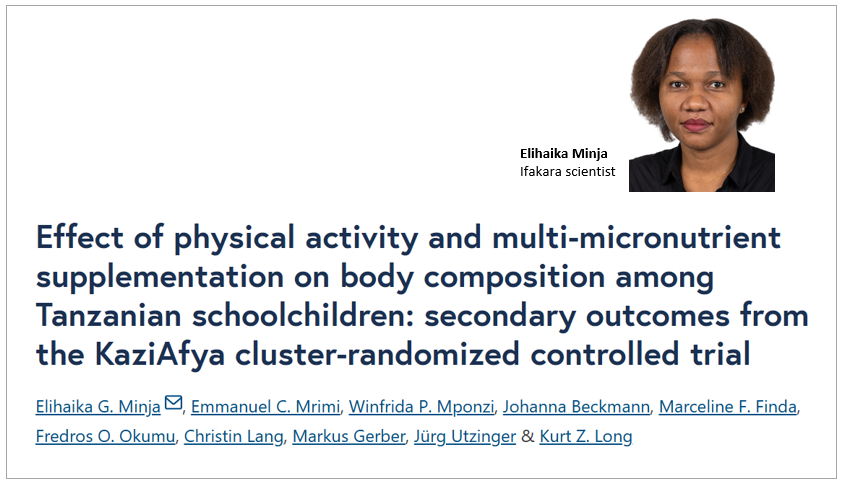
A new study in Kilombero, Tanzania, reveals that combining daily school-based physical activity with essential micronutrients may help children—particularly boys—develop healthier body composition.
Led by researchers from the Ifakara Health Institute, University of Basel, and Swiss TPH, the research assessed how simple school-centered interventions could address the double burden of malnutrition—the coexistence of undernutrition and rising rates of overweight and obesity in low- and middle-income countries (LMICs) like Tanzania.
Why these findings are critical
The results underline a key insight: children respond differently to the same health interventions, and gender plays a significant role in these outcomes.
- Boys who received both physical activity and micronutrient supplements gained muscle and lost fat—particularly around the trunk—suggesting improved long-term health potential.
- Girls, however, showed reductions in both fat and muscle mass, especially in the torso, raising concerns about unintended effects when physical activity is not matched with appropriate nutritional support.
This emerging evidence calls for tailored strategies, rather than one-size-fits-all solutions, especially in settings where malnutrition in all its forms remains a pressing public health issue.
Inside the research design
Published on BMC Public Health, the study drew from the KaziAfya project and involved 745 children aged 6–12 from four public primary schools. Over a period of 26 months, children were assigned to one of four intervention groups: Physical Activity (PA) only, Micronutrient Supplementation (MMNS) only; Both PA and MMNS and control group with no intervention
Researchers measured changes in fat mass (FM) and fat-free mass (FFM)—including muscle—to evaluate how the interventions affected body composition.
Patterns reveal gender-specific outcomes
While overall results didn’t show major changes across the entire group, clear gender-specific trends emerged upon deeper analysis:
- Girls in the PA group lost both fat and muscle mass, with greater decreases among those receiving both PA and MMNS—especially in the trunk region.
- Boys receiving MMNS alone gained muscle, particularly in the upper body. Those receiving both interventions experienced the most favorable outcomes, improving body composition by gaining muscle and losing trunk fat.
The case for gender-responsive programs
Although the study was not large enough to confirm statistically significant gender differences, the trends are striking and demand further research. The team suggests that these variations may be influenced by biological, behavioral, or social factors.
In countries like Tanzania—where structured physical activity in schools is often limited and access to balanced nutrition is inconsistent—this research offers a valuable direction. It reinforces the importance of scalable, school-based interventions that don’t just combine exercise and nutrition, but do so in ways that respond to children's differing needs.
Read the publication here.