

MOSQUITOES: New study maps breeding grounds in Zanzibar
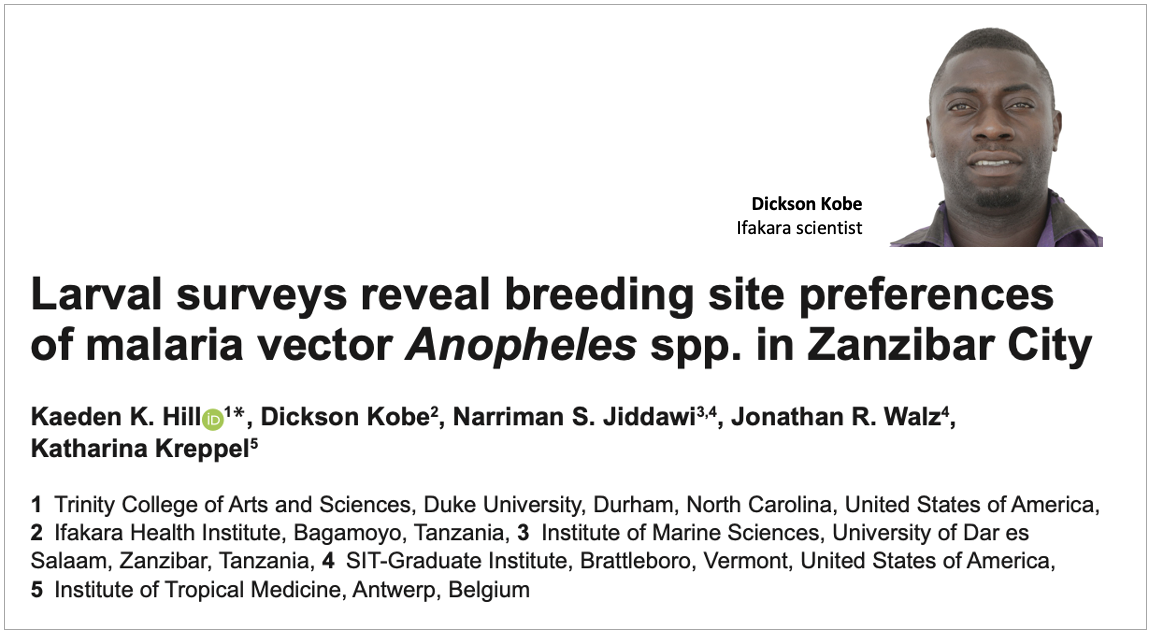
Ever wondered where malaria-carrying mosquitoes thrive in Zanzibar? A groundbreaking study, featuring contributions from Dickson Kobe of the Ifakara Health Institute in Tanzania, has mapped their breeding hotspots and uncovered the insects’ hidden preferences.
Published in PLOS One on May 16, this year, the research found that anopheles mosquitoes, the main carriers of malaria, tend to favour semi-permanent, concrete water sites with high oxygen levels.
However, after heavy rains, they also move into natural water bodies. This knowledge could transform how Zanzibar tackles malaria, allowing health authorities to target mosquito larvae before they grow into adults.
Why hunting mosquitos at the source matters
Malaria remains a stubborn challenge for Zanzibar. Despite decades of progress, the city still records an incidence of 1–2%, with cases rising slightly due to people bringing the parasite from mainland Tanzania.
As mosquito populations adapt and some become resistant to insecticides, traditional control methods like indoor spraying and bed nets are losing impact. Targeting mosquitoes at the larval stage could:
- Reduce adult mosquito numbers before they can spread disease.
- Focus control efforts on known breeding “hotspots” rather than spraying everywhere.
- Provide a new tool alongside existing malaria prevention strategy.
How the study was done
During the rainy season, researchers conducted systematic larval surveys across 16 semi-permanent/permanent water bodies and 30 temporary ones in Zanzibar City. They also analyzed water quality and environmental conditions, using statistical models to predict where Anopheles were most likely to be found.
Key findings include:
- Anopheles larvae were present in 56% of semi-permanent sites but only 10% of temporary sites.
- Preferred breeding grounds included artificial basins in parks and other tourist areas — a reminder that beautification projects can unintentionally help mosquitoes.
- Heavy rains expanded breeding into natural areas, showing the importance of seasonal monitoring.
A collaborative effort
While Ifakara’s Dickson Kobe played an important role in the study, Kaeden K. Hill from Duke University (USA) was the first author and Katharina Kreppel from the Institute of Tropical Medicine (Belgium) supervised it.
The research brought together experts from: Duke University (USA), Ifakara Health Institute (Tanzania); Institute of Marine Sciences, University of Dar es Salaam (Tanzania); SIT-Graduate Institute (USA) and Institute of Tropical Medicine (Belgium).
What’s next
The team recommends that Zanzibar use these findings to guide targeted larviciding — especially in semi-permanent concrete water bodies — and to maintain functional fountains, avoid flooding wetlands, and prevent stagnant water in artificial ponds. They believe hitting mosquitoes where they start life, can slow malaria transmission and protect communities.
🔗 Read the full study here: PLOS One – Larval Surveys in Zanzibar City