
MILESTONE: Tanzania, three other African countries record major progress in newborn care
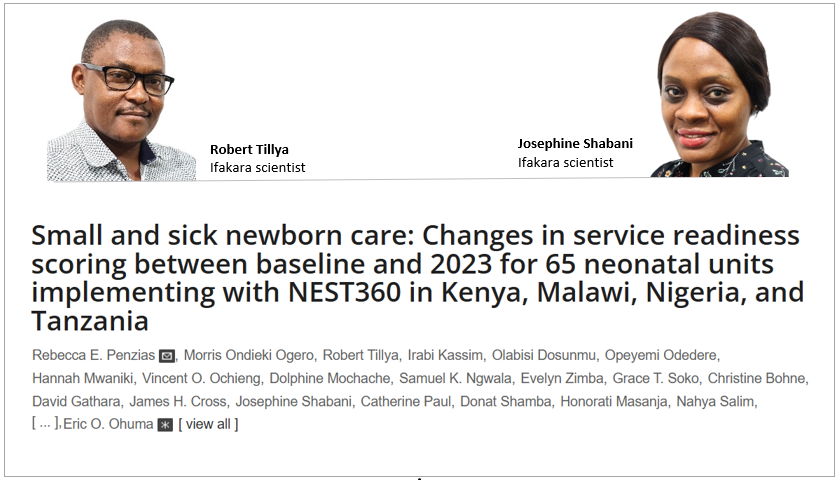
Hospitals in Tanzania, Kenya, Malawi, and Nigeria are improving their readiness to care for small and sick newborns (SSNC), according to a recent study published on PLOS Global Public Health. The research highlights major progress in key health system areas and advanced clinical treatments, with Tanzania and Nigeria showing the greatest improvements.
The study, conducted between 2019 and 2023, assessed hospital readiness using a specially designed Health Facility Assessment (HFA) tool across 65 neonatal units implementing with NEST360, a programme aimed at reducing inpatient neonatal mortality, in Kenya, Malawi, Nigeria, and Tanzania.
The tool developed collaboratively by NEST360, UNICEF, and ministries of health in the four countries allowed researchers to assess service readiness using two complementary approaches:
- Standards-based scoring: Evaluates hospital capacity across WHO’s six health system building blocks—service delivery, workforce, information systems, medical products, financing, and leadership/governance.
- Level-2+ clinical scoring: Focuses on hospitals’ ability to deliver WHO-recommended interventions that go beyond basic newborn care.
Researchers collected baseline data from September 2019 to March 2021 and followed up between May and July 2023, tracking changes over an average period of 31 months. This provided a substantial window to track changes in service readiness.
What key findings show
- Clinical interventions: Level-2+ scores improved from a median of 41% to 55%, a 14% improvement across the 65 hospitals.
- Health system readiness: Standards-based scores increased from 51% to 60%, a 9% improvement.
- Country differences: Hospitals in Tanzania and Nigeria led in improvements in clinical readiness, while Tanzanian hospitals showed the greatest gains in overall standards-based readiness.
“These results demonstrate the value of tracking hospital readiness over time,” said the study team. “They also show the need for continued investment in infrastructure and health system strengthening to ensure high-quality care for small and sick newborns.”
Why measuring hospital readiness matters
Small and sick newborns require specialized care, and improving hospital readiness is essential to reducing neonatal mortality. By measuring readiness across hospitals, countries can:
- Identify gaps in care and areas needing support
- Benchmark performance between hospitals
- Monitor progress toward national and global newborn health targets
Despite progress, large gaps remain
Despite progress, researchers caution that large gaps remain between current hospital readiness and international standards. They underscore the importance of continuous monitoring and targeted interventions in strengthening neonatal care.
“Our evaluation shows it is possible to improve newborn care readiness even over short periods and during challenging times, such as pandemics,” the authors said. They stress that achieving global newborn health targets will require sustained investment and ambition to ensure hospitals are equipped and ready to deliver high-quality care.
Ifakara, partners collaborate on the study
The study was led by the London School of Hygiene & Tropical Medicine (UK), with Rebecca Penzias as the lead author and Joy Lawn and Eric Ohuma as joint senior authors. Scientists from the Ifakara Health Institute in Tanzania, who are also part of the NEST360 team—Robert Tillya, Irabi Kassim, Christine Bohne, Josephine Shabani, Catherine Paul, Donat Shamba, Honorati Masanja, and Nahya Salim—also contributed.
Additional contributors came from Rice University (UK), Kamuzu University of Health Sciences (Malawi), Kenya Medical Research Institute (KEMRI)-Wellcome Trust, Aga Khan University, APIN Public Health Initiatives (Nigeria), University of Ibadan (Nigeria), and University of Lagos (Nigeria).
Read the publication here.