

LIFESTYLE: From playground to classroom – what really helps children learn
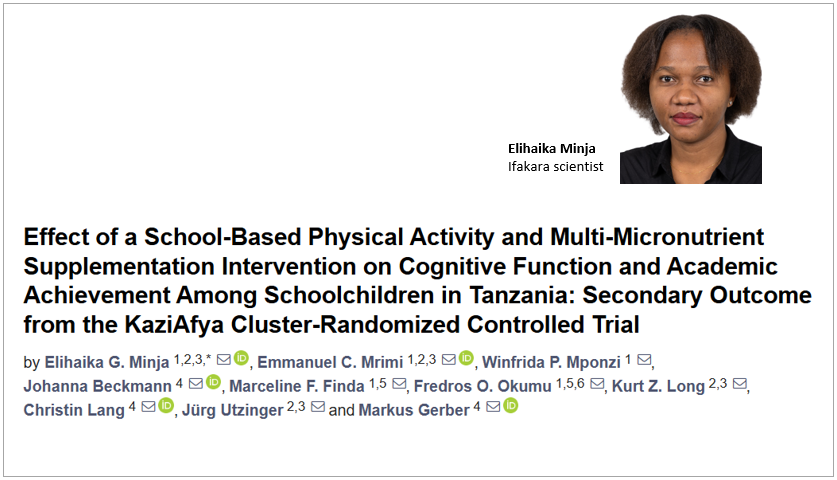
In four public primary schools in peri-urban Tanzania, researchers asked a simple question with a complex answer: can daily exercise and micronutrient supplements improve children’s thinking and school performance? The answer, according to the study, is not as straightforward as many might hope.
Led by Elihaika Minja from the Ifakara Health Institute, this collaborative effort included contributions from Emmanuel Mrimi, Winfrida Mponzi, Marceline Finda, and Fredros Okumu – all from Ifakara, alongside researchers from the Swiss Tropical and Public Health Institute (Swiss TPH) and the University of Basel.
Why this study matters
Childhood is a critical period for growth, both physically and mentally. Schools are often seen as ideal settings to nurture this development, and programs promoting good nutrition and exercise are widely encouraged. But how much do these interventions actually improve learning outcomes? This study provides some of the first insights from peri-urban Tanzania.
The study at a glance
The research, whose findings were published recently in the International Journal of Environmental Research and Public Health, followed 559 children aged 6 to 12 years over two years in Ifakara Town Council. It was part of the KaziAfya project, an initiative promoting healthier lifestyles among African schoolchildren.
Children were randomly divided into four groups:
- Physical activity only: Participated in structured exercise sessions.
- Micronutrient supplements only: Received daily multi-micronutrient tablets.
- Combined interventions: Exercise plus supplements.
- Control group: No interventions.
Cognitive skills were measured using computerized Flanker tasks, while academic performance was assessed through end-of-year exams in Kiswahili and Mathematics.
Unexpected findings
Contrary to expectations, the study found no significant improvement in overall cognitive function across the four groups.
- Children who received micronutrient supplements, either alone or with physical activity, performed better in Kiswahili.
- Those in the physical activity-only group scored lowest academically.
- No significant differences were observed in mathematics performance.
Why the gains weren’t bigger
Researchers suggest several factors could explain the results:
- Short intervention period—two years may not be long enough to show measurable cognitive changes.
- Ceiling effects—children may have already performed well at baseline.
- External influences—home environment, teaching quality, and other social factors likely played a role.
“Future studies in similar low-resource settings should consider longer supplementation periods, more challenging cognitive assessments, and strategies that address both education and health,” the authors wrote.
Lessons for schools and policymakers
The study underscores that while nutrition and exercise are essential for healthy growth, they may not be enough alone to improve classroom learning.
- Multi-layered approaches combining health, nutrition, and tailored educational strategies may be more effective.
- Schools should consider programs that go beyond supplements and exercise to address broader factors influencing academic success.
“Improving academic performance is more complex than just adding vitamins or exercise routines,” the researchers emphasized. “A child’s learning environment, teaching quality, and family support are equally important.”
>> Read the full research article, here.