

Principal Investigator: Donat Shamba
Project leader/ Coordinator: Donat Shamba
Project Administrator: TBC
Funding Partner: USAID through The University of North Carolina of Chapel Hill (UNC-CH)
Start date: Oct. 1, 2023
End date: Sept. 30, 2028
Global Health Program Evaluation, Analysis, Research and Learning - "GH PEARL"
The Global Health Program Evaluation, Analysis, Research and Learning (GH PEARL) project aims to effectively generate and utilize high-quality data and evidence with the goal of strengthen policies and program implementation to improve health and save lives in low and middle-income countries (LMIC).
GH PEARL project buildis upon the successful track record of the Measure Program, which has been involved in USAID-funded global health monitoring, evaluation, research, and learning (MERL) activities for more than 25 years, especially in the areas of family planning, reproductive, maternal, newborn, and child health and nutrition (FP/RMNCH+N), HIV/AIDS, malaria, and tuberculosis.
Implemented over a four-year timeframe, the GH PEARL project will facilitate effective generation and use of high-quality data and evidence to strengthen policies and program implementation to improve health and save lives in low- and middle-income countries.
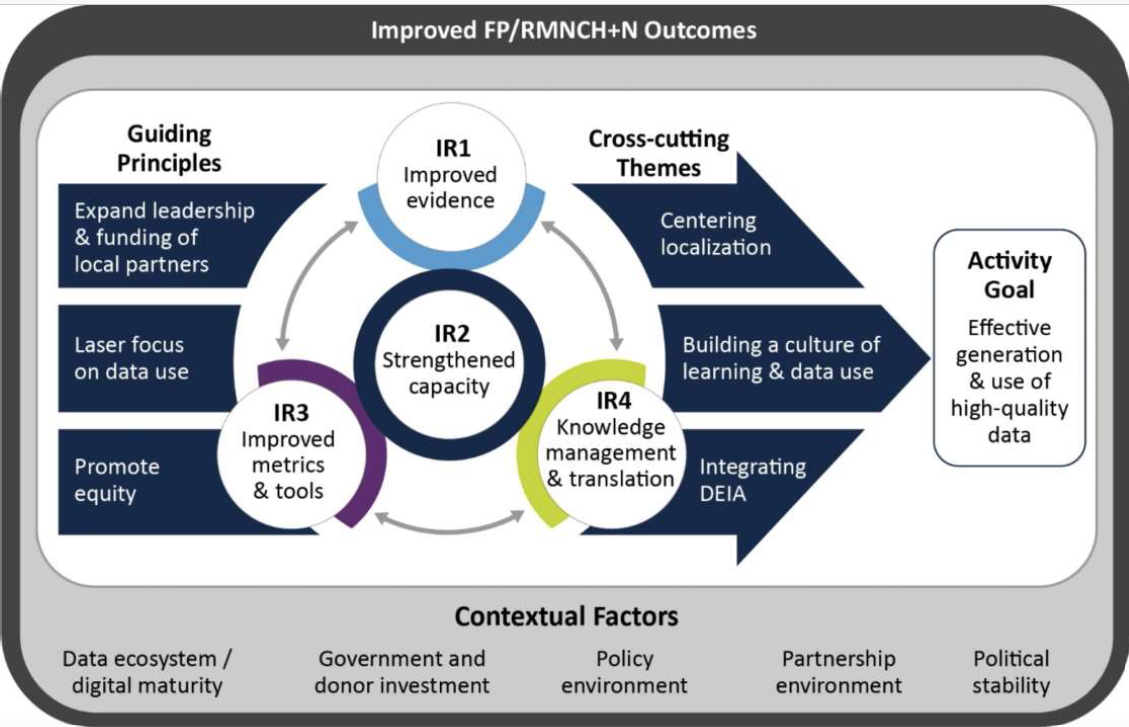
GH PEARL is driven by three key principles focused on localization - expand leadership and funding for local partners, prioritizing data utilization, and promoting equity. The global project encompasses the following four primary objectives:
- Improved evidence: Improve the quality, availability, and timeliness of evidence and data for the purpose of learning and taking action
- Strengthened capacity: Strengthen the capabalities of local organizationz and their systems to produce, analyze, visualize, interpret, report, disseminate, and use high-quality data for decision-making
- Improved metrics and tools: Design or improve, test, and apply robust metrics, methods, guidance and tools for MERL
- Knowledge management and translation: Conduct knowledge synthesis, translation, and management to inform decision-making
GH PEARL is a consortium led by the University of Carolina (UNC) in collaboration with GEMNet-Health; Ifakara Health Institute; International Centre for Diarrhoeal Disease Research, Bangladesh; Palladium International, LLC; Q2 Impact; and Tulane University.
The GH PEARL consortium will work together to assist countries in identifying and adopting proven and innovative approaches to improve the quality, coverage, and equity of FP/RMNCH+N interventions at the global, regional, national, and subnational levels.