

MALARIA: Hidden infections driving disease spread in Tanzania
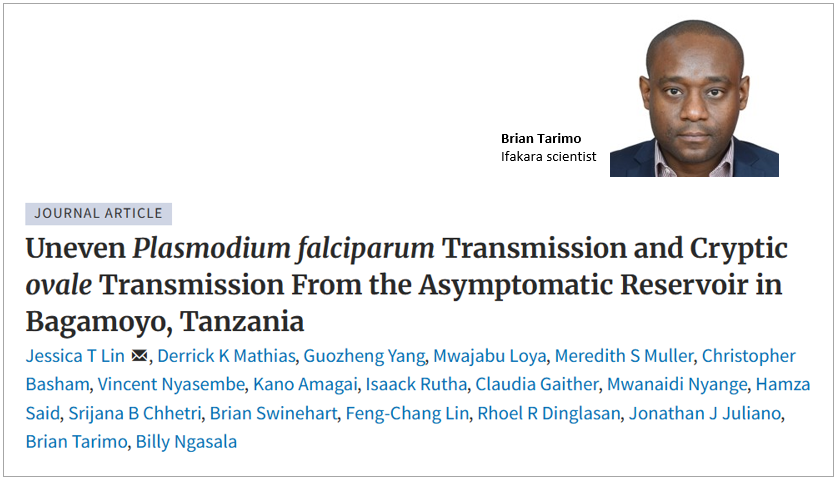
A new study in Bagamoyo, Tanzania has found that people who carry malaria parasites but do not feel sick are a major source of ongoing transmission, helping to keep malaria spreading in communities.
The research, published in The Journal of Infectious Diseases, shows that these “silent” or asymptomatic carriers can infect mosquitoes, which then pass malaria on to others. The study also suggests that transmission is not limited to plasmodium falciparum, the most common malaria parasite, but may also involve plasmodium ovale, a lesser-known species.
Why these results matter
Most malaria control programs focus on diagnosing and treating people who are visibly sick. However, this study shows that asymptomatic carriers can continue to infect mosquitoes and keep malaria circulating in the community.
The finding that low-density infections—often missed by rapid diagnostic tests (RDTs)—can still infect mosquitoes presents a major challenge for malaria elimination efforts. If these hidden infections are not addressed, standard testing and treatment strategies may not be enough to stop transmission.
Moreover, the discovery of plasmodium ovale is also important. Although less common and less severe milder than P. falciparum, P. ovale can hide in the body and return months later, making it difficult to detect and control using current surveillance systems.
What did the study find?
Researchers carried out detailed mosquito feeding experiments with nearly 500 residents in Bagamoyo district who tested positive for malaria but showed no symptoms. The participants were then exposed to Anopheles gambiae mosquitoes to feed on their skin to see if the insects would become infected.
The study, led by scientists from Tanzania and the United States, revealed several key findings:
- About 22% that is 1 in 5 people carrying malaria parasites without symptoms were able of infect mosquitoes.
- Individuals with very low levels of malaria parasites, too low to be detected by routine tests, could still transmit the parasite to mosquitoes.
- A small number of infected people caused most transmission. The top 3% of participants infected more than half of all mosquitoes that became infected.
- School-age children (6–15 years) contributed to nearly 58% of infected mosquitoes, highlighting a critical transmission group.
- The study also detected Plasmodium ovale, a lesser-known malaria parasite that can hide in the body and cause illness months later.
What are the next steps forward?
The researchers say malaria control efforts need to go beyond treating only people who feel sick. Suggested next steps include:
- Using more sensitive testing methods to identify hidden infections
- Targeted interventions to identify and treat infectious but symptom-free individuals
- Community-wide treatment approaches, such as periodic mass drug administration and enhanced molecular surveillance (PCR)
- Focused efforts among school-age children, who were shown to play a key role in transmission
- Improved tracking of all malaria species, not just the most common one
Further research is also needed to understand how asymptomatic infections change over time and how best to reduce their contribution to malaria transmission, particularly in areas where multiple malaria species are present.
Contributors to the study
The study was led by scientists from Tanzania and the United States. Jessica T. Lin of the University of North Carolina at Chapel Hill, USA, served as the lead author. Brian Tarimo, a senior scientist at the Ifakara Health Institute, also contributed to the research. Additional contributors were from the University of Florida, USA, and the Muhimbili University of Health and Allied Sciences, Tanzania.
Read the publication, here.