

MALARIA: New generation mosquito bed nets work — but everyday use reduces their impact
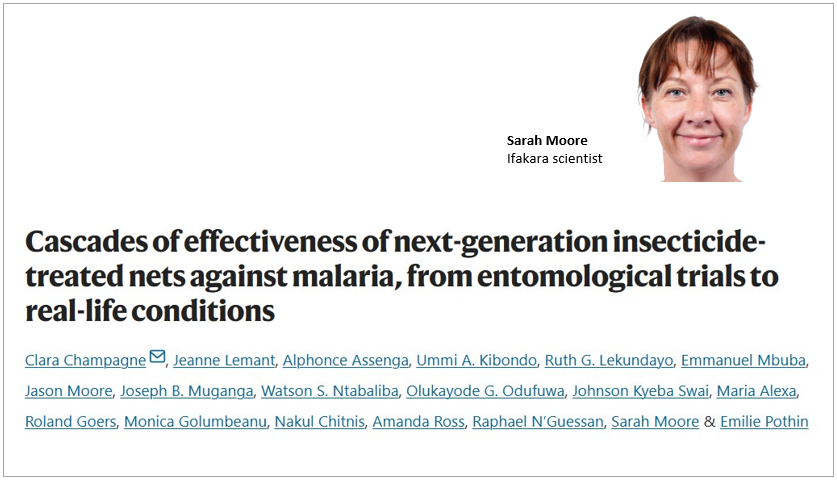
New-generation mosquito nets designed to overcome insecticide resistance can help reduce malaria, but their impact in real life is much lower than expected once everyday use and wear are considered, researchers say.
The study, published in Nature Communications, looked at how modern insecticide-treated nets perform — from when a mosquito first touches the net to their overall effect on malaria infection in communities.
Why this study matters
Countries across Africa are investing heavily in next-generation bed nets to fight malaria and insecticide resistance. This study does not question the value of these nets — but it shows that technology alone is not enough. Better net quality, regular use, community education, and ways to protect people from mosquito bites outside sleeping hours are all needed.
The findings highlight that malaria control efforts must focus not only on better tools, but also on how people live, sleep, and use protection.
What the researchers actually did?
Researchers from Switzerland and Tanzania analyzed two widely used next-generation nets — Interceptor® G2 and Olyset® Plus — which were developed to tackle growing resistance to traditional pyrethroid insecticides.
They found that protection is lost at several stages, a process they call a “cascade of effectiveness”, where strong results in the laboratory steadily weaken in real-world use.
Effective in trials, weaker in daily life
In controlled trials, the nets performed well. They reduced mosquito biting, killed insecticide-resistant mosquitoes, and lowered malaria transmission better than older, pyrethroid-only nets.
However, when researchers factored in real-world conditions — such as how often people actually sleep under nets, how quickly nets wear out, and when mosquitoes bite — the overall impact dropped sharply.
Over time, holes in nets, repeated washing, and reduced insecticide strength further weakened their protective effect.
Studying real communities
To better understand this gap, scientists combined mosquito data from trials in Tanzania, Benin and Côte d’Ivoire with malaria case data from community trials in Tanzania, Uganda and Benin.
Using a mathematical model, the researchers found that beyond mosquito-related factors, everyday realities — including how long nets last, how often they are used, and how much time people spend in bed — play a critical role in how well bed nets work.
They added that the findings are not limited to one country, noting “Our results obtained for Tanzania can be extended to other settings through a dashboard that allows users to explore net selection based on local factors that influence effectiveness.”
Ifakara, Swiss scientists lead the study
The study was led by scientists from the Swiss Tropical and Public Health Institute (Swiss TPH) and the Ifakara Health Institute.
From Ifakara, contributors included Alphonce Assenga, Ummi Kibondo, Ruth Lekundayo, Emmanuel Mbuba, Jason Moore, Joseph Muganga, Watson Ntabaliba, Olukayode Odufuwa, Johnson Kyeba Swai, and Sarah Moore.
The study was spearheaded by Clara Champagne, Jeanne Lemant and Emilie Pothin from Swiss TPH and Sarah Moore of Ifakara.
Read the publication, here.