

MATERNAL HEALTH: Study finds low-dose calcium just as safe for pregnant women as high-dose
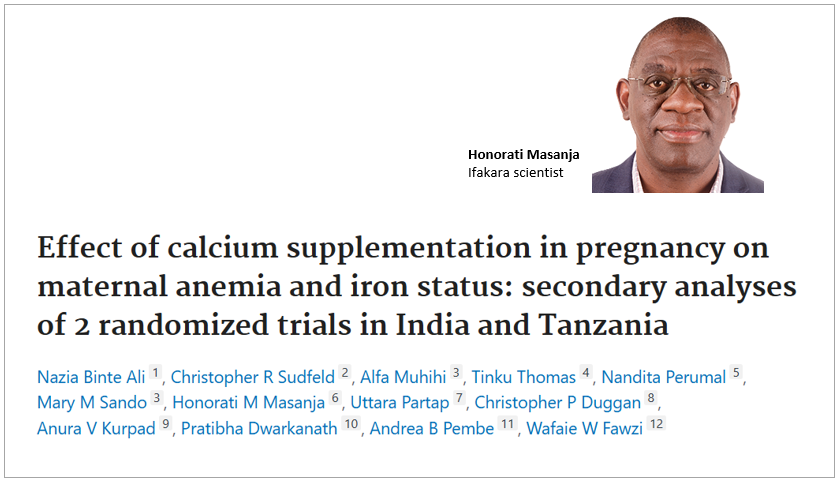
A large trial in Tanzania and India has found that low-dose calcium supplements taken during pregnancy are just as safe as the higher recommended dose when it comes to anemia and iron levels.
The study involved more than 22,000 pregnant women and compared 500 mg of calcium daily with the standard 1,500 mg dose commonly used to prevent preeclampsia — a serious pregnancy condition linked to high blood pressure that can threaten mothers and babies.
Published recently in The American Journal of Clinical Nutrition, the research was led by scientists from the USA, India and Tanzania, including Honorati Masanja of Ifakara Health Institute.
Lower dose proves equally safe
For years, scientists have questioned whether high doses of calcium could reduce iron absorption and increase the risk of anemia in pregnancy.
To investigate this, researchers carried out two large randomized clinical trials in Tanzania and India. More than 11,000 women in each country were assigned either 500 mg or 1,500 mg of calcium daily.
They found no meaningful differences between the two groups in hemoglobin levels, anemia, iron deficiency anemia, or iron stores in late pregnancy.
Researchers found no meaningful differences between the two doses in rates of anemia, iron deficiency anemia, hemoglobin levels or iron stores during the final stage of pregnancy (weeks 28 to 40).
The results also support earlier evidence that low-dose calcium is just as effective as high-dose in preventing preeclampsia, while being simpler for pregnant women to take, particularly in low-resource settings.
Why the findings matter
These findings could have important implications for maternal health programmes by simplifying supplementation during pregnancy. High-dose calcium supplementation often requires pregnant women to take several tablets daily, which can increase costs and reduce adherence to treatment. A lower-dose option could ease the burden on pregnant women.
Researchers urge future studies to examine whether combining calcium and iron supplements into a single tablet could further improve convenience and adherence without affecting iron absorption.
Overall, study adds to growing evidence that supports a shift toward simpler, more practical approaches to maternal nutrition without compromising safety or effectiveness.
Read the publication here.