
OPTIMISM: Scientists are confident that malaria will be eliminated “in our lifetime
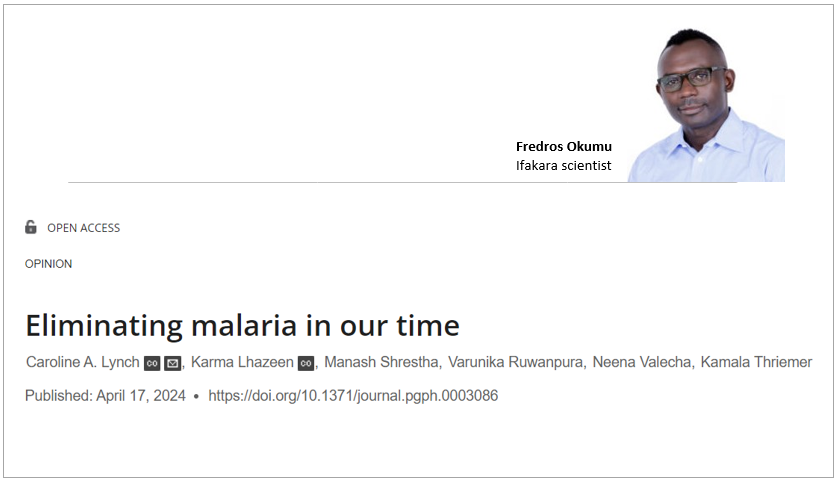
Is the elimination of malaria achievable in our lifetime? Public health scientists have shed light on the potential of eradicating malaria within our lifetime, and the challenges hindering this dream, in a recent publication on the PLOS Global Public Health journal.
Seasoned Ifakara Health Insitute scientist, Dr. Fredros Okumu edited the article in which scientists underscore the importance of working together and adopting innovative strategies to accelerate progress in the fight against malaria.
The scientists, from Switzerland, Singapore and Australia, with contributions from the Ministry of Health in Bhutan, emphasize that through global collaboration within the malaria community, there exists a real potential to “eliminate malaria within our lifetime.”
“We could be on the cusp of history—eliminating malaria in our lifetime. But to meet the World Health Organisation’s (WHO) Global Technical Strategy targets and stay on course for elimination, at least 30 more countries need to achieve their malaria elimination goals by 2030,” they note in their article.
The article also outlines some challenges associated with achieving this goal and suggests key recommendations aimed at speeding up the process.
Empowering nations with tailored solutions
These recommendations include greater country ownership and empowerment, whereby countries are given more control and responsibility over decision-making processes tailored to their specific contexts.
Additional recommended strategies included a proactive approach toward risk management in the implementation of new interventions, streamlined processes and system innovations to shorten the timeframe for introducing new tools, such as drugs and diagnostic tests, and proactive planning and readiness for delivery of new interventions.
The scientists stress the importance of integrating these strategies into the global health system to sustain malaria elimination efforts.
Urgent action in face of emerging threats
Moreover, the scientists caution about the looming threat of artemisinin resistance and the impact of climate change on health systems, underlining the urgency of accelerating malaria elimination efforts and the need for integrated planning and collaborative action within the global health community to seize the opportunity for malaria eradication.
“There is hope − the COVID pandemic accelerated new technologies now being used or developed for malaria prevention and treatment–long-acting injectables, malaria vaccines and monoclonal antibodies—and the vector control pipeline looks promising,” they noted.
“Advances in molecular surveillance enable us to better detect changes in the parasite earlier. We could accelerate and sustain malaria elimination by changing the global health system, strengthening country ownership, embracing risk, speeding up the implementation of process innovations, and improving readiness for new tools,” added the scientists.
Read the article here: