
ORAL HEALTH: Study highlights the impact of oral pain on the wellbeing of Tanzanian adolescents
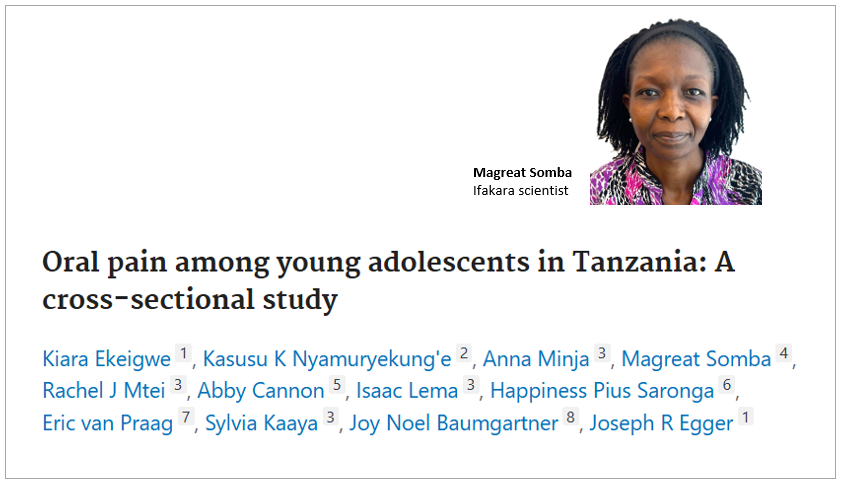
A significant number of adolescents in Tanzania experience oral pain that affects their physical and emotional well-being, according to a new study involving scientists from Tanzania and the United States, including Ifakara Health Institute researcher Magreat Somba.
Published recently in the Community Dental Health journal, the study highlights the need to strengthen oral health promotion and preventive care among young people, a group often overlooked in oral health research despite being at a critical stage of development.
Why it matters
Oral pain during adolescence can have lasting consequences beyond toothaches or dental problems. It can make it difficult for young people to eat, sleep, concentrate in class, socialise with friends, and participate fully in everyday life. Left untreated, oral health problems can affect school performance, mental well-being, self-confidence, and overall quality of life, while increasing the need for more complex and costly treatment later.
By highlighting the hidden burden of oral pain among Tanzanian adolescents, this study provides timely evidence to support stronger prevention, early detection, and accessible oral healthcare, helping young people stay healthy, learn better, and reach their full potential.
One in eight adolescents reported oral pain
The study involved more than 1,000 school-going adolescents in 20 government primary schools across Dar es Salaam and the Coast Region. Researchers found that 13% (about one in eight) reported experiencing oral pain in the previous month, who were also more likely to report discomfort, anxiety, and symptoms of depression compared with those who did not experience pain.
Researchers say the findings demonstrate that oral health problems extend beyond the mouth, affecting young people’s overall well-being, daily activities, and quality of life.
"Oral diseases are among the world's most common non-communicable diseases, yet information on adolescent oral health in many low-resource settings remains limited," the researchers noted.
Although the study found few differences by age or sex, it identified possible associations between oral pain and district of residence, parental occupation, and household food insecurity. These findings suggest that social and economic factors may influence oral health, although further research is needed to better understand these relationships.
Opportunity to strengthen prevention
The findings come as Tanzania expands healthcare access through universal health insurance and implements the National Oral Health Strategic Plan (2025–2030). The researchers say the evidence provides an opportunity to place greater emphasis on adolescent oral health by strengthening prevention and early treatment.
They recommend integrating oral health education, routine dental screening, and referral services into school health programmes while expanding outreach through community services and mobile dental clinics for adolescents who are out of school.
Investing in healthier futures
While the study relied on adolescents' self-reported experiences of oral pain rather than clinical dental examinations, the researchers say it provides important evidence from an area that remains under-researched in Tanzania.
"Primary prevention is important for oral health, especially in the adolescent age group, and reaching adolescents before their oral health concerns progress is critical," the authors concluded. The authors added that implementation of Tanzania’s National Oral Health Strategic Plan (2025–2030) presents an important opportunity to strengthen school-based programmes and expand access to preventive oral healthcare for adolescents.
Read the publication here.
We're a Registered Charity Organization in Tanzania
Ifakara Health Institute (IHI) is officially recognized as a charitable organization under the Income Tax Act. Certification issued on 20 March 2025 and valid until 31 December 2030.
Ifakara Health Institute (IHI) is officially recognized as a charitable organization under the Income Tax Act. Certification issued on 20 March 2025 and valid until 31 December 2030.