

IFAKARA WOMEN: Full-Circle Impact
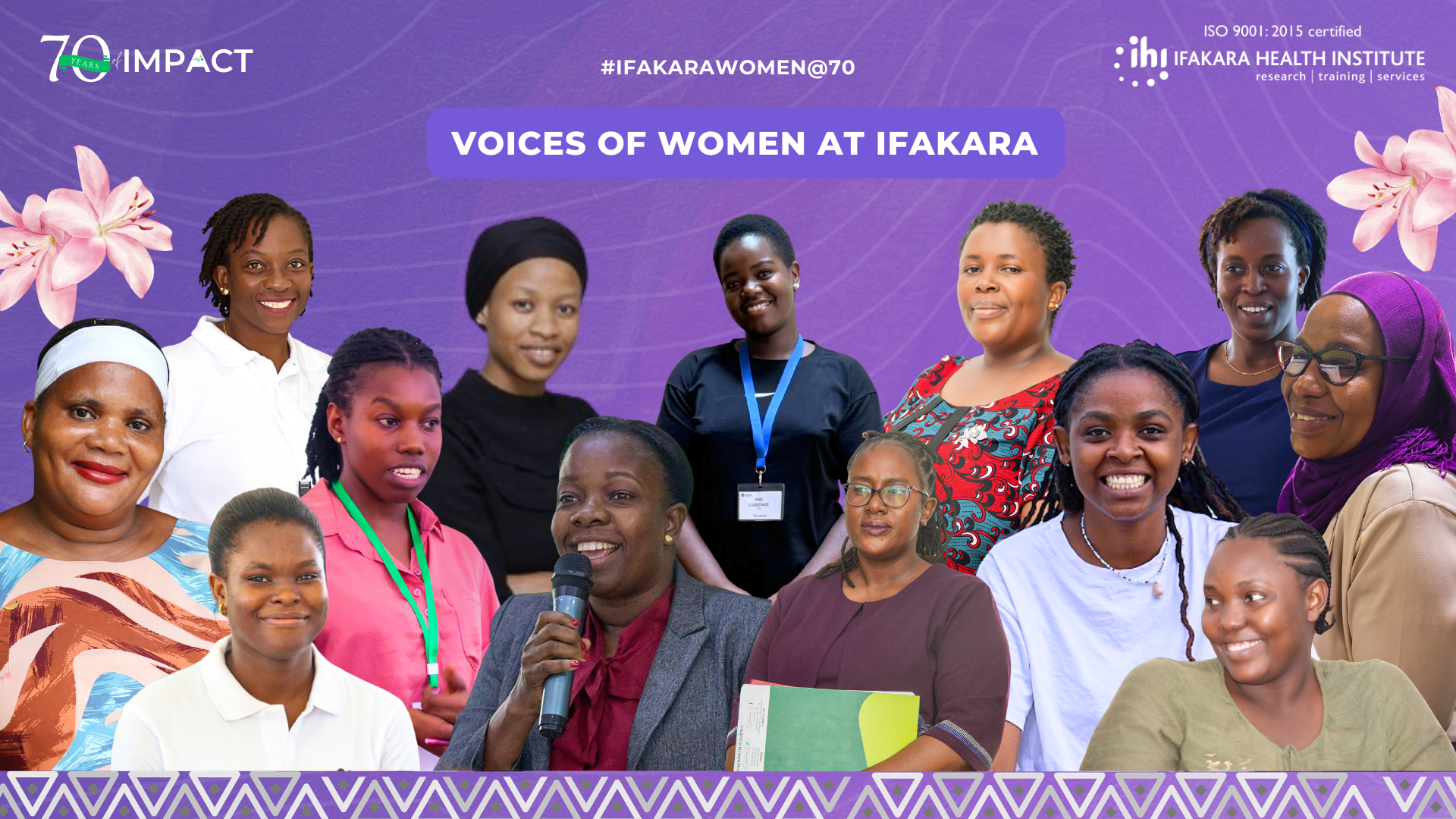
>> Writes Jane Moshi
This Women’s Day, I conducted a little study of my own, gathering insights into what makes the incredible women of Ifakara Health Institute boldly shape science in Tanzania. From lab benches to households, their work guides research, informs solutions, and ensures interventions are practical, trusted, and sustainable.
Women as creators and supporters of science
To understand how science actually works in the real world, you have to look at the entire value chain, starting with the culture that supports it. Leadership without women is simply incomplete. Dr. Grace Mhalu, Head of Health Systems, explains: “Women bring empathy, fresh perspectives, and consultative leadership. When women are at the table, organizations thrive.”
To her, leadership is not just about titles, but the ways women influence every decision, different approaches and the final outcome.
Visibility matters just as much as position. Togani Mhoma, our librarian, reminds us: “You can’t become what you don’t see.” For young women at the institute, seeing role models succeed is not just inspiring—it shows them what is possible.
And it’s not only high-profile roles that matter. Take Agnes Eliya, our receptionist. Her warm smile welcomes every visitor, setting the tone for connection, morale, and teamwork. At Ifakara, every role matters—because creating science isn’t just about experiments or leadership titles. It’s about building a culture where all women support, lead, and shape progress together.
Equality Strengthens the End-to-End Impact
To sustain this, the institutional framework must be as rigorous as the science itself. Policies matter, but action matters more. Doris Rushekya, our HR Manager, emphasizes mentorship, flexible work arrangements, and leadership training as key enablers for women.
Francisca, Head of Chronic Disease Clinic of Ifakara (CDCI), stresses dismantling structural and cultural barriers.
Adeline Charles, Branch Manager at our Bagamoyo offices, sums it simply: fairness builds trust, teamwork, and innovation. When women thrive, the entire research process benefits—from conception to delivery.
Every Role Matters
From high-profile scientists to behind-the-scenes caretakers, every contribution counts. Grace Urio, lovingly referred to as “Da Grace” our caretaker in Dar es Salaam, has been with the institute since 2009. She joined as a young girl and is now a mother of four. She says that Ifakara has given her the opportunity to thrive both as a professional and as a mother, particularly appreciating the institute’s supportive maternity and care policies.
Young scientists like Aidi Lugenge remind us that every question, observation, and experiment can shape science and transform communities. Women are at the center of this cycle—connecting discovery to application, knowledge to impact, and science to the lives it is meant to serve.
Breaking the "Boys' Club" of Innovation
Once that culture is set, the work of innovation begins. Innovation grows stronger when women are at the helm. Perpetua Matozi, the Institute’s sole female ICT professional, highlights how diverse perspectives allow teams to tackle problems from multiple angles, creating technological solutions that actually work.
Hope Peter, a Biomedical Engineer, reminds us that when women thrive in spaces historically dominated by men, they don’t just succeed—they open doors for others, challenging stereotypes.
Leaders like Sarah Mswata, our Bagamoyo lab manager, demonstrate every day that women can innovate, make critical decisions, and shape science from the ground up.
Women Ensure Science Reaches Communities
Yet, science remains a theoretical endeavor until it reaches the community. Winfrida Mponzi, who works in community engagement for vector control, puts it simply: “Women are at the heart of households—they care for family members, manage daily routines, and put health practices into action, from using bed nets to keeping homes clean. By listening to women and involving them in co-creating solutions, we gain insight into local realities, sleeping arrangements, and daily habits that affect malaria risk.
When women are part of the conversation, interventions become culturally appropriate, trusted, and more likely to be adopted. Science stops being a one-way street—it becomes a shared tool in the fight against disease.
The End-to-End Impact
Ultimately, it made me reflect on the full-circle impact women have—from pioneering research and driving innovation to supporting communities and championing interventions. When women lead, science ceases to be a one-way street.
By amplifying their voices—from the lab to the household—research becomes purposeful, interventions sustainable, and solutions truly human-centered. And if we’re honest, a little more interesting too.
Jane Moshi is a Communications Officer at the Ifakara Health Institute.