

Photo by IFAKARA Communications
#IFAKARAWOMEN@70: Ifakara Health Institute ladies owning the most powerful spots in science
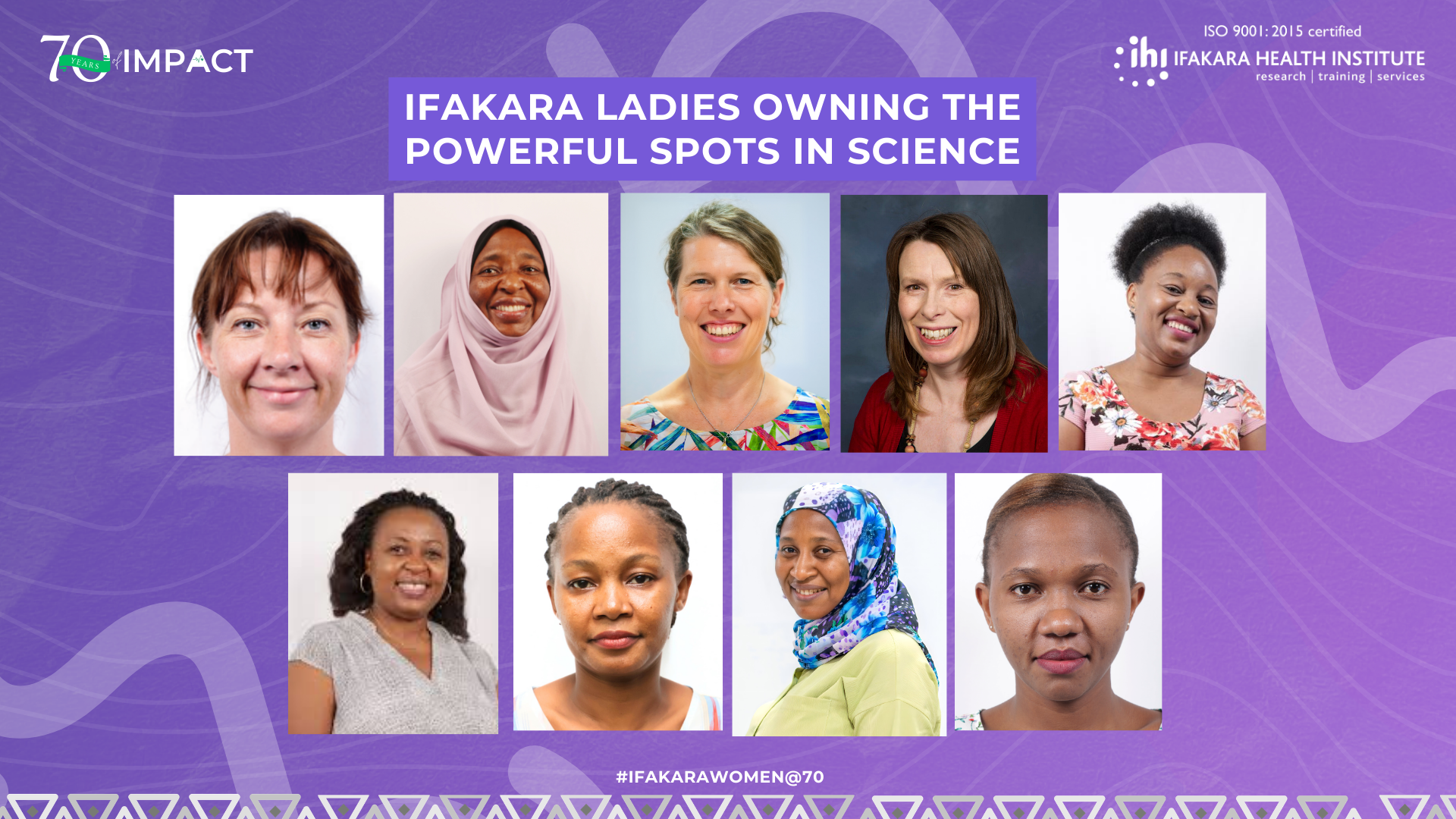
In scientific publishing, position is power. The first name on a paper often belongs to the researcher who conceived the idea, led the study, analysed the data, and wrote the first draft. The last name usually si…
Graphic by IFAKARA Communications
#IFAKARAWOMEN@70: Trailblazers in action - Writing Ifakara's research legacy
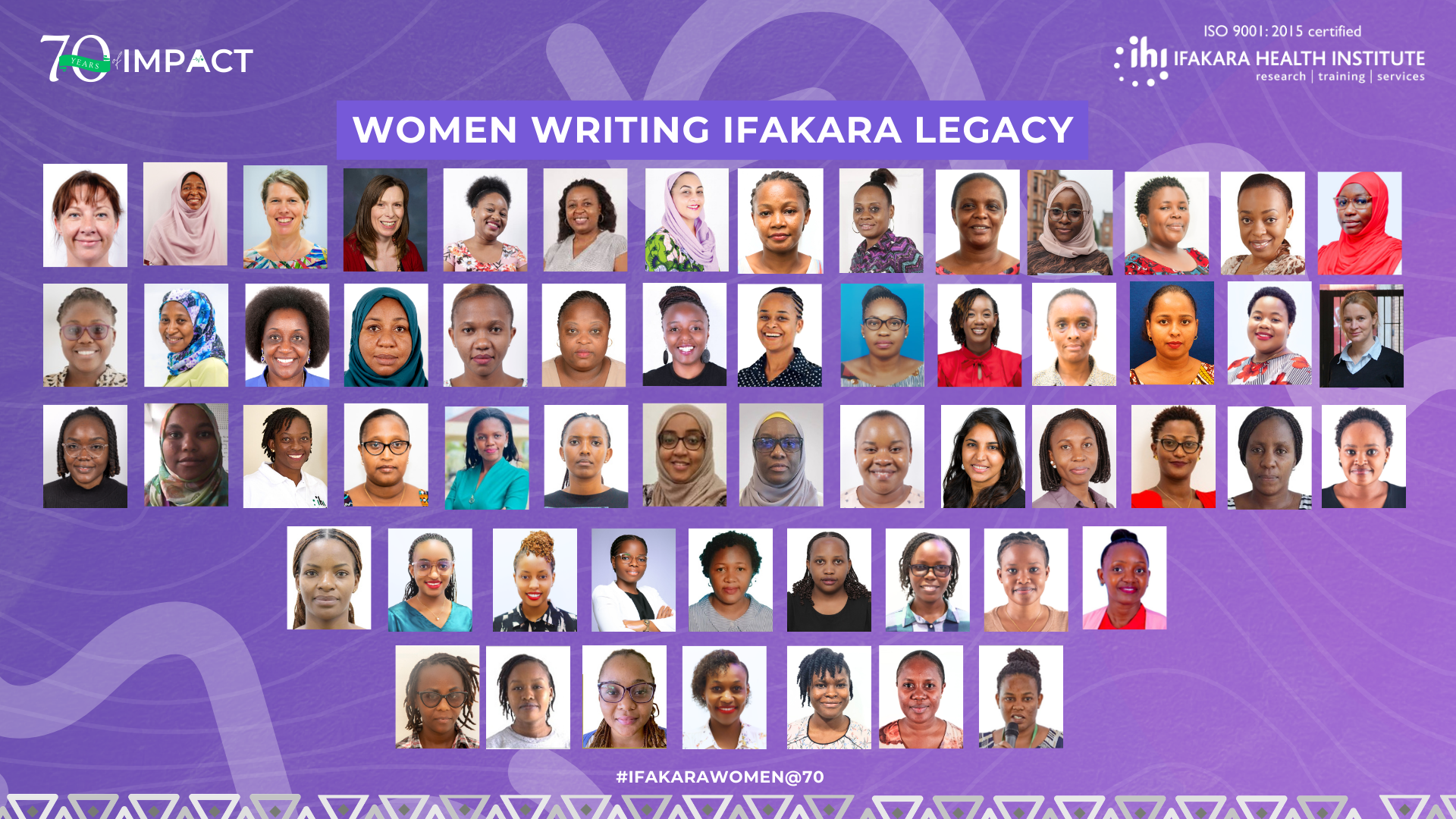
In science, numbers tell stories. Publication numbers are more than academic milestones—they are footprints. They show where knowledge has travelled, what questions have been answered, and who is shaping the con…

Graphic: Ifakara Communications
BLOG: Voices of Women at Ifakara - Leading, Innovating, Inspiring
On March 8, 2026, the world comes together to mark International Women’s Day, and the Ifakara Health Institute celebrates the women driving change across science, health, and communities. Jane Moshi from the Ins…
Graphic by IFAKARA Communications
#IFAKARAWOMEN@70: Stepping into the rooms where decisions are made
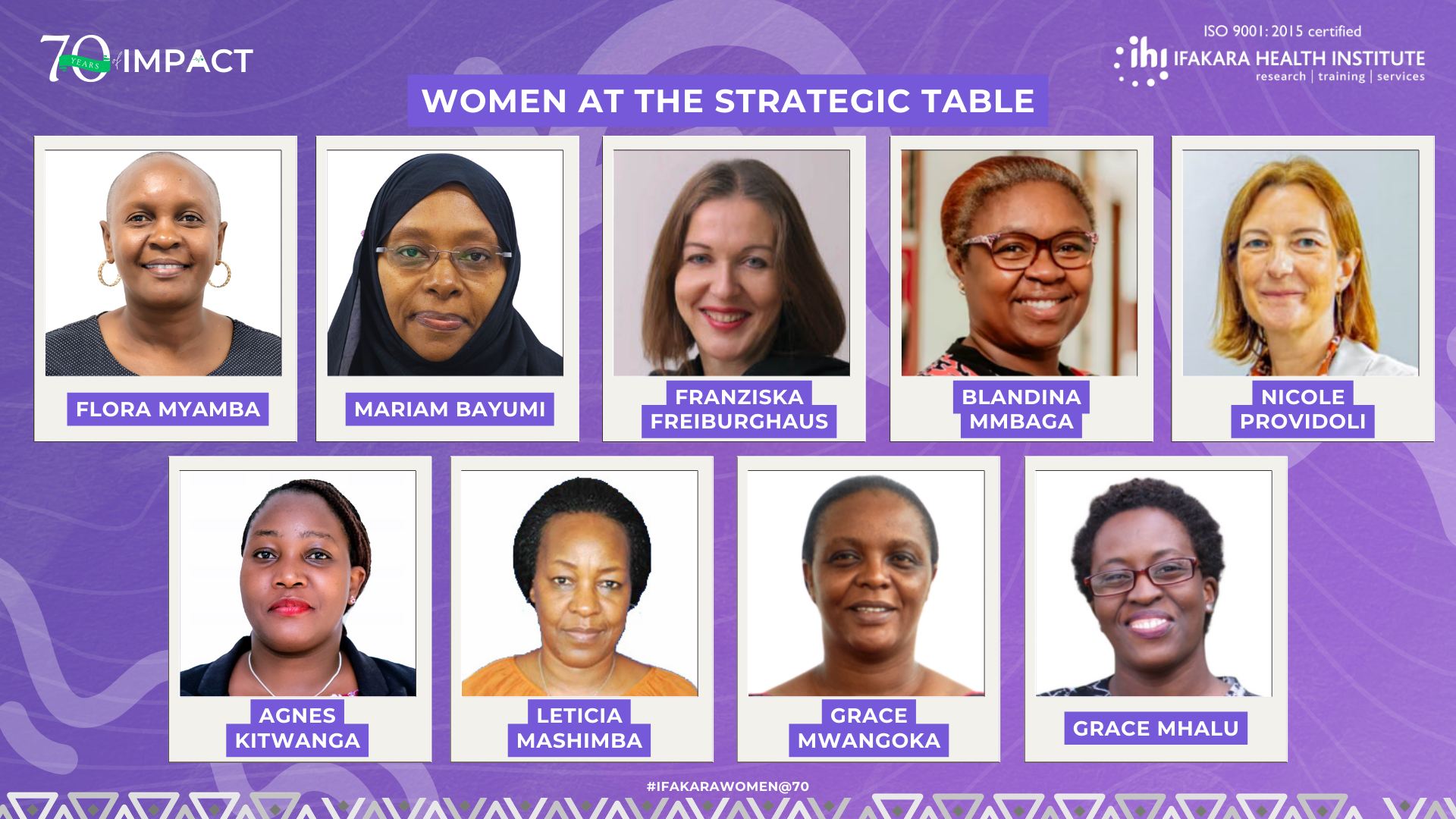
Science may begin in labs and field stations. But its direction—what gets studied, funded, and translated into policy—is often decided in boardrooms.
At t…
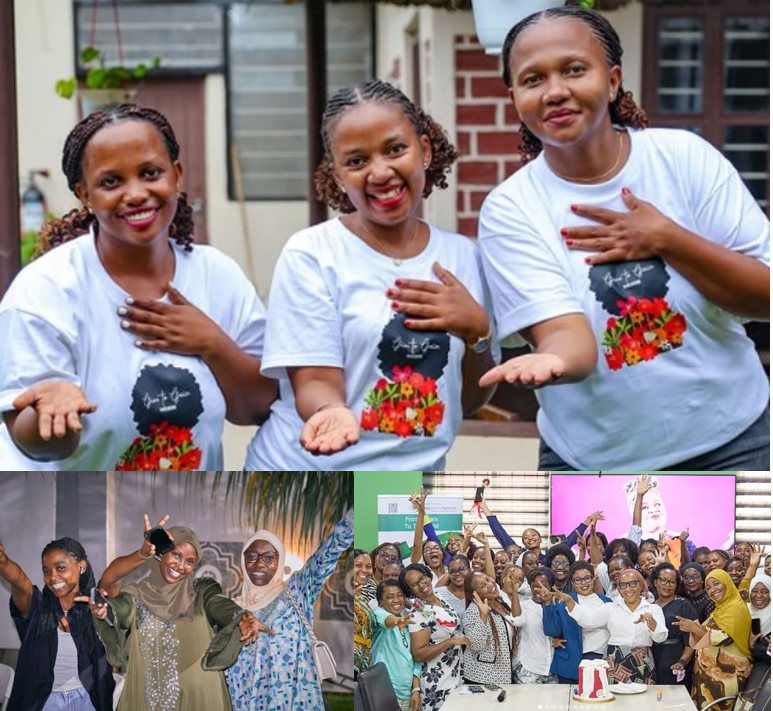
Photo: IFAKARA COMMUNICATIONS
#IWD2026: Ifakara ladies mark International Women’s Day across branches
In the days leading up to, and shortly after International Women’s Day, female staff at the Ifakara Health Institute came together across the institute’s branches to celebrate achievements, reflect on the …

Screen grab
#IFAKARAWOMEN@70: Are women finally getting the influence they deserve in science?
A seasoned researcher at the Ifakara Health Institute, Dr. Ester Elisaria, has highlighted the growing contribution of women in health research and decision-making in Tanzania, noting that their work is playing a crit…
Graphic: Ifakara Communications
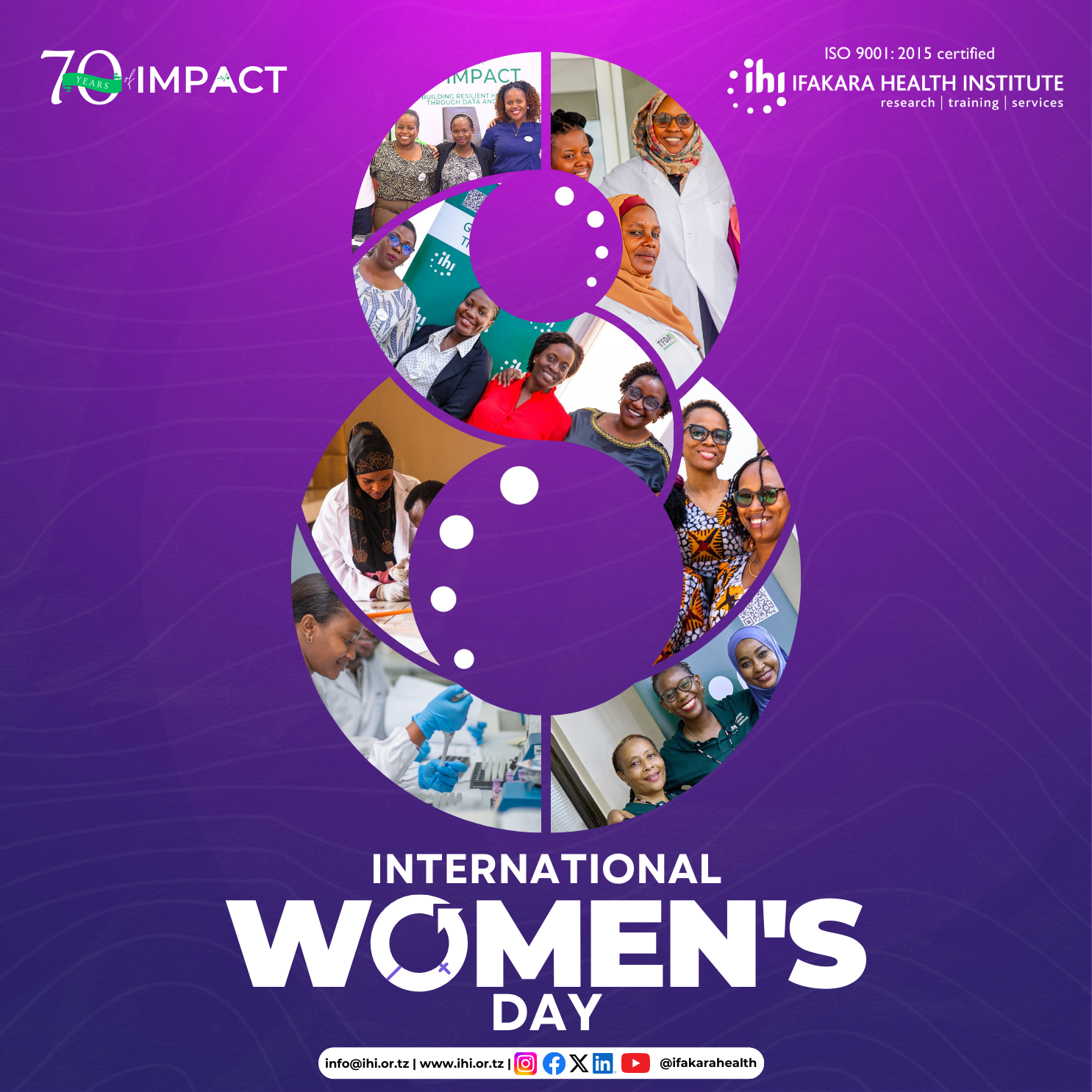
#IWD2026: Celebrating Ifakara Women - Leading, Innovating, Inspiring
Today, on International Women’s Day (IWD) 2026, the Ifakara Health Institute proudly acknowledges and celebrates the remarkable contributions of our women—leaders, innovators, researchers, and changemakers…
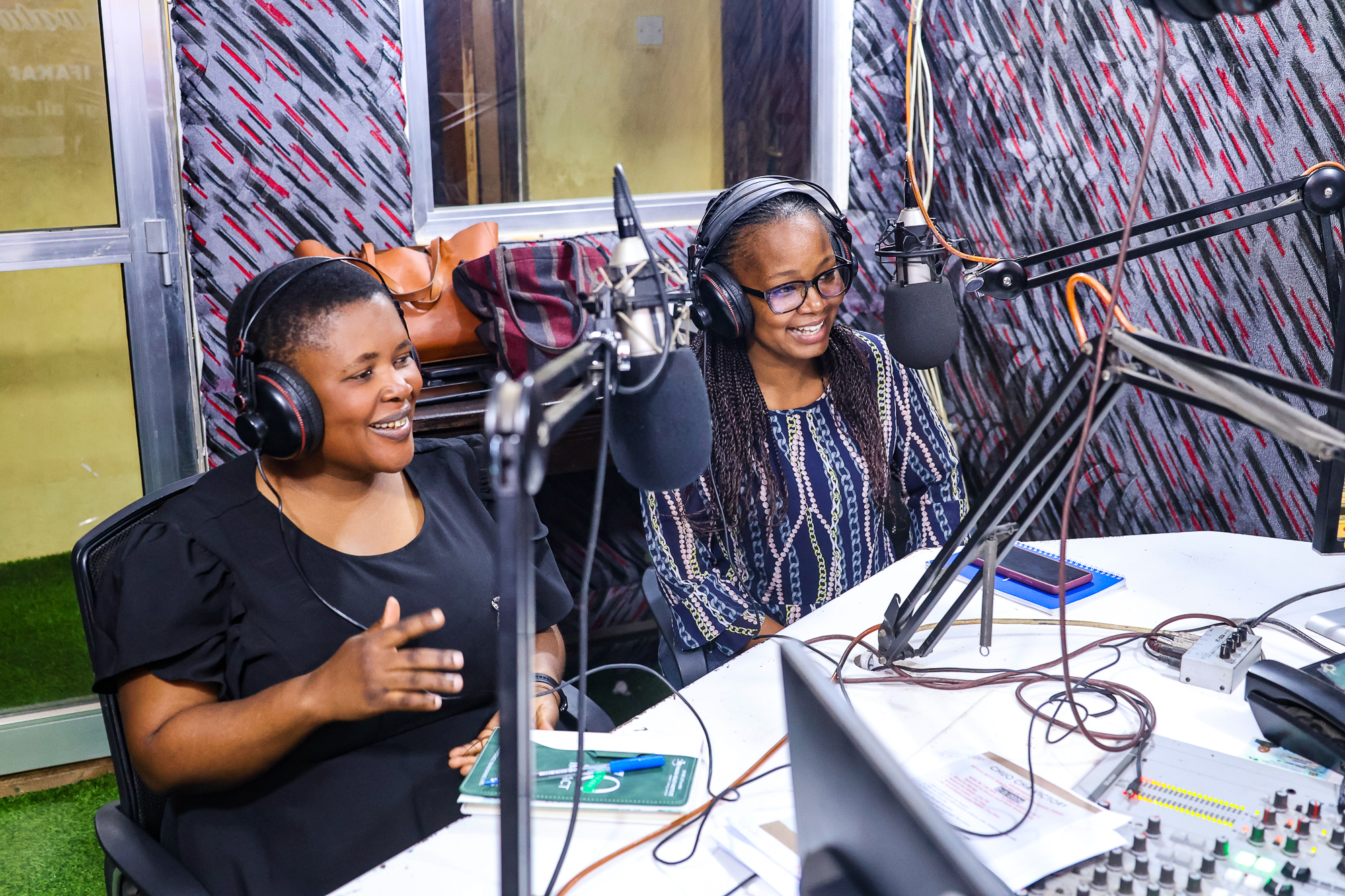
Photo by IFAKARA Communications
#IFAKARAWOMEN@70: Early-career female scientists discuss women role in science
As part of a week-long campaign marking International Women’s Day 2026, Ifakara Health Institute today participated in a media tour at Pambazuko FM radio station based in Ifakara, highlighting the role of women …
Graphic by IFAKARA Communications
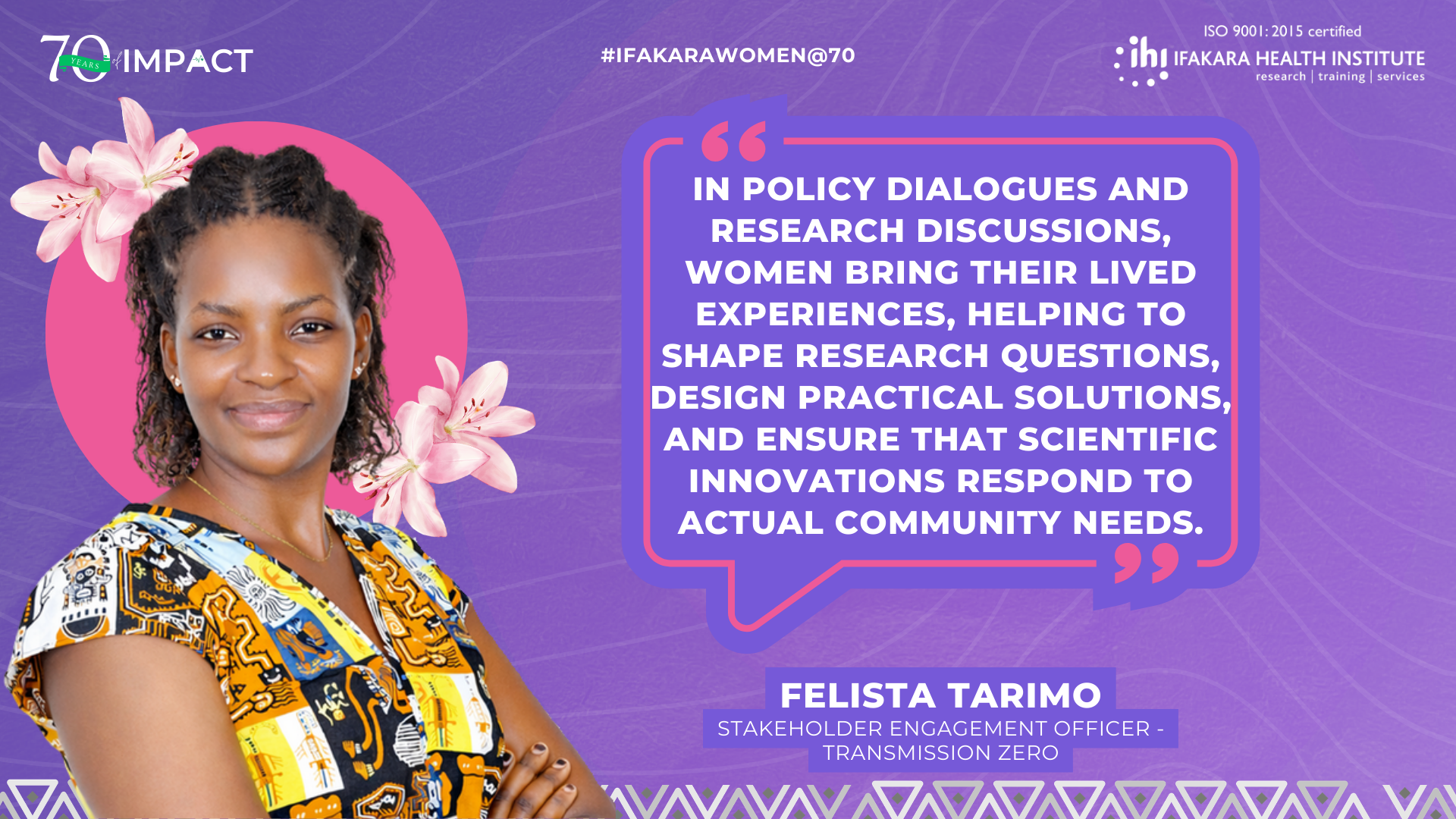
#IFAKARAWOMEN@70: New blog highlights the power of listening in the fight against malaria
As the Ifakara Health Institute marks 70 years of scientific discovery since 1956, the Institute continues to spotli…
Graphic by IFAKARA Communications
#IFAKARAWOMEN@70: 41% — and powering the future of science
At first glance, it is just a number – three hundred. But inside the walls and field stations of Ifakara Health Institute, that number carries ambition, resilience, and the steady rhythm of scientific discovery.…