
TRAINING: Sharpening teaching skills for quality postgraduate education
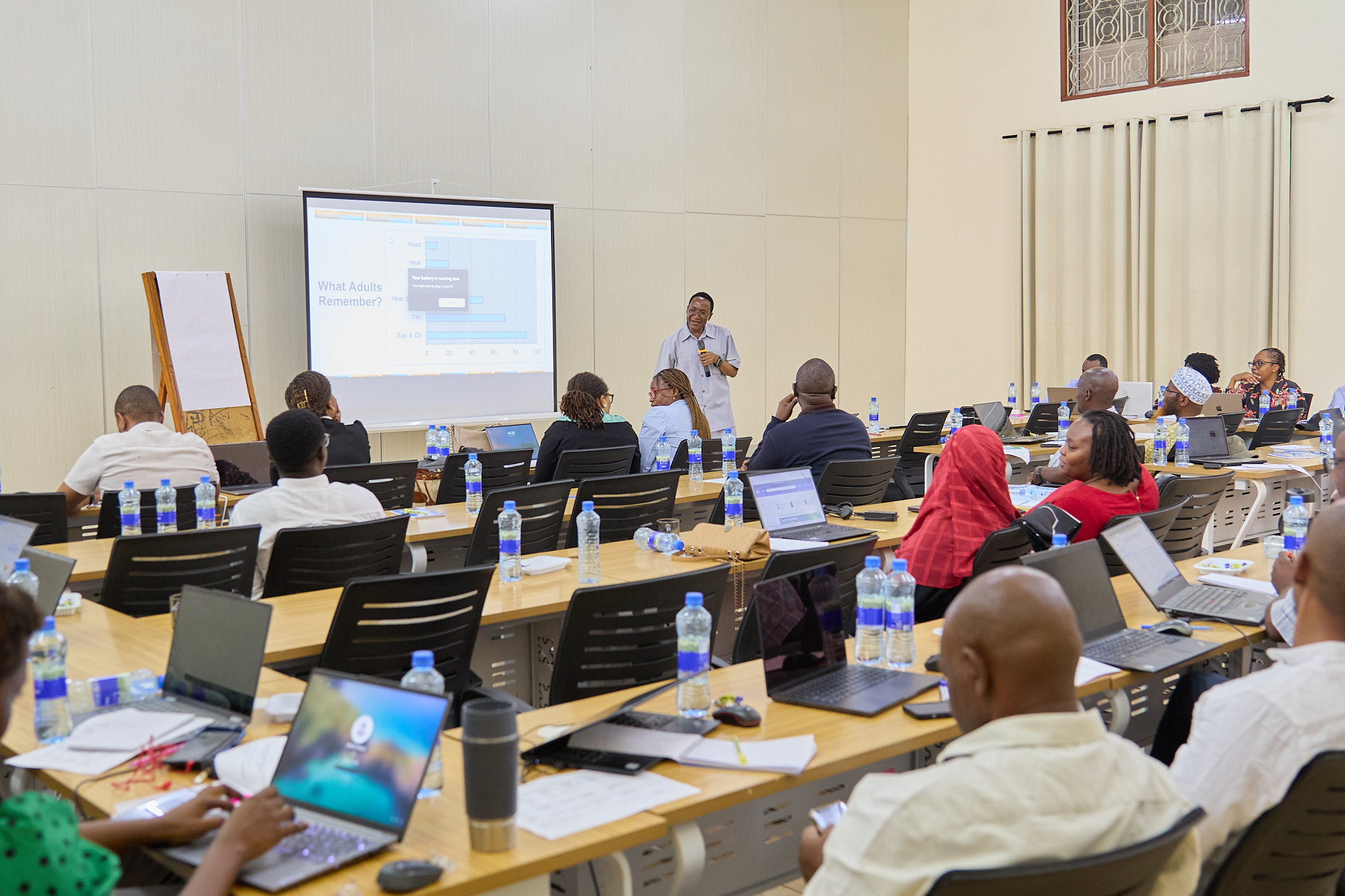
As part of its ongoing commitment to academic excellence and quality postgraduate training, from December 15–19, 2025, the Ifakara Health Institute, through its Capacity Building and Training Department, is conducting a Teaching Methodology Course aimed at strengthening pedagogical competencies among academic staff and facilitators.
The five-day course builds on a similar initiative conducted in 2024 and focuses on enhancing learner-centered teaching, effective facilitation, and robust assessment practices to support high-quality delivery of Ifakara’s postgraduate and professional training programs, including the Master of Science in Public Health Research (MScPHR).
Strengthening teaching and facilitation skills
The training covers a wide range of topics, starting with learning theories, principles of teaching and learning, curriculum interpretation, and lesson planning. Participants are introduced to diverse teaching approaches, with emphasis on student-centered methodologies that encourage participation, engagement, and deeper learning.
Sessions also address classroom management, student motivation, inclusive learning environments, and innovative teaching frameworks such as LePSA, equipping facilitators with practical tools to respond to diverse learner needs.
Expert facilitation grounded in academic excellence
The course is facilitated by Professor Senga Pemba of St. Francis University College of Health and Allied Sciences (SFUCHAS), who also led last year’s training. Drawing on extensive experience in medical and health sciences education, Professor Pemba guides participants through both theoretical and practical aspects of teaching, emphasizing reflective practice and continuous improvement.
Through interactive discussions, demonstrations, and guided exercises, participants are supported to critically examine their teaching styles and adopt approaches that enhance learning outcomes and academic rigor.
Designing assessments that support real-world learning
A key focus of the course is the design of effective assessment strategies aligned with learning objectives. Participants explore different types of assessment, principles of examination design, and methods for providing constructive feedback that promotes critical thinking and application of knowledge beyond the classroom.
The course concludes with portfolio-based learning and micro-teaching sessions, allowing participants to apply newly acquired skills, receive peer and facilitator feedback, and reflect on their professional growth. Pre- and post-training assessments, alongside a course evaluation, ensure continuous learning and quality assurance.
This Teaching Methodology Course reflects IHI’s continued investment in capacity strengthening, reinforcing its role as a center of excellence for health research and training in Tanzania and the region.
About the MScPHR
The Master of Science in Public Health Research (MScPHR) is designed to equip young graduates and early-career professionals with strong competencies in public health research methods, critical analysis, and scientific inquiry. The program offers a solid foundation for those pursuing careers in research, academia, and evidence-based policy-making, while also serving as a stepping stone for doctoral studies.
The program is delivered in collaboration with the Nelson Mandela African Institution of Science and Technology (NM-AIST) under a Memorandum of Understanding with IHI. It is a two-year program, comprising 12 months of coursework followed by 12 months of supervised research, and is hosted at IHI’s Kingani Training Center in Bagamoyo, Tanzania.
Through its strong research orientation and applied training approach, the MScPHR program continues to produce professionals equipped to address complex public health challenges and strengthen health systems in low- and middle-income settings.