

RESISTANCE: Malaria control at risk as mosquitoes adapt in Tanzania
A new study from Tanzania warns that traditional malaria tools are losing effectiveness as mosquito resistance increases. Scientists say combining existing measures – such as bed nets, indoor spraying, and biolarviciding – with malaria vaccines and effective case management could significantly reduce transmission.
Researchers from Tanzania and the USA, including the Ifakara Health Institute, have found that as mosquitoes become more resistant to insecticides, traditional malaria control methods may no longer be enough. The two main culprits – anopheles funestus and anopheles arabiensis – are evolving in ways that make traditional tools less effective, especially in areas where resistance is high.
Why this study matters
Malaria remains one of the deadliest diseases in sub-Saharan Africa, placing millions at risk each year. Even small setbacks in control efforts could reverse years of progress and lead to more illness and deaths.
The study, published in the Malaria Journal in November, highlights this impact. In areas where mosquito resistance is low or moderate, combining nets with indoor spraying or biolarvicides still works, keeping transmission under control. However, when resistance rises above 75%, these tools alone are not strong enough to stop malaria spread.
“Insecticide resistance greatly diminishes the effectiveness of vector control tools,” the researchers said. “While nets, spraying, and biolarvicides reduce transmission at moderate resistance levels, they remain inadequate when resistance becomes very high.”
Integrating vaccines and treatment
The researcher’s analysis points to a potential solution with vaccines and artemisinin-based combination therapy (ACT). Malaria vaccines such as RTS,S and R21, when combined with nets and effective treatment using ACT, can gradually reduce transmission – even in areas where mosquitoes are highly resistant.
“No single magic bullet is sufficient to eliminate malaria,” the researchers noted. “However, a complete package of locally appropriate interventions with adequate coverage may help lower the malaria burden and support the Global Technical Strategy goal of a 90% reduction in malaria incidence and mortality by 2030,” they said.
According to the study, reaching at least 40% vaccine coverage, alongside 80% coverage for both bed nets and effective treatment, can significantly cut infection rates, even under high resistance intensities.
Tailored strategies is key
The study concludes that malaria control now requires a careful, tailored approach that considers local mosquito behavior and resistance patterns.
“Compared to ITNs alone, combining ITNs with IRS and/or biolarvicides greatly improves malaria control at low to moderate resistance levels, but yields no additional benefits at high resistance,” cautioned the researchers.
“Effective malaria control therefore requires a tailored approach that combines vector control strategies with additional interventions, such as immunization and treatment, adapted to local resistance patterns and dominant vector behaviours,” they added.
For communities across Tanzania, these findings offer both a warning and hope. While mosquito resistance is rising, combining old and new tools, including vaccines and effective treatment, is our best chance to fight malaria and keep progress alive.
The team behind the study
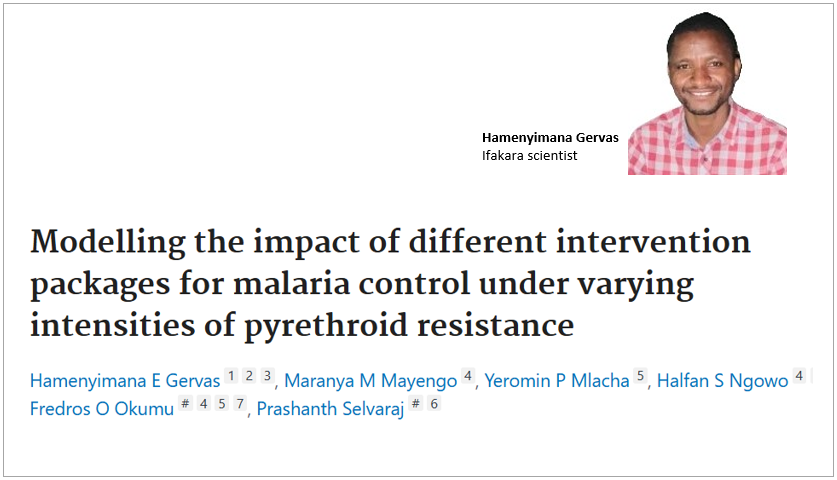
The study was led by the Ifakara Health Institute, with contributions from Hamenyimana Gervas, the lead author, Yeromin Mlacha, Halfan Ngowo, and Fredros Okumu, alongside Prashanth Selvaraj from the Gates Foundation’s Institute for Disease Modeling, and Maranya Mayengo from the Nelson Mandela African Institution of Science and Technology (NM-AIST). Fredros Okumu and Prashanth Selvaraj also served as joint last authors of the study.
Read the publication, here.