

TB: Decentralizing testing cuts costs, improves early access to treatment
For many patients, getting tested for tuberculosis (TB) using widely available diagnostic tools can be expensive, slow and often delaying life-saving treatment, since these tests rely on centralized systems, where samples must travel from local clinics to a central lab for analysis.
However, a new study has found that decentralising TB testing – moving it from central hospitals to local clinics – can save patients money and improve early access to treatment, especially in some of the poorest communities.
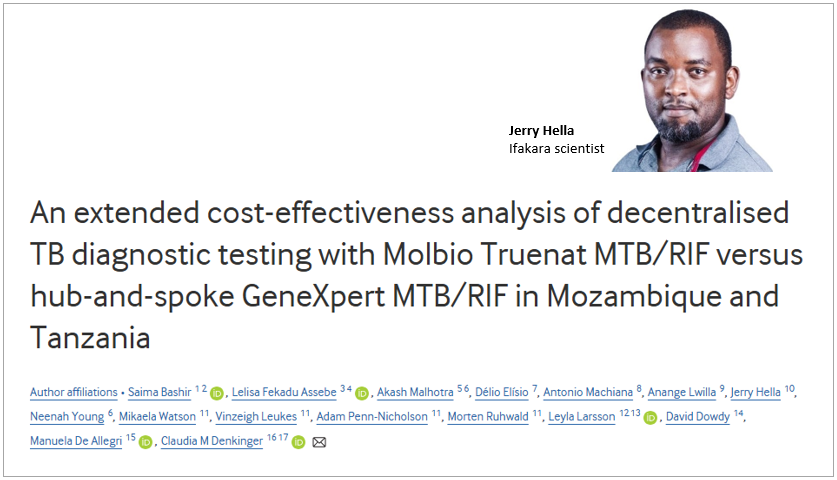
Findings from this study, published recently in BMJ Global Health show decentralised TB testing has the potential to significantly reduce the time to diagnosis and facilitate faster linkage to treatment, with many patients’ beginning TB treatment within seven days of diagnosis, while also lowering patient costs.
Why this study matters
This is the first real-world study to demonstrate that decentralised TB testing can save money, speed up treatment, and reduce inequalities in healthcare. For the first time, it shows that point-of-care diagnostics not only improve health outcomes but also address financial barriers for vulnerable communities.
In countries with high TB burdens, such as Tanzania and Mozambique, these findings could help governments and donors invest strategically in decentralised testing, ensuring that more patients receive care promptly, regardless of socioeconomic status.
TB remains a major threat
In 2023, TB regained its status as the leading cause of death from a single infectious agent in low- and middle-income countries, surpassing COVID-19. Rapid and accurate diagnosis is essential to treat patients on time and prevent further spread.
Commonly used TB diagnostic tools, such as Xpert MTB/RIF Ultra rely on centralised hub-and-spoke networks, which can delay diagnosis and treatment as patients wait longer for test results, postponing treatment initiation.
A smarter approach
The new research, part of the TB-CAPT Core trial, compared the hub-and-spoke system with decentralised point-of-care testing using the Molbio Truenat platform, which can be performed closer to where patients live.
Researchers collected economic data from patients in both Tanzania and Mozambique, including out-of-pocket (OOP) costs and socioeconomic status. They used advanced cost-effectiveness analyses to assess how the new approach affected both finances and health outcomes.
Key findings
- Patients using the decentralised (Truenat) spent less on average: US$8.82 per person compared with US$13.61 under the hub-and-spoke model.
- Cost savings were observed across all socioeconomic groups: the least poor saved more in absolute costs (US$6.36 vs US$2.93), while the poorest saw the biggest health gains in terms of timely treatment initiation (within 7 days).
- Decentralised testing was more effective in getting people started on TB treatment faster compared to standard care.
Overall, researchers say the decentralised approach is both cheaper and more effective, stating, “This approach not only improves patient health outcomes but also reduces the economic burden on patients, and it may be especially beneficial for the most vulnerable.”
Implications for research, practice, and policy
The researchers hope the evidence from the study will encourage governments and donors to invest in scaling up decentralised TB testing services, particularly in high-burden countries, improving access for vulnerable communities.
“Policymakers can use this evidence to justify investments in point-of-care molecular diagnostics—not just for their effectiveness but also for their role in advancing equity and reducing catastrophic patient costs,” the study concluded.
International collaboration behind the study
The study, conducted in Tanzania and Mozambique, involved Dr. Jerry Hella, a seasoned expert in TB research from the Ifakara Health Institute. He worked alongside lead authors Saima Bashir from Heidelberg University Hospital (Germany) and Lelisa Fekadu Assebe from the University of Bergen (Norway). Additional contributors are from Mozambique, the USA, Switzerland, and Zimbabwe.
Read more, here.