

MALARIA CONTROL: Fungus helps defeat insecticide-resistant mosquitoes
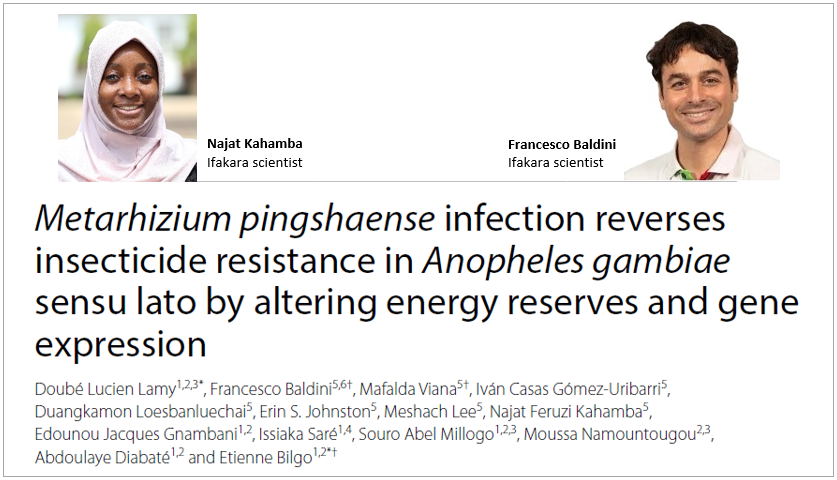
A recent study by researchers from Tanzania, Burkina Faso and the UK has found that a naturally occurring fungus can weaken malaria mosquitoes and reverse their resistance to commonly used insecticides, a discovery that offers new hope in the fight against malaria.
Published in Parasites & Vectors recently the study examined an entomopathogenic fungus known as Metarhizium, which infects and kills insects. Researchers tested the fungus against malaria-transmitting mosquitoes (Anopheles gambiae), many of which have developed resistance to insecticides, reducing the effectiveness of key malaria control tools such as insecticide-treated bed nets.
Why these findings matter
The findings are important for malaria control, especially in regions where insecticide resistance is widespread. Across Africa, malaria control efforts rely heavily on insecticides, especially for insecticide-treated bed nets and indoor residual spraying. However, growing resistance in mosquito populations threatens to undermine these life-saving interventions.
This study shows that instead of replacing existing insecticides, fungal biopesticides can be used alongside existing insecticides, making current tools work better. Importantly, researchers say this approach supports more sustainable malaria control strategies by reducing reliance on chemicals alone and slowing the spread of insecticide resistance.
It weakens mosquitoes, restores effectiveness
The findings showed that mosquitoes infected with metarhhizium were more likely to die when later exposed to deltamethrin, a widely used insecticide, even though they would normally survive such exposure to deltamethrin.
According to the researchers, the fungal infection weakens mosquitoes by reducing their energy reserves. It reduces sugar, fat, and stored energy levels, leaving mosquitoes too weak to survive insecticide exposure. The fungus also lowers the activity of key genes that help mosquitoes break down insecticides and fight infections.
“Entomopathogenic fungi like metarhizium are emerging as effective biopesticides against malaria vectors,” the researchers noted. “They reduce mosquito survival, reproduction, and flight ability, and can reverse insecticide resistance in Anopheles gambiae populations.”
In contrast, mosquitoes that were not infected with the fungus continued to resist the insecticide, underscoring the critical role of Metarhizium in restoring insecticide effectiveness.
Ifakara scientists contribute to the research
Scientists from Ifakara Health Institute, including Francesco Baldini and Najat Kahamba, played a key role in this research. The study was conceived and designed by Francesco Baldini in collaboration with Doubé Lucien Lamy and Etienne Bilgo from the Institut de Recherche en Sciences de la Santé (Burkina Faso), and Mafalda Viana from the University of Glasgow (UK).
Read more, here.