

QUALITY CARE: Tanzania health facilities record gains in mother, child care readiness
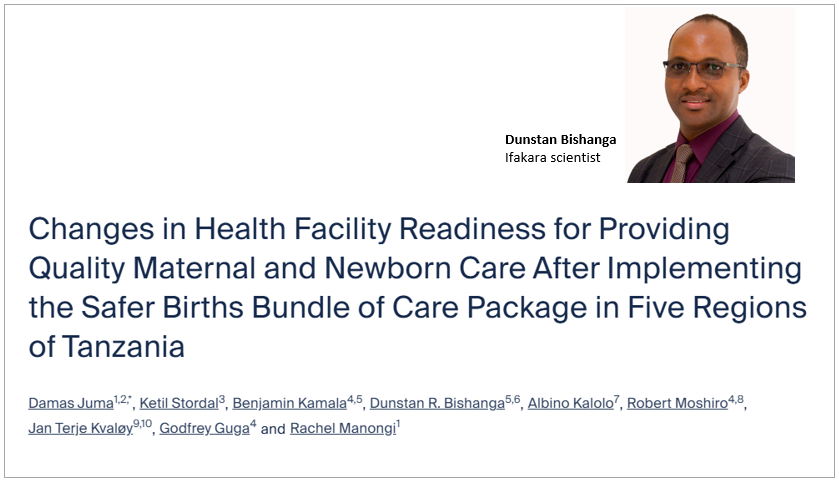
Health facilities in Tanzania have become better prepared to provide maternal and newborn care after the rollout of a quality improvement package known as the Safer Births Bundle of Care (SBBC), a new study shows.
The study found that overall facility readiness increased from 68% in 2020 to 84% in 2023 across 28 health facilities in five regions of the country. This improvement signals meaningful progress in strengthening care during childbirth. However, researchers note that further gains are still needed for Tanzania meet its national goals and global health targets.
Published in the journal of Healthcare, the study assessed facility readiness before and after SBBC implementation between December 2020 and January 2023. The SBBC programme is designed to strengthen clinical capacity and improve emergency response during childbirth.
The study, led by researchers in Tanzania and Norway, also included contributions from Ifakara Health Institute’s seasoned scientist, Dr. Dunstan Bishanga.
Why readiness matters for mothers and newborns
Tanzania continues to face high rates of maternal and newborn deaths. partly due to gaps in the quality of care provided during childbirth and immediately after delivery. The study underlines that improving health facility readiness can help address some of these challenges.
The authors emphasize that strengthening facility readiness is crucial to ensuring high-quality maternal and newborn care.
To achieve this, they urge authorities to “take swift action to address the identified gaps” by prioritizing effective and practical interventions, closely monitoring progress, and sustaining the gains already achieved.
Big gains in equipment, supplies and guidelines
After the implementation of SBBC, health facilities recorded the largest improvements in the availability of medical equipment, diagnostic and treatment supplies, and clinical guidelines — all of which are essential for effective maternal and newborn care.
However, the study found no significant improvement in staffing levels and basic amenities, which remained weak, pointing to ongoing challenges related to human resources and infrastructure.
What the safer births bundle of care delivers
The SBBC programme supports health facilities to deliver safer births by ensuring health workers are properly equipped and trained to respond to childbirth emergencies. The package combines:
- Clinical tools, such as fetal heart rate monitors and neonatal resuscitation equipment
- Simulation training equipment, including manikins for practice
- Continuous quality improvement processes that encourage regular training and performance reviews at facility level
What steps are needed to sustain progress
To sustain and expand progress, the study recommends that the government, development partners, and other stakeholders take several steps, including:
- Increasing staffs
- Allocating sufficient resources for maternal and newborn care
- Improving basic facility infrastructure
- Expanding the SBBC programme to more regions
- Conducting regular assessments to monitor and maintain readiness
Overall, these findings show that the Safer Births Bundle of Care can improve health facility readiness to deliver quality maternal and newborn services. However, sustained progress will depend on continued investment in staffing, infrastructure, and ongoing training.
Read the publication, here.