HIV: Late diagnosis, drug resistance undermines disease control
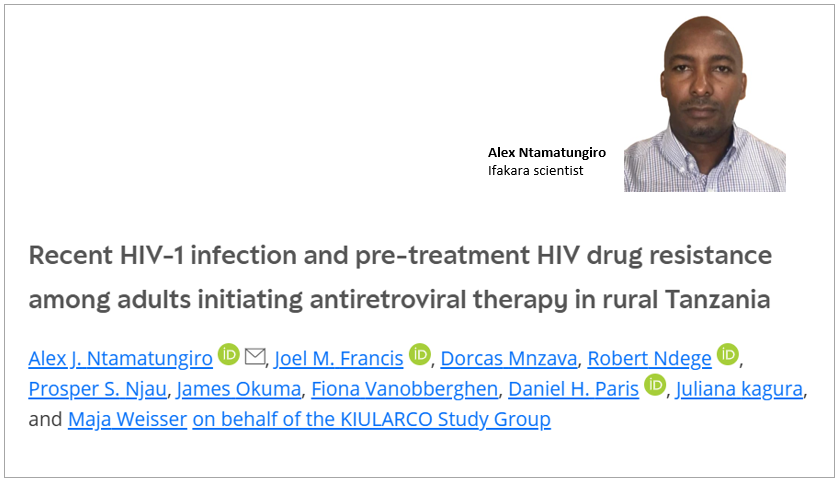
A new study in rural Tanzania shows that most adults start HIV treatment long after they are first infected—and that some already carry HIV strains resistant to antiretroviral drugs before treatment begins. These findings raise serious concerns for patient health and for efforts to control the HIV epidemic.
Recently published in the international journal of STD & AIDS, the study was led by Ifakara Health Institute scientist Alex Ntamatungiro, with contributions from researchers in Tanzania, Switzerland, and South Africa. The research team included Ifakara colleagues Dorcas Mnzava, Robert Ndege, and Maja Weisser.
Why early HIV testing matters
Early HIV diagnosis allows people to begin treatment sooner, stay healthier, and greatly reduce the risk of transmitting the virus. Late diagnosis delays these benefits and slows progress toward ending the HIV epidemic.
Starting treatment with drug-resistant HIV can reduce the effectiveness of standard medicines. This increases the risk of treatment failure, raises healthcare costs, and may require earlier use of more expensive second-line drugs.
Few people are diagnosed soon after infection
The study was conducted at a rural referral hospital in Ifakara. Among 599 adults living with HIV enrolled in the Kilombero and Ulanga Antiretroviral Cohort between March 2019 and March 2022, 24 people (about 4%) were identified with recent HIV infection. No factors were linked to recent infection.
This means that the vast majority of patients were diagnosed months or even years after acquiring HIV. Many likely lived with the virus for a long time before entering care. Late diagnosis remains a major challenge, weakening efforts to reduce HIV transmission and limiting health benefits for individuals.
Drug resistance detected before treatment begins
The study also looked at whether people with recent HIV infection already carried drug-resistant virus. Drug resistance testing was successful in 16 of the 24 people with recent HIV infection (67%). Of these, 5—nearly one in three (31%)—had HIV drug resistance mutations to at least one class of commonly used antiretroviral drugs before starting antiretroviral therapy (ART).
An important warning for HIV programmes
Although only a small number of recent infections were identified, the high level of drug resistance among them is a strong warning signal. The findings highlight the need for routine drug-resistance monitoring, strengthened early testing strategies, and careful selection of first-line treatments—especially in rural settings.
Read the publication, here.