

MENTAL HEALTH: This peer support program offers opportunity to improve care for HIV positive youth in Tanzania
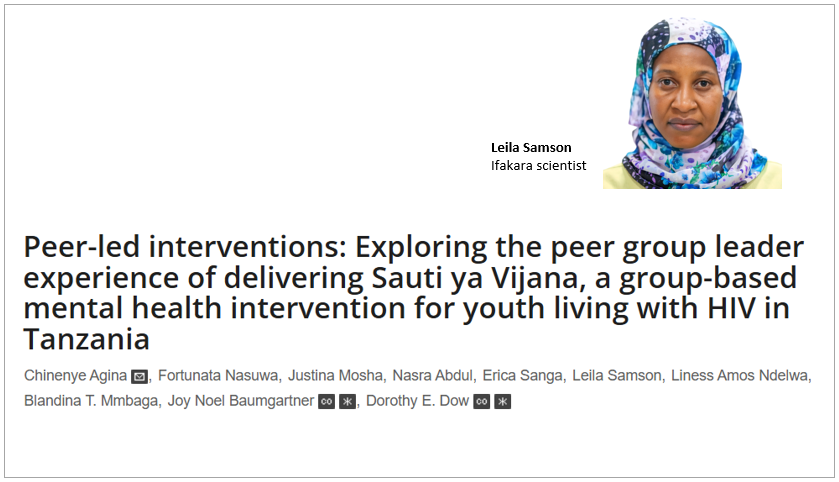
A peer-led mental health program is helping young people living with HIV in Tanzania cope better with their emotional challenges, offering a potential model for expanding care in places with few mental health professionals, a new study published in PLOS Mental Health shows.
The program, called Sauti ya Vijana (SYV) in Swahili — literally meaning Youth Voice — trains young adults who are themselves living with HIV to lead group sessions for their peers.
Among the contributors to the research was Leila Samson, a research scientist and counselor from Ifakara Health Institute, working alongside US and Tanzanian collaborators.
Why this study matters
The findings show that peer-led mental health support can be highly effective for young people living with HIV, especially in countries like Tanzania, where professional mental health services are limited.
By equipping young people to support one another, programs like SYV help close long-standing gaps in care, particularly for adolescents facing both health and social challenges of living with HIV.
A response to a growing need
Adolescents and young adults living with HIV often experience high levels of emotional stress, stigma, anxiety, and depression, which can make it harder to stay on treatment. Across much of sub-Saharan Africa, however, there is a shortage of trained mental health specialists.
The program addresses this gap by creating safe spaces where participants can speak openly with facilitators who share similar lived experiences.
How the SYV program works
Participants meet regularly in small groups over a series of sessions that combine practical coping strategies with guided discussion. Topics include how to manage stress, navigate stigma, build relationships, plan for the future and understanding sexual and reproductive health.
Some sessions also involve caregivers, helping to strengthen support systems at home and improve communication within families.
Key findings
- Peer leaders were motivated to help: Many joined because of their own experiences with HIV and a desire to support others.
- The program built confidence: Leaders gained skills and purpose, while participants felt more hopeful about their futures.
- Shared lived experience built trust: Being close in age and also living with HIV helped leaders create safe, open spaces.
- Peer-led care helps fill mental health workforce gaps: Trained peers can expand mental health support where specialists are few.
- Long-term success needs support: Leaders emphasized the need for, ongoing supervision, fair compensation, and strong health system integration for sustainability of such program.
Looking ahead
While the results are promising, researchers emphasize that peer-led models must be supported by continuous training, mentorship, and resources to remain effective and scalable as part of routine HIV care.
“Across themes, Peer Group Leaders (PGLs) emphasized sustainability, offering recommendations to strengthen program expansion and long-term impact. Insights from the PGLs can help enhance and position SYV for sustainability as Tanzania navigates scaling mental health care [for youth living with HIV] YLWH and also inform other peer-led mental health interventions in low-resource contexts,” the researchers recommend.
With the right investment, the approach could be adapted in other countries facing similar challenges—bringing mental health support closer to the young people who need it most.
Read the publication, here.