

#IFAKARAWOMEN@70: Ifakara Health Institute ladies owning the most powerful spots in science
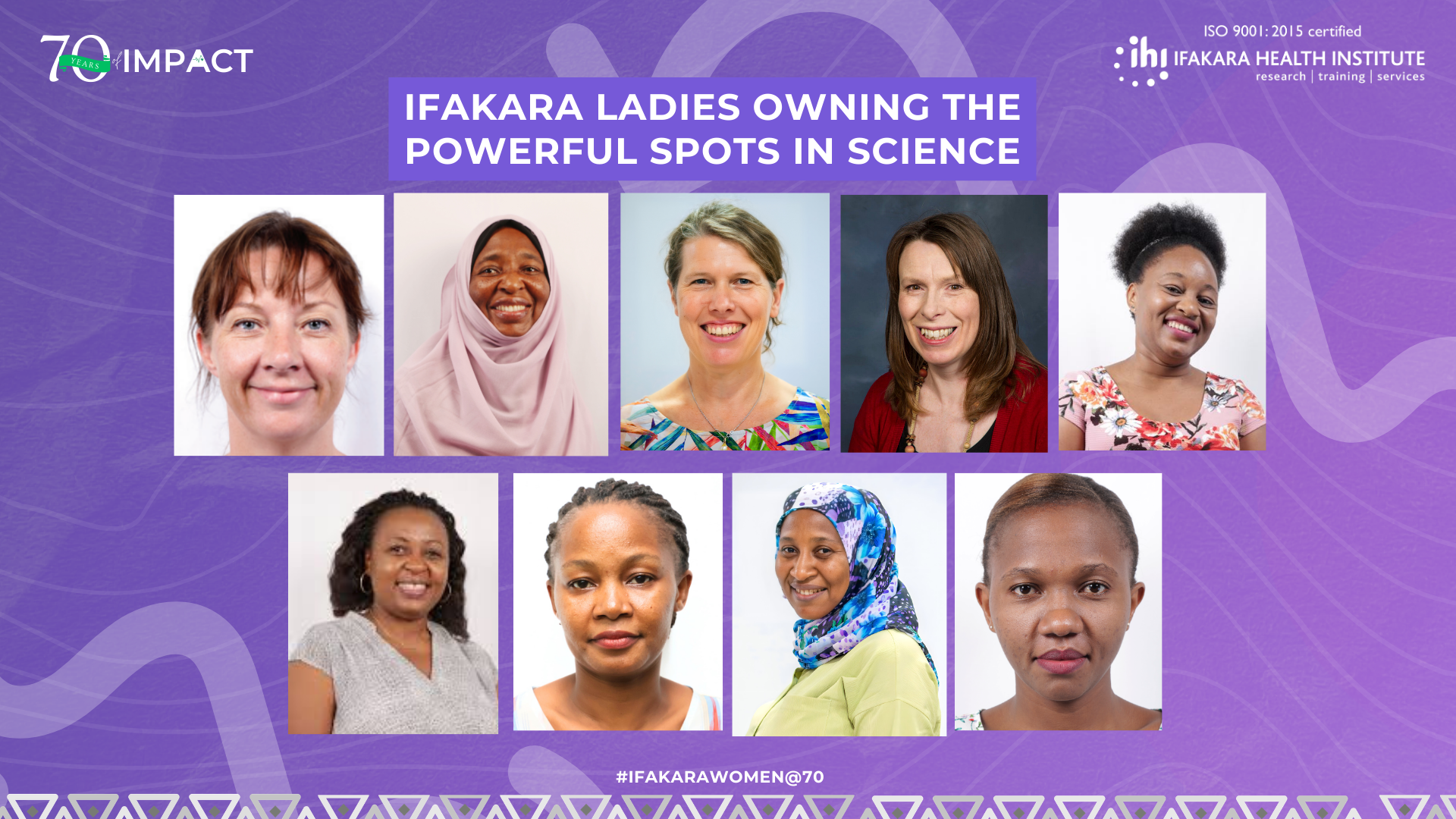
In scientific publishing, position is power. The first name on a paper often belongs to the researcher who conceived the idea, led the study, analysed the data, and wrote the first draft. The last name usually signals the senior scientist—the mentor, the grant holder, the strategic mind guiding the entire project.
At Ifakara Health Institute, 61 female scientists have secured 129 lead (first) authorships and 119 last authorships across 982 total publications between 1965 and projections into 2026.
The near balance between these two roles is striking. It tells a story of women not only generating ideas—but also steering research from positions of senior authority.
Who is leading from the front?
Lead authorship is where scientific identity is forged. It is where innovation begins.
At IHI, Sally Mtenga stands out with 9 lead authorships, frequently driving studies focused on community engagement and behavioural health.
Close behind are, Marceline Finda with 8 lead papers, and Fatuma Manzi with 7. Their work spans infectious diseases, health systems, and public health interventions—demonstrating that women are not waiting for opportunities. They are creating them.
Encouragingly, lead authorship is widely distributed. Fifty-one of the 61 women have held at least one first-author position. That breadth signals a healthy research environment where emerging scientists are trusted to take intellectual ownership.
Who commands from the back?
If first authorship is about driving the engine, last authorship is about steering the ship.
Here, Sarah Moore commands attention with 55 last authorships—a remarkable indicator of sustained senior leadership.
She is followed by Maja Weisser with 23 last positions, and Heather Ferguson with 19, both demonstrating visible seniority in clinical, ecological, and infectious disease research.
But here lies a revealing contrast: only 10 women hold any last-author positions at all. These are: Sarah Moore, Fatuma Manzi, Maja Weisser, Heather Ferguson, Marcelina Finda, Sally Mtenga, Dorcas Mnzava, Leila Samson, and Elihaika Minja.
That concentration tells a nuanced story. While leadership exists—and is strong—it remains clustered within a relatively small senior circle.
The contrast that speaks loudest
Lead authorships: 129 (spread across 51 women)
Last authorships: 119 (held by just 10 women)
The numbers show momentum at the front end of research. Many women are initiating and leading studies.
But at the senior-most level—where funding decisions are shaped and research agendas are set—representation narrows.
This is not a story of absence. It is a story of transition.