

SAFE BIRTH: Training saves newborn lives—but regular practice makes it last
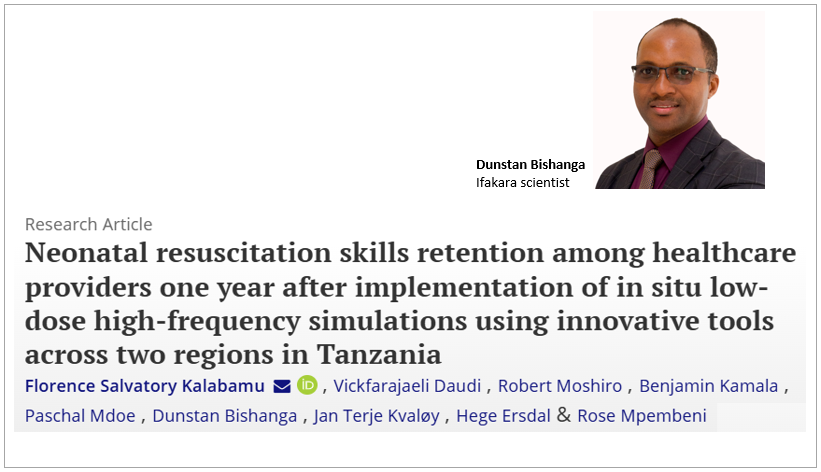
A new study has found that healthcare workers in Tanzania can retain essential newborn resuscitation skills up to one year after training—offering hope in the fight to reduce preventable newborn deaths.
The research, published in Global Health Action, evaluated the impact of the Safer Births Bundle of Care (SBBC)—a programme implemented in Tanzania that uses innovative clinical practices and training tools to improve labour care and strengthen newborn resuscitation, particularly for babies who do not breathe at birth.
The research was carried out by a team that included Ifakara Health Institute scientist Dunstan Bishanga, alongside colleagues from Muhimbili University of Health and Allied Sciences (Tanzania), Haydom Lutheran Hospital (Tanzania), and Stavanger University Hospital (Norway).
Why it matters
The first minutes after birth are often described as the “golden minute”—a critical window when timely intervention can save a newborn’s life. Ensuring that health workers are not only trained but remain confident and competent is essential.
The study adds to growing evidence that one-off training is not enough. Instead, sustained systems—such as routine drills, supportive supervision, and access to functioning equipment—are needed to maintain life-saving skills.
Birth asphyxia as leading cause of newborn deaths
Each year, thousands of newborns die from birth asphyxia—a condition where a baby cannot start or sustain breathing. Quick and effective resuscitation in the first minutes of life can mean the difference between survival and death.
To address this, the SBBC programme combines hands-on training, medical equipment, and ongoing practice using simulation tools. The approach has been rolled out in parts of Tanzania to strengthen care during and immediately after delivery.
Training alone isn’t enough, continuous practice is key
In the study, researchers evaluated healthcare providers one year after they had received SBBC training. They found that many were still able to correctly perform essential resuscitation steps, suggesting that the programme can lead to lasting improvements in clinical skills.
However, the findings also highlight an important caveat: skills retention depends heavily on regular practice and continued support.
Healthcare workers who frequently engaged in simulation exercises and had access to mentorship and equipment were more likely to maintain high performance. In contrast, those without ongoing reinforcement showed some decline in their skills over time.
A path forward
The findings support continued investment in programmes like the Safer Births Bundle of Care, particularly in low-resource settings where newborn mortality remains high.
By strengthening both training and long-term support, health systems can improve the quality of care at birth—and give more newborns a chance to survive and thrive.
Read the publication, here.