
MALARIA FORUM 2026: Ifakara to convene national partners in Dodoma ahead of World Malaria Day
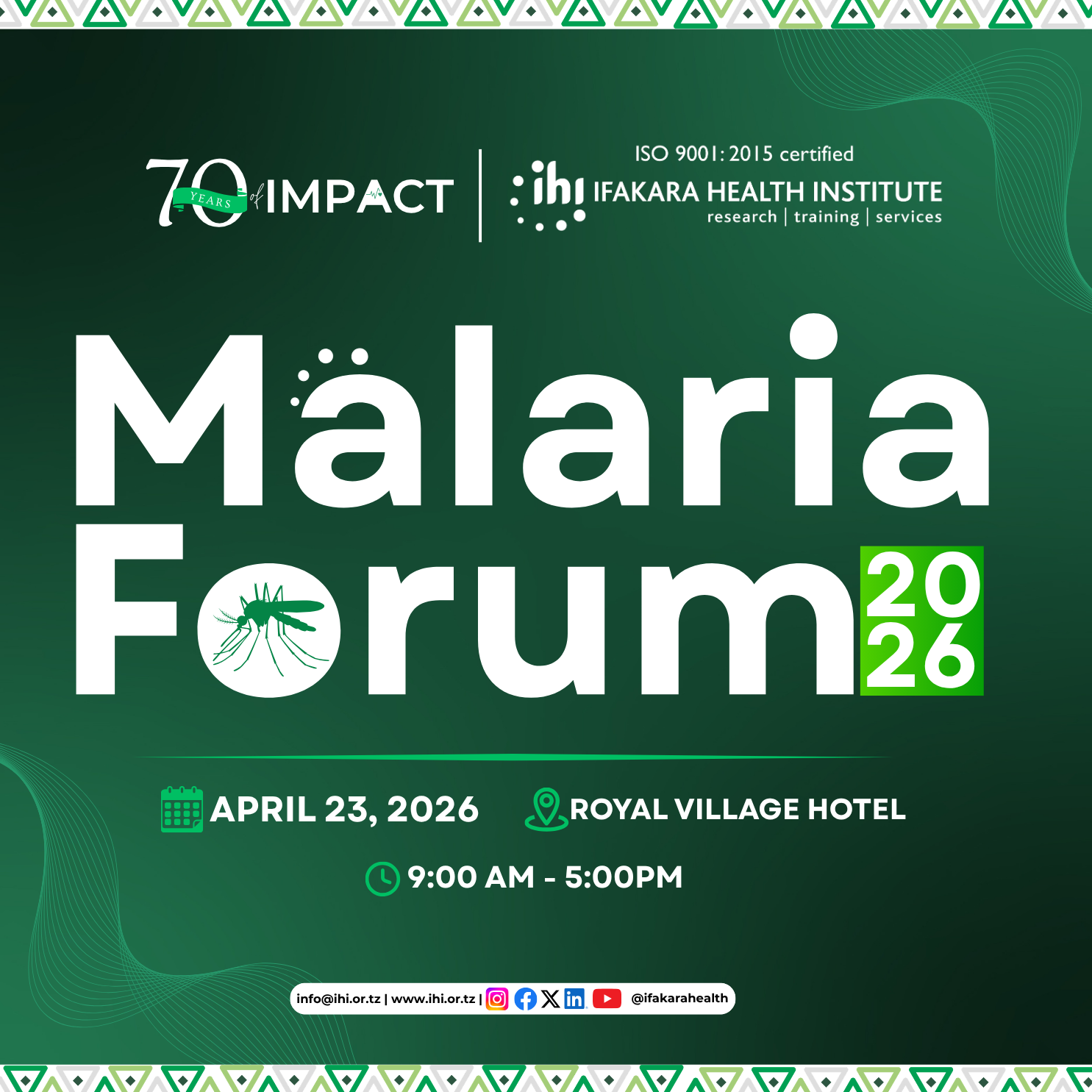
The Ifakara Health Institute will next week host the fifth edition of its annual Malaria Forum, bringing together Tanzania's leading voices in malaria research, policy, and public health for a landmark session in Dodoma.
The forum takes place on 23 April 2026 at the Royal Village Hotel — two days before World Malaria Day — and will run from 9:00 AM to 5:00 PM. It will convene policymakers, researchers, implementing partners, funders, and media under this year's global theme: "Driving Innovation to End Malaria — Now We Can. Now We Must."
A national platform for coordination and action
For five years, the Malaria Forum has served as one of Tanzania's most important national platforms for malaria knowledge exchange, strategic dialogue, and partnership coordination. The 2026 edition will feature high-level presentations, expert panel discussions, and interactive roundtable sessions focused on the progress made — and the work that remains.
Built on 70 years of evidence
Ifakara's contribution to Tanzania's malaria response spans more than seven decades of field research, clinical trials, and policy engagement.
Our drug resistance monitoring directly informed two of Tanzania's most consequential treatment policy decisions: the shift from chloroquine to sulfadoxine-pyrimethamine in 2001, and the adoption of artemisinin-based combination therapies in 2006 — changes that significantly improved treatment outcomes for millions of Tanzanians.
Our researchers contributed to the development of child-friendly dispersible malaria treatments, improving adherence and outcomes for young children across the continent. We also played an active role in the evaluation of both WHO-recommended malaria vaccines — RTS,S/AS01, recommended in 2021, and R21/Matrix-M™, recommended in 2023.
Field evidence generated by Ifakara scientists further helped shift global WHO guidance on insecticide-treated net distribution from targeted delivery to universal coverage — a change that has protected millions of households across Africa.
From progress to elimination
Tanzania's malaria burden has fallen dramatically over the past two decades, part of a broader trend that has seen malaria-endemic countries achieve more than a 50 percent reduction in malaria prevalence globally. That progress is the result of sustained investment, scientific rigour, and coordinated action across government, research institutions, and implementing partners.
The Malaria Forum 2026 will build on that foundation. Sessions will address the innovations, partnerships, and systems required to move Tanzania — and the region — from controlling malaria to eliminating it entirely