
× Home Projects Partners FAQs Contacts
ihi-logo

REPORT: Tanzania’s rural HIV clinic pioneers “whole-person” care
April 15, 2026 11:00hrs
REPORT: Tanzania’s rural HIV clinic pioneers “whole-person” care
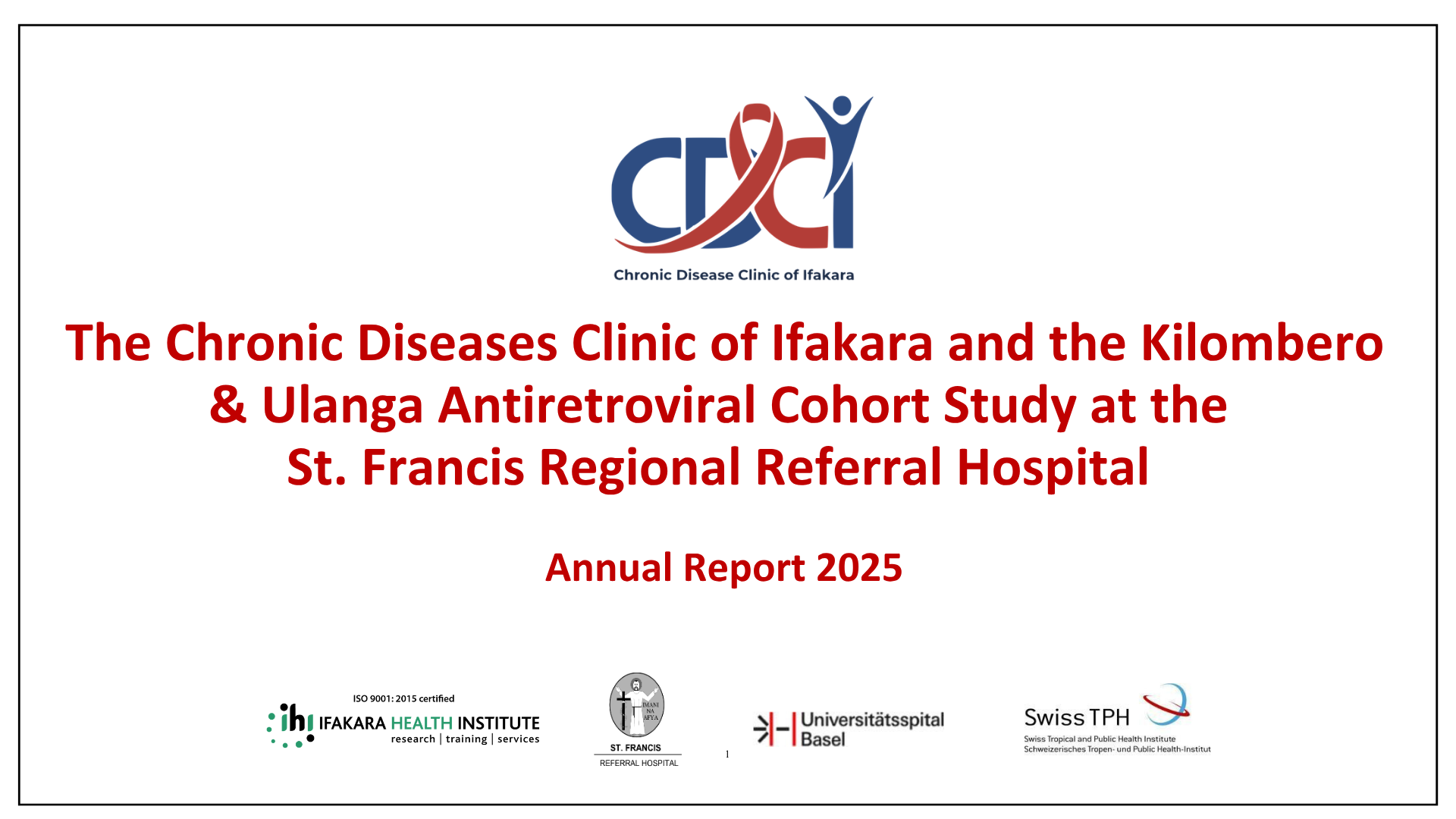
Graphic by IFAKARA Communications

While battling one of Africa’s oldest HIV epidemics, the Chronic Diseases Clinic of Ifakara (CDCI) has quietly launched a new front: treating the growing burden of cancer, diabetes, hypertension and mental health conditions in the same patients.

In 2025 the clinic dramatically expanded integration of communicable and non-communicable disease (NCD) services, offering monthly cervical-cancer, breast-cancer and sexually transmitted infection screenings alongside routine HIV and tuberculosis care. Diabetes and mental-health screening have now been built directly into the HIV clinic flow, creating a true “one-stop” model for entire families.

“We have expanded service integration for communicable and non-communicable diseases,” the clinic’s 2025 annual report states. “Monthly cervical cancer, breast cancer, and STI screenings and integration of diabetes and mental health screening.”

The innovation is anchored in the One Stop Clinic (OSC), where mothers, fathers, children and adolescents living with or affected by HIV receive all family services under one roof. Next door, the Heart and Lung Clinic — a joint project of the Ifakara Health Institute, St. Francis Regional Referral Hospital, Swiss Tropical and Public Health Institute, Charité University Hospital Berlin and University Hospital Basel — provides seamless hypertension and cardiovascular care.

Why the shift matters now

Sub-Saharan Africa faces a double epidemic. People living with HIV on long-term antiretroviral therapy are surviving longer and developing the same NCDs seen in ageing populations worldwide. At the same time, cervical cancer — almost entirely preventable through screening — remains a leading killer of women living with HIV.

CDCI’s response is practical and locally driven. Outreach teams now combine HIV testing with NCD screening during village visits to fisher camps and schools. In the clinic itself, patients receive integrated check-ups rather than being referred elsewhere and risk falling out of care.

The approach builds on the clinic’s already impressive HIV outcomes. Despite the 2025 funding crisis that halted salaries for 35 staff, viral suppression rates stayed at 95 % (<1,000 copies/ml) and 93 % (<50 copies/ml) among the 2,359 patients on active follow-up — figures that rival or exceed many urban programmes.

A model for the region

Clinic leaders say the integration is not an add-on but a necessity. With international funding uncertain and domestic resources stretched, treating HIV in isolation is no longer enough.

The partnerships with European academic hospitals have brought expertise and equipment for cervical and breast screening, while the on-site laboratory supports both HIV viral-load monitoring and NCD diagnostics.

Patients themselves are helping shape the next phase through the clinic’s new Patient and Public Involvement initiative, which began feeding community voices into research on mental health and other comorbidities.

A quiet revolution in rural Africa

The CDCI’s holistic model is emerging as a blueprint for other rural facilities across Tanzania and beyond. By embedding NCD services into an established HIV platform, the clinic is reducing stigma, cutting travel costs for patients, and catching diseases earlier — exactly what global health experts say is needed as Africa’s population ages and HIV becomes a chronic condition.

In a year marked by funding shocks and political uncertainty, the clinic’s leadership transition, continued community celebrations such as Siku ya Kongano, and this expansion of whole-person care show the same determination that kept doors open when salaries stopped.

As the report concludes, the shared enthusiasm of staff and partners “remained unbroken,” allowing them to reach the most vulnerable — rural communities, children, adolescents and pregnant women — with a more complete package of care than ever before.

>> Read the full report, here.

REPORT:

Tanzania’s rural HIV clinic pioneers “whole-person” care

While battling one of Africa’s oldest HIV epidemics, the Chronic Diseases Clinic of Ifakara (CDCI) has quietly launched a new front: treating the growing burden of cancer, diabetes, hypertension and mental health conditions in the same patients.

In 2025 the clinic dramatically expanded integration of communicable and non-communicable disease (NCD) services, offering monthly cervical-cancer, breast-cancer and sexually transmitted infection screenings alongside routine HIV and tuberculosis care. Diabetes and mental-health screening have now been built directly into the HIV clinic flow, creating a true “one-stop” model for entire families.

“We have expanded service integration for communicable and non-communicable diseases,” the clinic’s 2025 annual report states. “Monthly cervical cancer, breast cancer, and STI screenings and integration of diabetes and mental health screening.”

The innovation is anchored in the One Stop Clinic (OSC), where mothers, fathers, children and adolescents living with or affected by HIV receive all family services under one roof. Next door, the Heart and Lung Clinic — a joint project of the Ifakara Health Institute, St. Francis Regional Referral Hospital, Swiss Tropical and Public Health Institute, Charité University Hospital Berlin and University Hospital Basel — provides seamless hypertension and cardiovascular care.

Why the shift matters now

Sub-Saharan Africa faces a double epidemic. People living with HIV on long-term antiretroviral therapy are surviving longer and developing the same NCDs seen in ageing populations worldwide. At the same time, cervical cancer — almost entirely preventable through screening — remains a leading killer of women living with HIV.

CDCI’s response is practical and locally driven. Outreach teams now combine HIV testing with NCD screening during village visits to fisher camps and schools. In the clinic itself, patients receive integrated check-ups rather than being referred elsewhere and risk falling out of care.

The approach builds on the clinic’s already impressive HIV outcomes. Despite the 2025 funding crisis that halted salaries for 35 staff, viral suppression rates stayed at 95 % (<1,000 copies/ml) and 93 % (<50 copies/ml) among the 2,359 patients on active follow-up — figures that rival or exceed many urban programmes.

A model for the region

Clinic leaders say the integration is not an add-on but a necessity. With international funding uncertain and domestic resources stretched, treating HIV in isolation is no longer enough.

The partnerships with European academic hospitals have brought expertise and equipment for cervical and breast screening, while the on-site laboratory supports both HIV viral-load monitoring and NCD diagnostics.

Patients themselves are helping shape the next phase through the clinic’s new Patient and Public Involvement initiative, which began feeding community voices into research on mental health and other comorbidities.

A quiet revolution in rural Africa

The CDCI’s holistic model is emerging as a blueprint for other rural facilities across Tanzania and beyond. By embedding NCD services into an established HIV platform, the clinic is reducing stigma, cutting travel costs for patients, and catching diseases earlier — exactly what global health experts say is needed as Africa’s population ages and HIV becomes a chronic condition.

In a year marked by funding shocks and political uncertainty, the clinic’s leadership transition, continued community celebrations such as Siku ya Kongano, and this expansion of whole-person care show the same determination that kept doors open when salaries stopped.

As the report concludes, the shared enthusiasm of staff and partners “remained unbroken,” allowing them to reach the most vulnerable — rural communities, children, adolescents and pregnant women — with a more complete package of care than ever before.

>> Read the full report, here.

REPORT:

Tanzania’s rural HIV clinic pioneers “whole-person” care

While battling one of Africa’s oldest HIV epidemics, the Chronic Diseases Clinic of Ifakara (CDCI) has quietly launched a new front: treating the growing burden of cancer, diabetes, hypertension and mental health conditions in the same patients.

In 2025 the clinic dramatically expanded integration of communicable and non-communicable disease (NCD) services, offering monthly cervical-cancer, breast-cancer and sexually transmitted infection screenings alongside routine HIV and tuberculosis care. Diabetes and mental-health screening have now been built directly into the HIV clinic flow, creating a true “one-stop” model for entire families.

“We have expanded service integration for communicable and non-communicable diseases,” the clinic’s 2025 annual report states. “Monthly cervical cancer, breast cancer, and STI screenings and integration of diabetes and mental health screening.”

The innovation is anchored in the One Stop Clinic (OSC), where mothers, fathers, children and adolescents living with or affected by HIV receive all family services under one roof. Next door, the Heart and Lung Clinic — a joint project of the Ifakara Health Institute, St. Francis Regional Referral Hospital, Swiss Tropical and Public Health Institute, Charité University Hospital Berlin and University Hospital Basel — provides seamless hypertension and cardiovascular care.

Why the shift matters now

Sub-Saharan Africa faces a double epidemic. People living with HIV on long-term antiretroviral therapy are surviving longer and developing the same NCDs seen in ageing populations worldwide. At the same time, cervical cancer — almost entirely preventable through screening — remains a leading killer of women living with HIV.

CDCI’s response is practical and locally driven. Outreach teams now combine HIV testing with NCD screening during village visits to fisher camps and schools. In the clinic itself, patients receive integrated check-ups rather than being referred elsewhere and risk falling out of care.

The approach builds on the clinic’s already impressive HIV outcomes. Despite the 2025 funding crisis that halted salaries for 35 staff, viral suppression rates stayed at 95 % (<1,000 copies/ml) and 93 % (<50 copies/ml) among the 2,359 patients on active follow-up — figures that rival or exceed many urban programmes.

A model for the region

Clinic leaders say the integration is not an add-on but a necessity. With international funding uncertain and domestic resources stretched, treating HIV in isolation is no longer enough.

The partnerships with European academic hospitals have brought expertise and equipment for cervical and breast screening, while the on-site laboratory supports both HIV viral-load monitoring and NCD diagnostics.

Patients themselves are helping shape the next phase through the clinic’s new Patient and Public Involvement initiative, which began feeding community voices into research on mental health and other comorbidities.

A quiet revolution in rural Africa

The CDCI’s holistic model is emerging as a blueprint for other rural facilities across Tanzania and beyond. By embedding NCD services into an established HIV platform, the clinic is reducing stigma, cutting travel costs for patients, and catching diseases earlier — exactly what global health experts say is needed as Africa’s population ages and HIV becomes a chronic condition.

In a year marked by funding shocks and political uncertainty, the clinic’s leadership transition, continued community celebrations such as Siku ya Kongano, and this expansion of whole-person care show the same determination that kept doors open when salaries stopped.

As the report concludes, the shared enthusiasm of staff and partners “remained unbroken,” allowing them to reach the most vulnerable — rural communities, children, adolescents and pregnant women — with a more complete package of care than ever before.

>> Read the full report, here.

REPORT:

Tanzania’s rural HIV clinic pioneers “whole-person” care

While battling one of Africa’s oldest HIV epidemics, the Chronic Diseases Clinic of Ifakara (CDCI) has quietly launched a new front: treating the growing burden of cancer, diabetes, hypertension and mental health conditions in the same patients.

In 2025 the clinic dramatically expanded integration of communicable and non-communicable disease (NCD) services, offering monthly cervical-cancer, breast-cancer and sexually transmitted infection screenings alongside routine HIV and tuberculosis care. Diabetes and mental-health screening have now been built directly into the HIV clinic flow, creating a true “one-stop” model for entire families.

“We have expanded service integration for communicable and non-communicable diseases,” the clinic’s 2025 annual report states. “Monthly cervical cancer, breast cancer, and STI screenings and integration of diabetes and mental health screening.”

The innovation is anchored in the One Stop Clinic (OSC), where mothers, fathers, children and adolescents living with or affected by HIV receive all family services under one roof. Next door, the Heart and Lung Clinic — a joint project of the Ifakara Health Institute, St. Francis Regional Referral Hospital, Swiss Tropical and Public Health Institute, Charité University Hospital Berlin and University Hospital Basel — provides seamless hypertension and cardiovascular care.

Why the shift matters now

Sub-Saharan Africa faces a double epidemic. People living with HIV on long-term antiretroviral therapy are surviving longer and developing the same NCDs seen in ageing populations worldwide. At the same time, cervical cancer — almost entirely preventable through screening — remains a leading killer of women living with HIV.

CDCI’s response is practical and locally driven. Outreach teams now combine HIV testing with NCD screening during village visits to fisher camps and schools. In the clinic itself, patients receive integrated check-ups rather than being referred elsewhere and risk falling out of care.

The approach builds on the clinic’s already impressive HIV outcomes. Despite the 2025 funding crisis that halted salaries for 35 staff, viral suppression rates stayed at 95 % (<1,000 copies/ml) and 93 % (<50 copies/ml) among the 2,359 patients on active follow-up — figures that rival or exceed many urban programmes.

A model for the region

Clinic leaders say the integration is not an add-on but a necessity. With international funding uncertain and domestic resources stretched, treating HIV in isolation is no longer enough.

The partnerships with European academic hospitals have brought expertise and equipment for cervical and breast screening, while the on-site laboratory supports both HIV viral-load monitoring and NCD diagnostics.

Patients themselves are helping shape the next phase through the clinic’s new Patient and Public Involvement initiative, which began feeding community voices into research on mental health and other comorbidities.

A quiet revolution in rural Africa

The CDCI’s holistic model is emerging as a blueprint for other rural facilities across Tanzania and beyond. By embedding NCD services into an established HIV platform, the clinic is reducing stigma, cutting travel costs for patients, and catching diseases earlier — exactly what global health experts say is needed as Africa’s population ages and HIV becomes a chronic condition.

In a year marked by funding shocks and political uncertainty, the clinic’s leadership transition, continued community celebrations such as Siku ya Kongano, and this expansion of whole-person care show the same determination that kept doors open when salaries stopped.

As the report concludes, the shared enthusiasm of staff and partners “remained unbroken,” allowing them to reach the most vulnerable — rural communities, children, adolescents and pregnant women — with a more complete package of care than ever before.

>> Read the full report, here.