

IFAKARA@70: How mosquito ecology research is reshaping malaria control
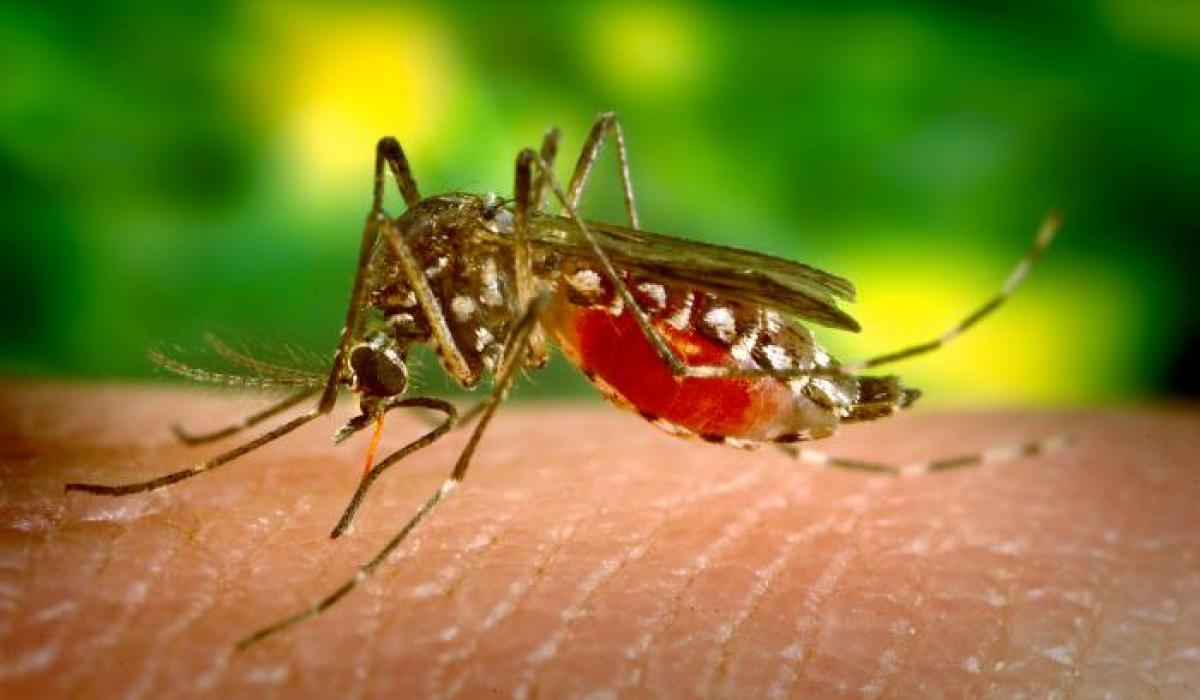
For over four decades, Ifakara Health Institute has been at the forefront of studying one of humanity’s deadliest enemies—the mosquito. These studies form one of the key milestones as the Institute marks its 70th anniversary this year.
What began as field observations in rural Tanzania in 1956 has grown into a world-class science, shaping how malaria and other mosquito-borne diseases are controlled.
At the core of this work is a simple mission: to defeat malaria, and in order to do that we must first understand mosquito behaviour.
A legacy rooted in understanding the smallest enemy
Over the decades, Ifakara has generated a large body of (350+) mosquito ecology research, particularly through its work under the Environmental Health and Ecological Sciences department. These studies focus on how mosquitoes live, breed, survive, and transmit disease—and how this knowledge can be translated into better control strategies.
A major focus has been the malaria vector anopheles funestus, one of the key drivers of transmission in East and Southern Africa. Once considered less dominant in many settings, it is now responsible for a large share of ongoing transmission in parts of south-eastern Tanzania.
In a 2025 study, scientists traced the mosquito’s genetic history over the past 100 years by analysing its DNA. The findings revealed high genetic diversity across African populations, with clear regional differences—including variations linked to insecticide resistance.
A changing mosquito landscape
Ifakara’s mosquito ecology research is also expanding to document the rise of Anopheles stephensi, an urban mosquito species associated with diseases such as dengue and chikungunya.
Originally from Asia, these mosquitoes thrive in rapidly growing cities, where water storage practices and waste accumulation create abundant breeding sites. A recent study involving Ifakara researchers and global collaborators highlights that its emergence demands new surveillance and control strategies.
Together, these findings deepen understanding of mosquito evolution and ecology—and help explain why malaria transmission persists despite decades of control efforts.
Decoding mosquito behaviour: adaptation in action
Another growing area of research focuses on behavioural change in mosquitoes. Field studies by Ifakara scientists show that some malaria vectors are adapting in ways that reduce the effectiveness of existing interventions.
These changes include:
- Earlier evening biting, before people go under bed nets
- Increased outdoor feeding, away from protected indoor spaces
- Reduced contact with insecticide-treated surfaces
Such shifts represent a form of behavioural adaptation, which over time, allows mosquitoes to survive and reproduce, gradually weakening current malaria control tools.
Uncovering hidden breeding sites in everyday life
Ifakara studies have also transformed the understanding of where mosquitoes breed. Researchers have shown that many species depend on small, often overlooked water sources—discarded containers, old tyres, household storage vessels, and rain-filled debris.
In south-eastern Tanzania, studies revealed that disease-carrying mosquitoes such as Aedes aegypti thrive in everyday environments—from discarded tires to flowerpots and even coconut tree holes – places people rarely associate with disease risk.
These insights have reshaped prevention strategies, shifting emphasis beyond spraying to include environmental management, waste control, and urban planning. They also highlight the growing importance of integrated approaches for multiple mosquito-borne diseases, including dengue, Zika, and Rift Valley fever.
Understanding the human–environment connection
Recent research has gone further, showing that mosquito ecology is deeply shaped by human behaviour and changing lifestyles.
A 2024 study found that mosquito breeding patterns are closely linked to how communities use water for farming, household needs, and livelihoods.
This understanding has helped shift strategies from simply eliminating water sources to managing them safely through larval source management and community-led interventions.
Testing solutions in real-world settings
One of Ifakara’s most groundbreaking contributions is its unique research infrastructure—famously known to as “Mosquito City.”
This large semi-field system simulate real village environments, allowing scientists to observe mosquito behavior under controlled but realistic conditions.
Here, researchers test innovations that are now widely used in malaria control, including:
- New mosquito traps and repellents
- Outdoor control tools
- Improved housing designs
- Novel approaches like insecticide auto-dissemination
Such facilities, which researchers refer to “semi-field systems” have enabled scientists to bridge the gap between laboratory science and real-world impact, accelerating the development of effective solutions.
The impact: dramatic reductions in transmission
The results of this work are both measurable and remarkable. A long-term study in south-eastern Tanzania shows that malaria transmission has dropped by more than 99% since the early 2000s.
This progress reflects a combination of:
- Evidence-based interventions like insecticide-treated nets
- Improved housing and urban development
- Smarter vector control strategies informed by ecological research
By understanding when, where, and how mosquitoes bite—indoors and outdoors, rural and urban—Ifakara scientists have helped shape targeted interventions that save lives.
Innovation for future ecology studies
Today, Ifakara’s research is moving into a new era of innovation, exploring next-generation tools such as:
- Genetic approaches to mosquito control
- Digital tools like drones, combined with AI, to identify breeding sites
- Integrated strategies that combine environment, technology, and community action
Through this work, Ifakara continues to ensure that Africa is not just a recipient of innovation—but a leader in global health science.
“The future of malaria control lies in integrated approaches—bringing together ecology, technology, and community engagement to address the problem from every angle,” says a vector ecology researcher.
A future without malaria is possible
Taken together, these discoveries have transformed malaria control from a narrow focus on killing mosquitoes into a broader understanding of entire ecosystems.
For decades, Ifakara has demonstrated that world-changing science can be developed in Africa, for Africa, and for the world. From mapping mosquito habitats to reshaping disease control systems, its work shows that understanding the smallest ecological details can deliver the biggest public health impact.
As World Malaria Day approaches, Ifakara’s 70-year journey offers a powerful reminder: scientific progress is built through collaboration, and commitment—and a future without malaria is still within reach.
We're a Registered Charity Organization in Tanzania
Ifakara Health Institute (IHI) is officially recognized as a charitable organization under the Income Tax Act. Certification issued on 20 March 2025 and valid until 31 December 2030.
Ifakara Health Institute (IHI) is officially recognized as a charitable organization under the Income Tax Act. Certification issued on 20 March 2025 and valid until 31 December 2030.