
MALARIA FORUM 2026: National dialogue on malaria kicks off in Dodoma
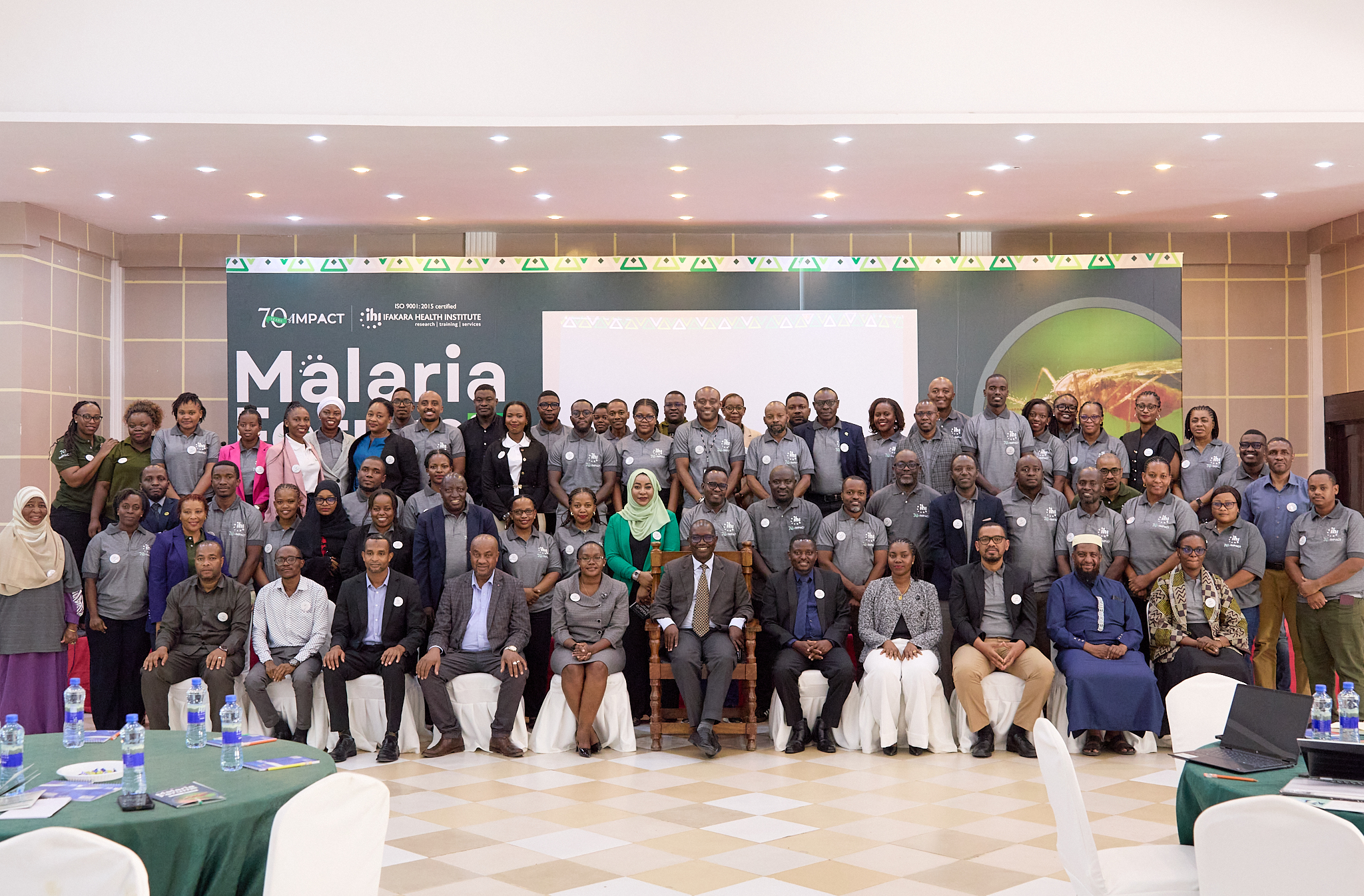
On April 23 2026, the Ifakara Health Institute Malaria Forum 2026 took place in Dodoma at the Royal Village Hotel, Dodoma, Tanzania, bringing together researchers, policymakers, partners, and stakeholders committed to advancing malaria elimination.
The day kicks off with innovation
The forum opened on a strong note with a dynamic project showcasing session, highlighting some of Ifakara’s most impactful innovations. Among them was VBD360 (Vector-Borne Diseases 360)—formerly known as MosquitoDB—a real-time surveillance system that integrates a data-capturing mobile app for vector and human behaviour indicators, alongside an interactive dashboard designed to strengthen the monitoring, control, and elimination of vector-borne diseases.
More innovations here: Seven decades of innovation in the fight against malaria
Also featured was Protecting Beyond Nets, a forward-looking approach aimed at strengthening malaria prevention beyond traditional tools and interventions.
More on bed nets here: Treated bed nets – The intervention that reshaped global malaria control
With partners and stakeholders in attendance, the message from the outset is clear: malaria elimination will be driven by innovation, collaboration, and evidence-based action.
As the forum unfolds, it sets the tone exactly as intended—grounded in innovation, driven by science, and focused on impact.
Government calls for stronger science–policy action
The central message of the Ifakara Malaria Forum 2026 opening was clear and urgent: Tanzania has the tools to end malaria—but success now depends on sustained action, investment, and collective responsibility.
Speaking on behalf of Dr. Seif Shekalaghe, Permanent Secretary, Ministry of Health, Dr. Ahmed Makuwani, Director of Reproductive, Maternal and Child Health, emphasized that the fight against malaria has reached a decisive moment. Scientific progress has delivered new solutions—from improved insecticide-treated nets to vaccines and innovative vector control methods—meaning “now we can” realistically achieve elimination.
However, the message was equally a warning: “now we must.” Progress remains fragile. Without sustained political commitment, strong health systems, and continued financing, the gains Tanzania has made could quickly reverse. Malaria is no longer just a question of innovation—it is a test of consistency, coordination, and commitment.
The remarks reinforced that ending malaria will not be achieved by one actor alone. Government leadership, research institutions like the Ifakara Health Institute, development partners, and communities must act together, guided by evidence and driven by shared accountability.
At its core, the message was a call to move beyond discussion: turn science into policy, policy into action, and action into impact—now.
Collaboration is Key to Ending Malaria
Opening remarks from partners, including the National Institute for Medical Research (NIMR), the Commission for Science and Technology (COSTECH), and Muhimbili University of Health and Allied Sciences (MUHAS), consistently underscored a shared message: collaboration is the cornerstone of malaria elimination. Speakers emphasized that progress will depend on moving collectively—aligning institutions, research, policy, and communities toward a common goal of a malaria-free future.
The fight to end malaria cannot be achieved in isolation. It requires sustained collaboration, shared expertise, and a collective commitment to turning science into action.
At the Ifakara Malaria Forum, Ifakara Health Institute expressed deep appreciation for its long-standing partners who have supported its work over more than seven decades. Their continued engagement has been instrumental in strengthening malaria research, innovation, and implementation efforts in Tanzania.
Advancing Malaria Elimination Through Evidence, Systems, and Partnerships
Ifakara and partners discussed advancing malaria elimination through evidence, systems, and partnerships at the Ifakara Malaria Forum 2026 in Dodoma.
Across a series of high-level panels, experts explored how innovation in vector control, stronger data systems, and meaningful community engagement can reshape malaria response. The conversations also highlighted the urgency of translating research into policy and practice, ensuring evidence—especially from sub-national tailoring approaches—directly informs national strategies.
Discussions further emphasized that sustaining progress will depend on stronger financing mechanisms, deeper regional and global collaboration, and renewed commitment to country ownership in the fight against malaria.
Together, the panels reinforced a shared message: ending malaria requires alignment between science, systems, and sustained partnerships.
Momentum beyond the forum
The Ministry of Health and ZAMEP (Zanzibar Malaria Elimination Programme) extended sincere appreciation to all participants for their active engagement and valuable contributions throughout the forum. The Ministry emphasized that progress in malaria control and elimination can only be sustained through continued collaboration and strong partnerships across all stakeholders.
In closing, the Director of Science, Dr. Ally Olotu, reaffirmed that ending malaria is both an achievable and shared goal, and called on all partners to deepen collaboration and maintain momentum beyond the forum, underscoring the importance of sustained collective action to turn evidence into impact.