WARNING: Scientists detect early signs of resistance to key malaria drug
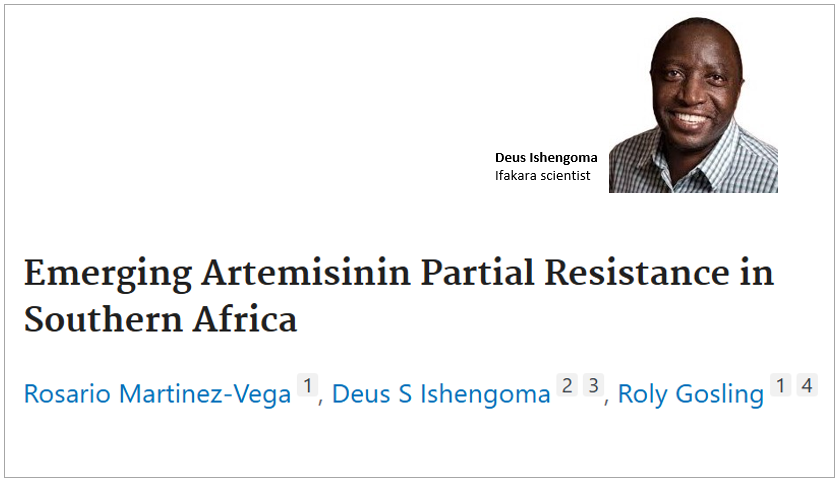
A new study published in the American Journal of Tropical Medicine and Hygiene has identified early warning signs of resistance to artemisinin —the world’s most important malaria treatment in southern Africa and globally.
The study was co-authored by researchers from the United Kingdom and Tanzania. Among them is Dr. Deus Ishengoma of Ifakara Health Institute, who is also affiliated with the National Institute for Medical Research (NIMR). He collaborated with Rosario Martinez-Vega and Roly Gosling from the London School of Hygiene and Tropical Medicine, UK.
Why this matter?
Artemisinin is the backbone of modern malaria treatment, and millions of lives depend on its continued effectiveness—especially in Africa. Early signs of resistance, even partial, can undermine treatment success, increase transmission, and reverse decades of progress in malaria control.
Early identification of resistance markers provides an opportunity to act before widespread treatment failure occurs.
If resistance spreads widely, it could lead to more severe illness, higher healthcare costs, and increased mortality, particularly among vulnerable groups such as children under five.
Genetic signals raise concern
Researchers used genetic analysis to track changes in plasmodium falciparum, the parasite responsible for malaria. The study found evidence of a mutation known as P441L, which is linked to partial resistance—a stage where the drug still works, but clears parasites more slowly.
“The detection of mutations associated with delayed parasite clearance signals the potential emergence of artemisinin resistance in the region,” noted the researchers.
The findings underscore the urgent need to strengthen surveillance systems, protect existing drugs, and invest in the development of new malaria treatments before resistance takes hold.
A familiar pattern from Southeast Asia
This form of resistance has previously been observed in Southeast Asia, where it contributed to treatment failures. Its emergence in Africa raises concern, as the continent bears the highest global burden of malaria.
“Although artemisinin-based therapies remain effective, these findings highlight the importance of continued molecular surveillance,” underscored the scientists.
Artemisinin-based combination therapies (ACTs) remain highly effective, but scientists warn that delayed parasite clearance is a critical early signal that resistance could spread if not contained.
Read the publication, here.