

RABIES: Single-dose vaccine offers long-lasting protection
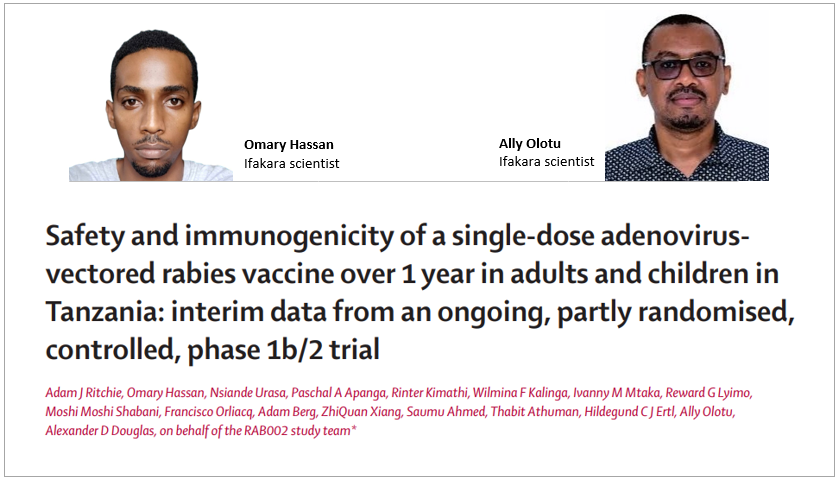
A new clinical trial conducted in Tanzania suggests that a single-dose rabies vaccine could offer strong, long-lasting protection—potentially transforming how the disease is prevented in some of the world’s most affected regions.
A persistent but preventable threat
Rabies kills around 59,000 people each year, mostly in Africa and Asia. Children are the most vulnerable, often exposed through dog bites.
Despite the availability of effective vaccines, access remains uneven. Current vaccines typically require two or more clinic visits, a major barrier in rural and low-resource settings.
Breakthrough from Tanzania trial
Published in The Lancet, the study, led by scientists from the University of Oxford in collaboration with the Ifakara Health Institute, tested a new vaccine ChAdOx2 RabG, designed to work in a single dose.
A total of 174 participants—63 adults and 111 children aged between two and six—took part in the trial.
Researchers found that the new vaccine triggered significantly stronger immune responses than existing rabies vaccines. After one year, antibody levels were around five times higher in adults and more than eight times higher in children compared to standard single-dose vaccines.
Better outcomes for children
In children, the results were particularly striking. The single-dose vaccine outperformed the standard two-dose regimen recommended by the World Health Organization.
Nearly all vaccinated children maintained antibody levels above the threshold considered protective against rabies after one year.
Why this matter
Experts say the findings could mark a turning point in rabies prevention.
Omar Hassan, a researcher at the Ifakara Health Institute and project leader of the study, said the results bring new hope for communities most at risk:
“By demonstrating that a simpler and more affordable vaccination schedule can provide strong protection, this trial brings us closer to making rabies prevention accessible to the populations that need it most.”
Prof. Sandy Douglas of Oxford’s Jenner Institute, the developer of the vaccine and the study’s senior author said, “Rabies is entirely preventable, yet it still causes tens of thousands of deaths each year, mostly among children.”
She added that while current vaccines are effective, they are often difficult to deliver where they are needed most.
Towards easier and wider access
A single-dose vaccine could simplify logistics, reduce costs, and expand access—especially in remote areas where repeated clinic visits are challenging.
Researchers also noted that the vaccine produces a rapid immune response, raising the possibility that it could be used in emergency situations after exposure, although further studies are needed.
What comes next
The trial is ongoing, with participants being followed for several years to determine how long protection lasts.
If confirmed in larger studies, scientists say the vaccine could become a “game changer” in global efforts to eliminate rabies—bringing life-saving protection within reach for millions of people at risk.
Read the publication, here.