

MALARIA VACCINE: Study reveals path to stronger, long-lasting protection
Scientists say one of the biggest challenges in the fight against malaria is that vaccine protection can fade over time, making it harder to achieve long-term control of the disease.
Now, a new study offers fresh insight into how that problem could be overcome. Published in Frontiers in Immunology, the research examined how the body responds to two promising malaria vaccines that target different stages of the parasite.
Two vaccines, one goal
The study focused on:
- R21/Matrix-M, which works at the early stage of infection in the liver
- RH5.1/Matrix-M, which targets the parasite once it enters the bloodstream
By analyzing clinical trial data from East Africa, including Tanzania and Kenya, researchers explored how key immune cells — B cells and T cells — respond after vaccination.
Children show stronger responses
Findings showed that young children developed stronger immune responses than adults to the R21 vaccine.
This is particularly important because children are among the most at risk from malaria, and stronger immunity in this group could translate into better protection.
Researchers also found that higher vaccine doses led to stronger immune reactions, particularly in the production of memory B cells — the cells responsible for producing antibodies that can recognize and fight infection in the future.
Timing, prior exposure matters
The also study found that delaying the booster dose improved the quality and durability of the immune response, particularly for the RH5 vaccine. These findings suggest that not just the vaccine itself, but how and when it is given, plays a critical role in how well it works.
The researchers also observed that people with prior exposure to malaria developed stronger immune responses after vaccination, highlighting how natural exposure may influence how well vaccines work in endemic regions.
Why this matters
Malaria vaccines have made major progress in recent years, but one of the biggest challenges has been maintaining long-lasting protection.
This study provides new evidence on how to improve vaccine performance — from choosing the right dose to optimizing timing and combining vaccines that target different stages of the parasite’s life cycle.
Scientists say a multi-stage vaccine approach could be a game changer, offering stronger and more durable immunity than current options.
With malaria still claiming hundreds of thousands of lives each year — most of them children in Africa — these findings could help shape the next generation of vaccines and bring the world closer to controlling, and eventually eliminating, the disease.
Collaboration behind the research
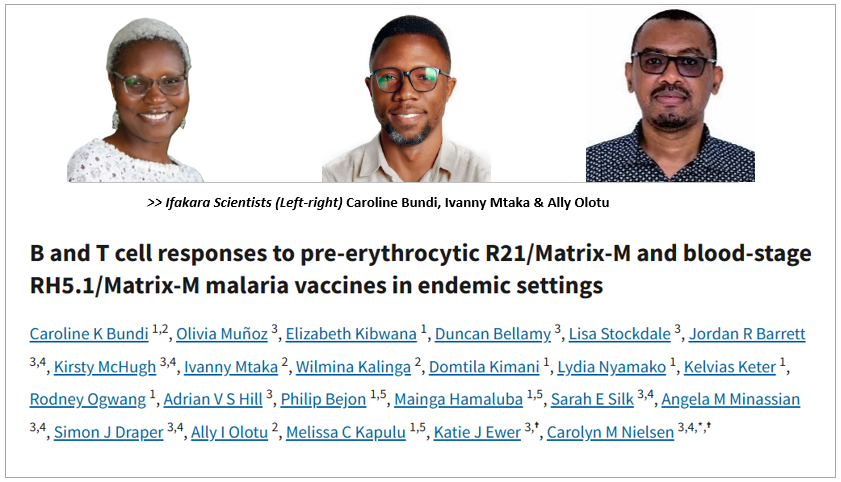
The study was led by Caroline Bundi of Ifakara Health Institute, working in collaboration with partners from the University of Oxford. Other contributors from Ifakara Health Institute included Ivanny Mtaka, Wilmina Kalinga and Ally Olotu.
Read the publication, here.
We're a Registered Charity Organization in Tanzania
Ifakara Health Institute (IHI) is officially recognized as a charitable organization under the Income Tax Act. Certification issued on 20 March 2025 and valid until 31 December 2030.
Ifakara Health Institute (IHI) is officially recognized as a charitable organization under the Income Tax Act. Certification issued on 20 March 2025 and valid until 31 December 2030.