

STAR HOMES: Tanzania study shows improved housing can reduce childhood diseases
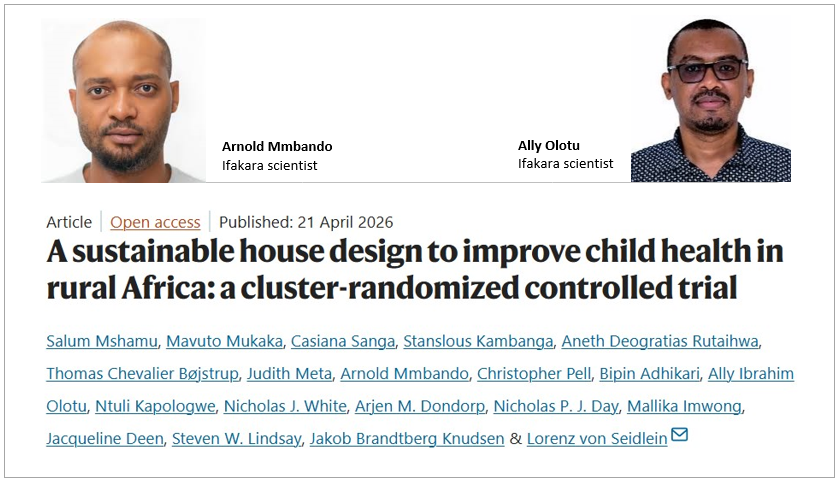
Improving housing conditions could be a powerful strategy for reducing childhood diseases in Tanzania, according to findings from a major rural study linking better homes with lower disease rates among children.
Published in Nature Medicine, the study followed families living in specially designed “Star Homes” in Mtwara Region and compared their health outcomes with those living in traditional rural houses between 2022 and 2024. Researchers found that children under five years old living in the improved homes had lower rates of disease infections over the three-year study period.
Why the findings matter
The findings come as many African countries face growing pressure from climate change, insecticide resistance and overstretched health systems while trying to maintain progress against malaria and child mortality.
A key message from the research is that disease prevention does not happen only in clinics and hospitals. Healthy living environments can play an equally important role.
“Major improvements in rural house design have the potential to make a substantial public health impact across hot, humid regions of Africa,” the authors concluded.
Major reductions in childhood illnesses
Key findings from the study show that children living in the improved homes had 44% less malaria, 30% fewer diarrheal illnesses, and 18% fewer acute respiratory infections. The study also found improvements in child growth and reductions in stunting among children living in the upgraded homes.
“The transmission of these three preventable childhood killer diseases is closely associated with the home environment,” the researchers wrote.
The Star Homes were intentionally designed to address these risks through features such as mosquito-proof screening, improved ventilation, cleaner cooking spaces, rainwater harvesting systems, solar power, and better sanitation facilities.
Researchers said the findings support the idea that “improved housing can reduce the burden of three lethal diseases of childhood and improve a child’s growth”.
Rethinking housing as a health tool
For decades, disease control efforts in Africa have focused largely on medicines, vaccines, and improved healthcare services. While these interventions remain critical, the study demonstrates that housing itself can also play a major role in disease prevention.
Traditional rural homes often expose families to mosquitoes, indoor smoke, poor ventilation, unsafe water storage, and overcrowded conditions — all of which contribute to infectious diseases.
By improving multiple aspects of the home environment at once, the researchers say the Star Homes created healthier living conditions for children and families.
A collaborative research involving Ifakara scientists
The research was led through a collaboration involving scientists from Ifakara Health Institute, CSK Research Solutions, the University of Oxford, Royal Danish Academy, Durham University, Netherlands University of Amsterdam, and the Mahidol Oxford Tropical Medicine Research Unit.
Researchers from Ifakara Health Institute who contributed to the study include Arnold Mmbando and Ally Olotu.
Read the publication here.
We're a Registered Charity Organization in Tanzania
Ifakara Health Institute (IHI) is officially recognized as a charitable organization under the Income Tax Act. Certification issued on 20 March 2025 and valid until 31 December 2030.
Ifakara Health Institute (IHI) is officially recognized as a charitable organization under the Income Tax Act. Certification issued on 20 March 2025 and valid until 31 December 2030.