

BOOT CAMP: Ifakara scientist highlights AI’s transformative power in African healthcare
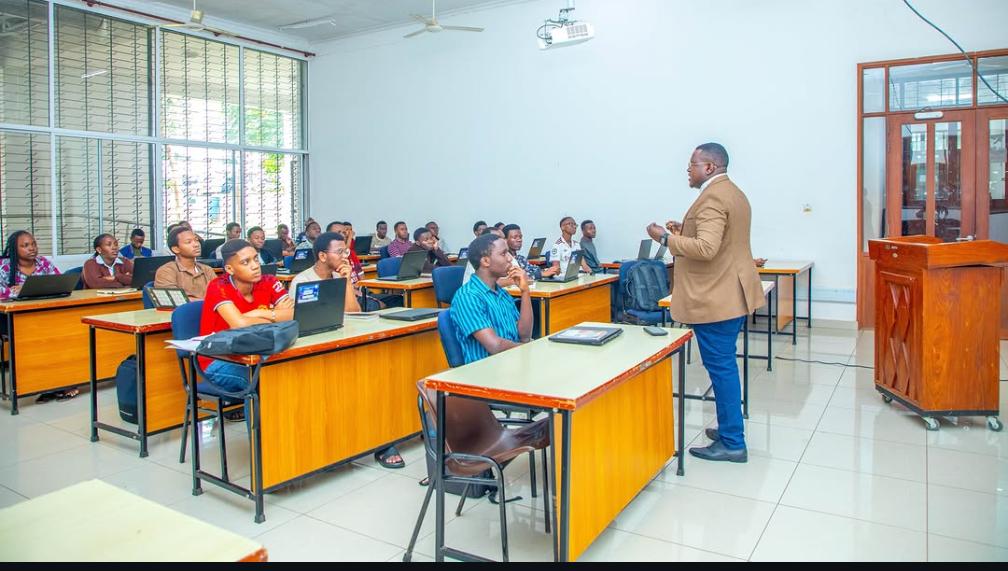
On the 15 of May 2026, Research Scientist at the Ifakara Health Institute (IHI), Dr Issa Mshani, took part in an Artificial Intelligence (AI) Boot Camp organized under the Samia Scholarship on Data Science and Artificial Intelligence, implemented through Tanzania’s Ministry of Education.
Hosted with support from the Nelson Mandela African Institution of Science and Technology (NM-AIST), the boot camp brought together academic leaders, facilitators, and scholars committed to advancing innovation, technology, and scientific excellence in Tanzania.
The programme also convened some of Tanzania’s highest-performing Advanced Level students from the 2025 Form Six cohort, selected under the prestigious scholarship initiative that supports outstanding young Tanzanians to pursue studies in the United Kingdom and other international universities.
During the session, Mshani engaged the students on the growing applications of artificial intelligence in medicine and public health, sharing insights from his work and highlighting the potential of AI and data science to transform healthcare systems and research across Africa.
Speaking about the experience, Dr Mshani described the interaction as both inspiring and energizing, noting the students’ curiosity, ambition, and willingness to engage with complex ideas in AI and data science.
“Moments like these remind me how important it is to invest in people. Tanzania is building something special, empowering a generation that will lead in AI, data science, and beyond,” he said.
Dr Mshani also commended President Dr Samia Suluhu Hassan and the Minister of Education, Prof Adolf Mkenda, for their leadership in supporting the initiative and nurturing Tanzania’s brightest young minds through the scholarship programme.
He added “My deep gratitude also goes to Prof Adolf Mkenda, the Minister of Education, for his commitment to nurturing Tanzania’s brightest minds by championing this program.
Special thanks to Prof Daniel Mushi for making my participation possible. I am equally grateful to Prof Kipanyula and the entire team at the Nelson Mandela African Institution of Science and Technology, including Dr Judith Leo, Prof Liliane Passape, and Dr Lawrence, for the warm welcome and excellent organization.”