

CHILD DEVELOPMENT: Scientists share valuable lessons from inclusive school readiness programme
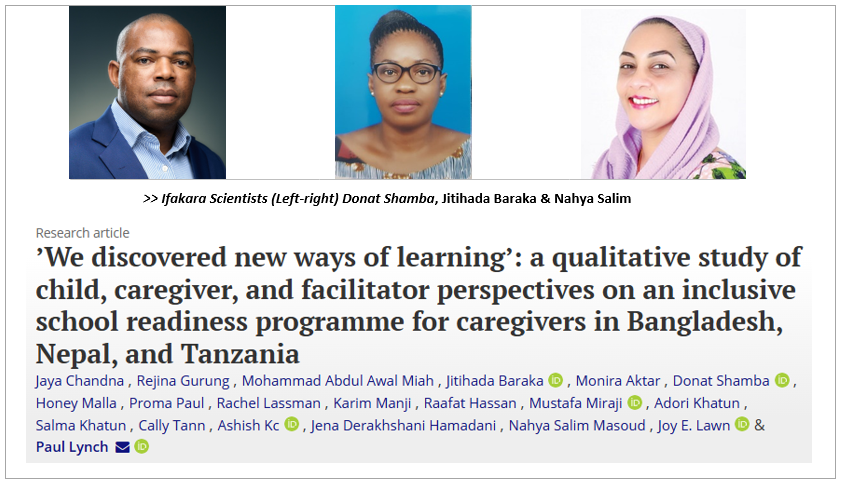
A community-based caregiving programme is helping improve school readiness for young children — including those with disabilities — in low- and middle-income countries, where many children still miss out on pre-primary schooling, a new study has found.
Published in Global Health Action last week, the study was part of the EN-REACH trial evaluating an inclusive school readiness training programme for caregivers in Tanzania, Bangladesh and Nepal. The programme was co-designed with caregivers, teachers, and representatives from the health and education sectors.
Scientists from the UK, Bangladesh, Nepal and Tanzania contributed to the study, including Donat Shamba, Jitihada Baraka and Nahya Salim from the Ifakara Health Institute.
Why this matter
Children with disabilities often face barriers to early learning, including limited access to preschool services and tailored support. This study supports targeted delivery of inclusive school readiness programmes to vulnerable children.
Researchers say “embedding caregiver-based programmes within government pre-primary and parenting systems” could help expand access and improve equity at scale.
“This study is significant in showing how participatory, play-based parenting programmes may promote school readiness for all children in LMICs,” the authors noted.
Supporting children often left behind
The programme trained caregivers of children aged 4–6 years to support school readiness through simple, inclusive activities at home and in the community.
Researchers then conducted 16 focus group discussions with caregivers and facilitators to assess whether the programme was practical, acceptable and beneficial.
Positive impact reported
The study found that the programme showed potential to strengthen child learning, caregiver practices and facilitator skills.
Children became more engaged in learning activities and more eager to attend school. Caregivers reported improved confidence, more positive parenting practices, and stronger advocacy for their children’s needs. Facilitators also said the programme strengthened their ability to use inclusive teaching approaches.
Researchers identified three main factors behind the programme’s success:
- Inclusive content for children with additional needs
- Play-based group sessions involving parents and teachers
- Low-cost, locally adapted learning materials
But… challenges remain
Despite the positive results, the study also identified several challenges, including irregular attendance, varying support needs among children, and disruptions linked to transport difficulties and bad weather.
Researchers say addressing these barriers will be important if the programme is expanded to reach more communities.
Wider impact
The authors concluded that community-based programmes like EN-REACH could help improve equitable school readiness, particularly for children with disabilities, by supporting a smoother transition from home to school.
“Embedding such programmes within communities may accelerate equitable school readiness,” the authors noted. However, they emphasized that ongoing training, supervision and attention to local barriers would be necessary to sustain impact during scale-up.
Read the publication, here.