

MALARIA CONTROL: Study maps breeding grounds sustaining mosquitoes
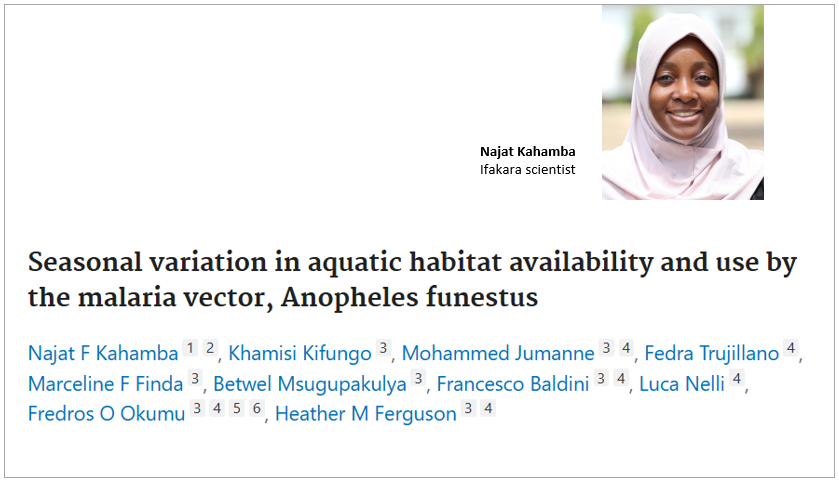
Scientists in Tanzania have identified seasonal water habitats that help one of Africa’s deadliest malaria mosquitoes survive and spread, in findings that could strengthen control efforts in malaria endemic countries.
The study, led by researchers from Ifakara Health Institute and published in Malaria Journal recently, examined where anopheles funestus mosquitoes breed during wet and dry seasons in south-eastern Tanzania.
Researchers surveyed nearly 3,000 water bodies across five villages in the Kilombero Valley in Morogoro, Tanzania and found that more than a quarter (27%) contained mosquito larvae.
The species, anopheles funestus — one of the main malaria vectors in sub-Saharan Africa — was found breeding year-round in streams, ditches and ground pools.
Why the findings matter
The researchers say the findings could strengthen Larval Source Management (LSM), a malaria control approach that targets mosquito larvae before they develop into adults capable of transmitting disease.
By identifying habitats most likely to sustain mosquito populations throughout the year, the study provides evidence that could improve malaria interventions in Tanzania and other countries facing similar challenges.
Rainy season creates more breeding habitats
During the rainy season, results showed that Anopheles funestus mosquitoes expanded into additional habitats including rice fields, spring-fed wells and dug pits.
The scientists also found that environmental factors such as water depth, vegetation, algae and water clarity influenced where the mosquitoes were most likely to breed, suggesting the mosquito species is highly adaptable and capable of surviving in a wide range of aquatic environments.
A continuing malaria challenge
Malaria remains a major public health challenge in Tanzania, causing thousands of illnesses and deaths each year, particularly among children under five.
Although insecticide-treated bed nets and indoor spraying have helped reduce infections over the years, researchers say Anopheles funestus mosquitos continue to sustain transmission because they are highly adaptable and capable of surviving in diverse environments.
Researchers call for targeted seasonal interventions
The researchers say the study demonstrate the ecological adaptability of Anopheles funestus, which shifts its use of breeding habitats across seasons.
Although the mosquito species typically prefers permanent water bodies, the study found it expands into a wider range of habitats during the rainy season — a pattern with implications for larval source management (LSM).
The authors say the findings could help improve the timing and efficiency of mosquito control efforts. “Targeting persistent habitats during the dry season may offer a more efficient and feasible window for implementing this intervention,” they concluded.
Ifakara research team behind the study
The study was led by scientists from Ifakara Health Institute, with Najat Kahamaba serving as lead author.
Other contributors included Khamisi Kifungo, Mohammed Jumanne, Marceline Finda, Betwel Msugupakulya, Francesco Baldini, Fredros Okumu and Heather Ferguson.
Read the publication here.
We're a Registered Charity Organization in Tanzania
Ifakara Health Institute (IHI) is officially recognized as a charitable organization under the Income Tax Act. Certification issued on 20 March 2025 and valid until 31 December 2030.
Ifakara Health Institute (IHI) is officially recognized as a charitable organization under the Income Tax Act. Certification issued on 20 March 2025 and valid until 31 December 2030.